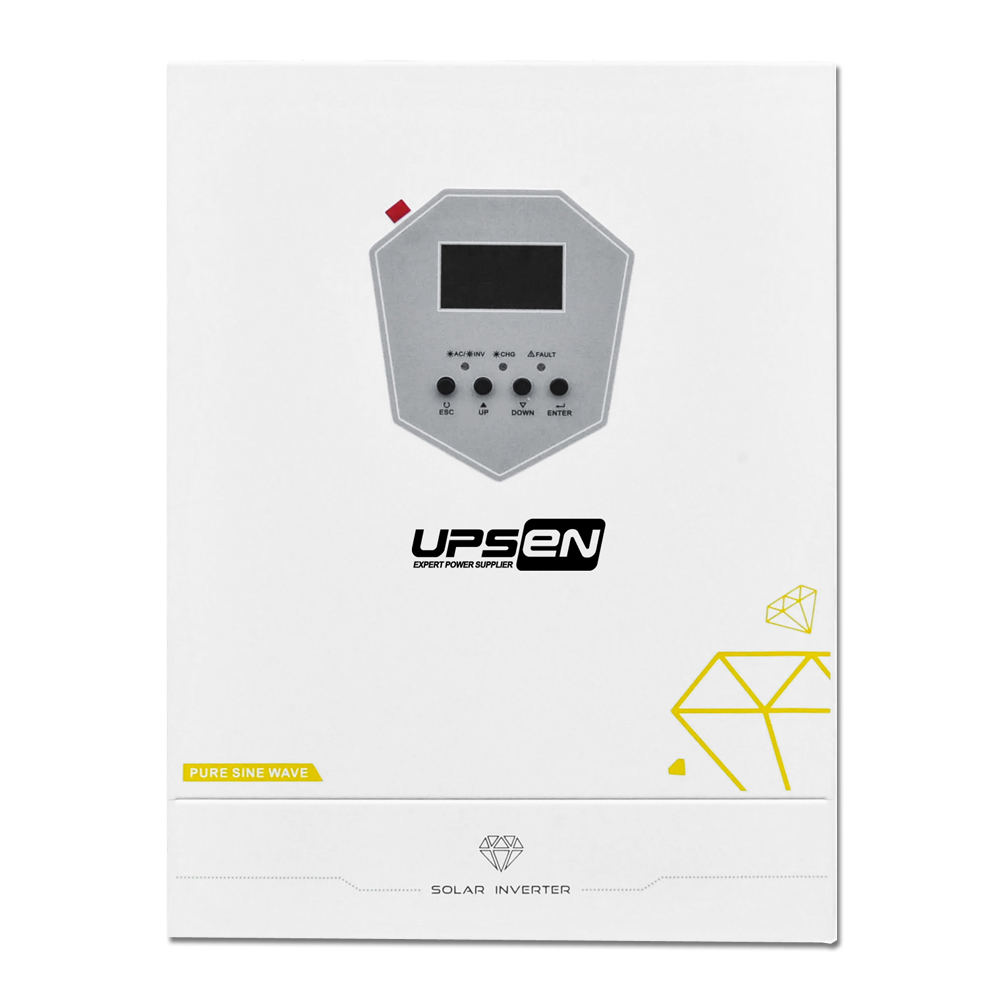
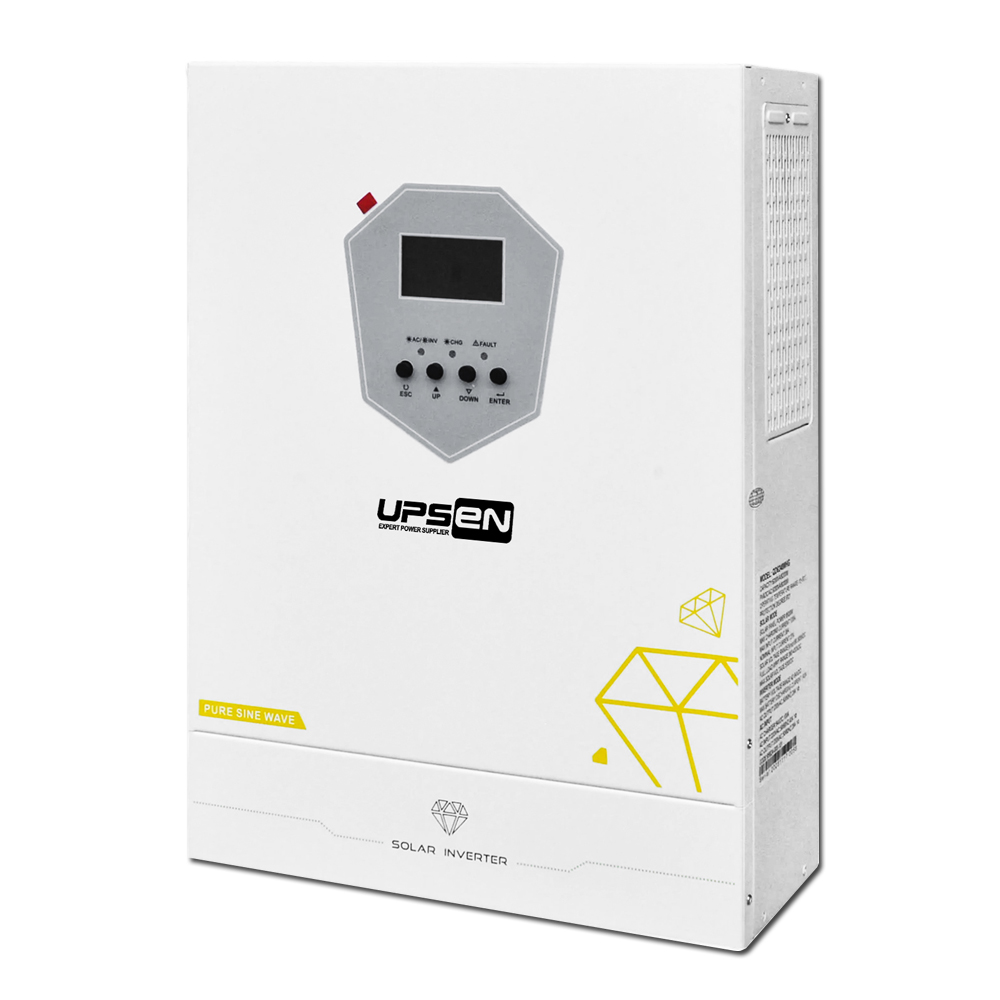
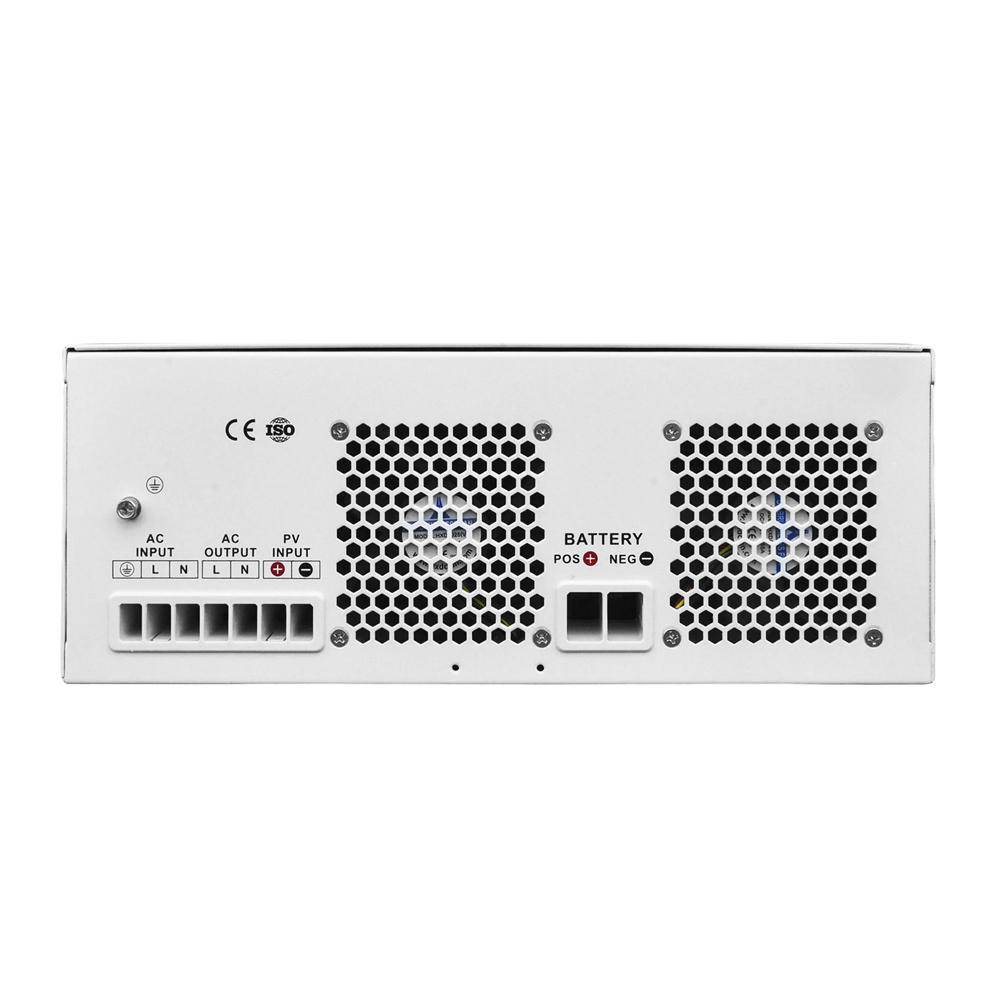
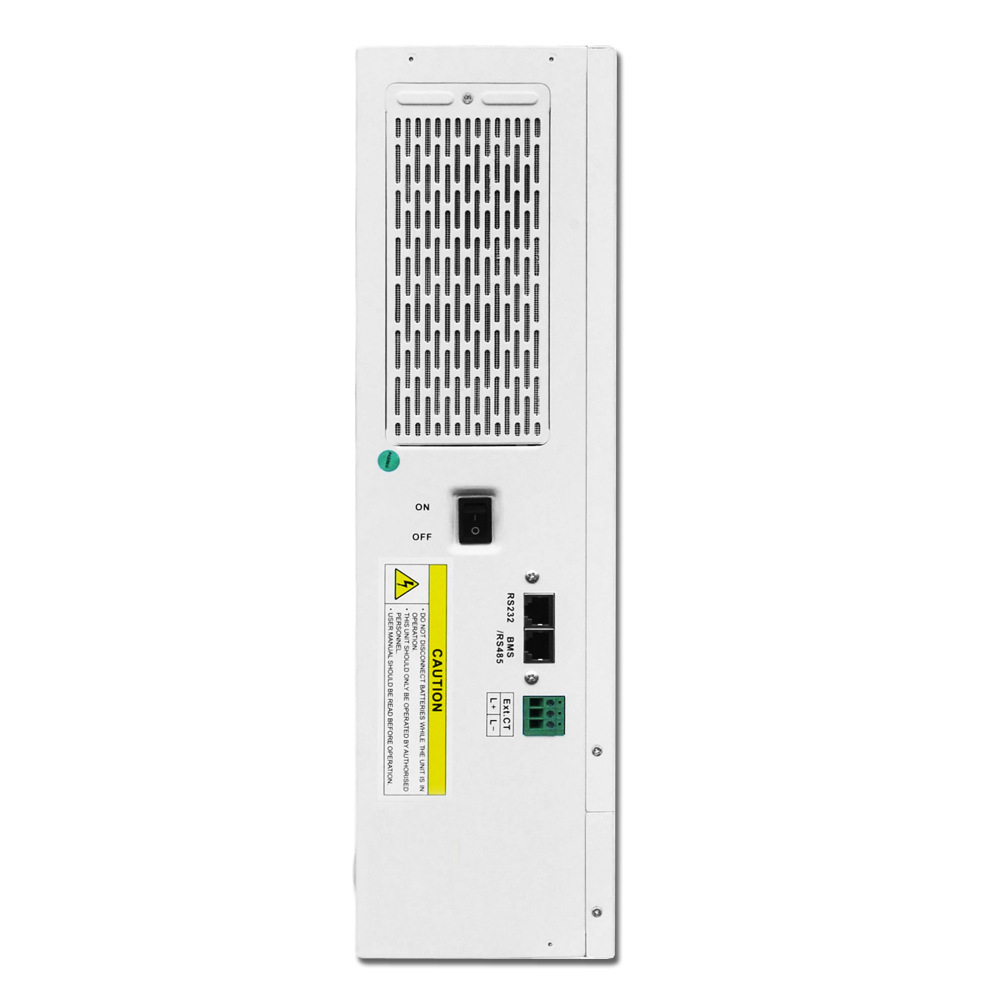
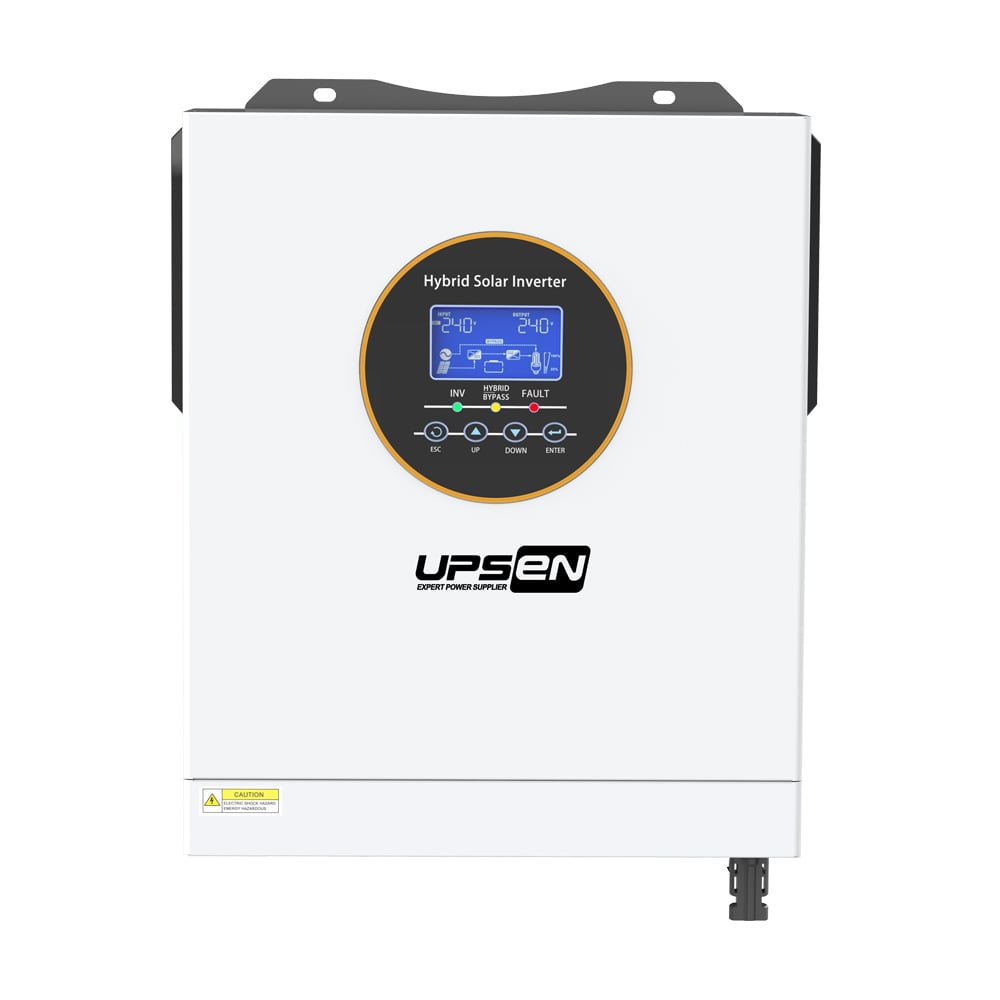
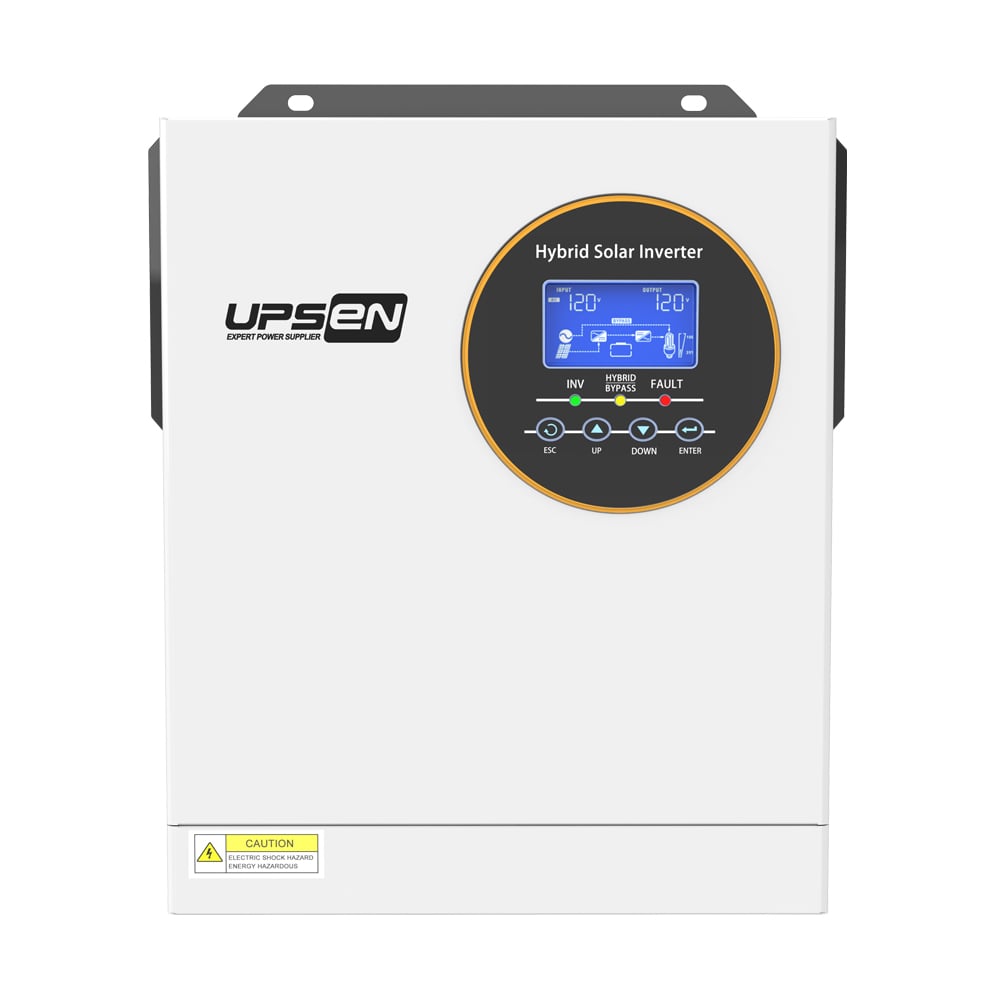
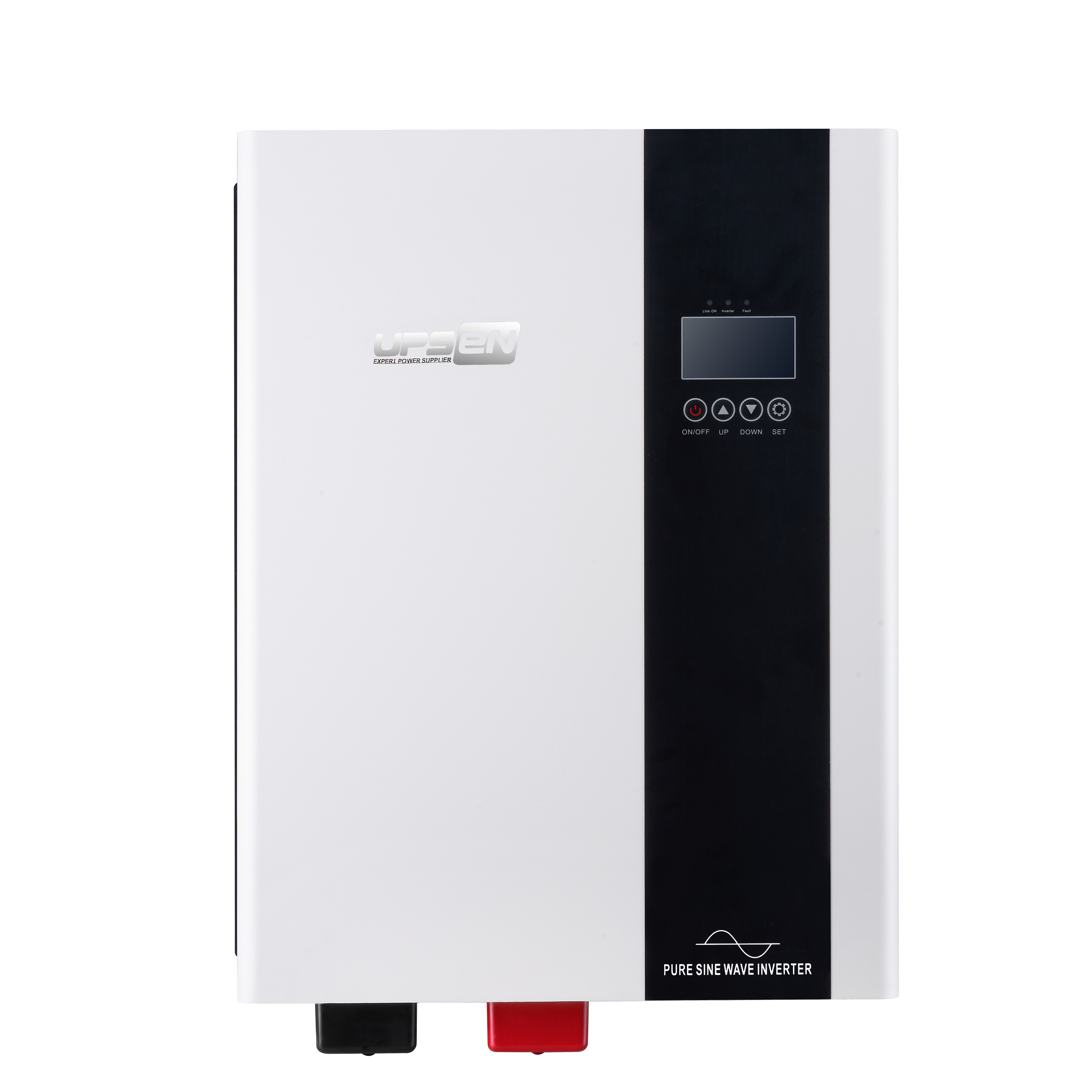
·Ausgangs-Leistungsfaktor PF = 1,0
·Automatische Neustartfunktion für Lithiumbatterien für ein komfortableres Laden
·Unterstützt CT-Rückflussschutz, erkennt automatisch den Netzzustand und verhindert, dass Leistung ins Netz zurückfließt
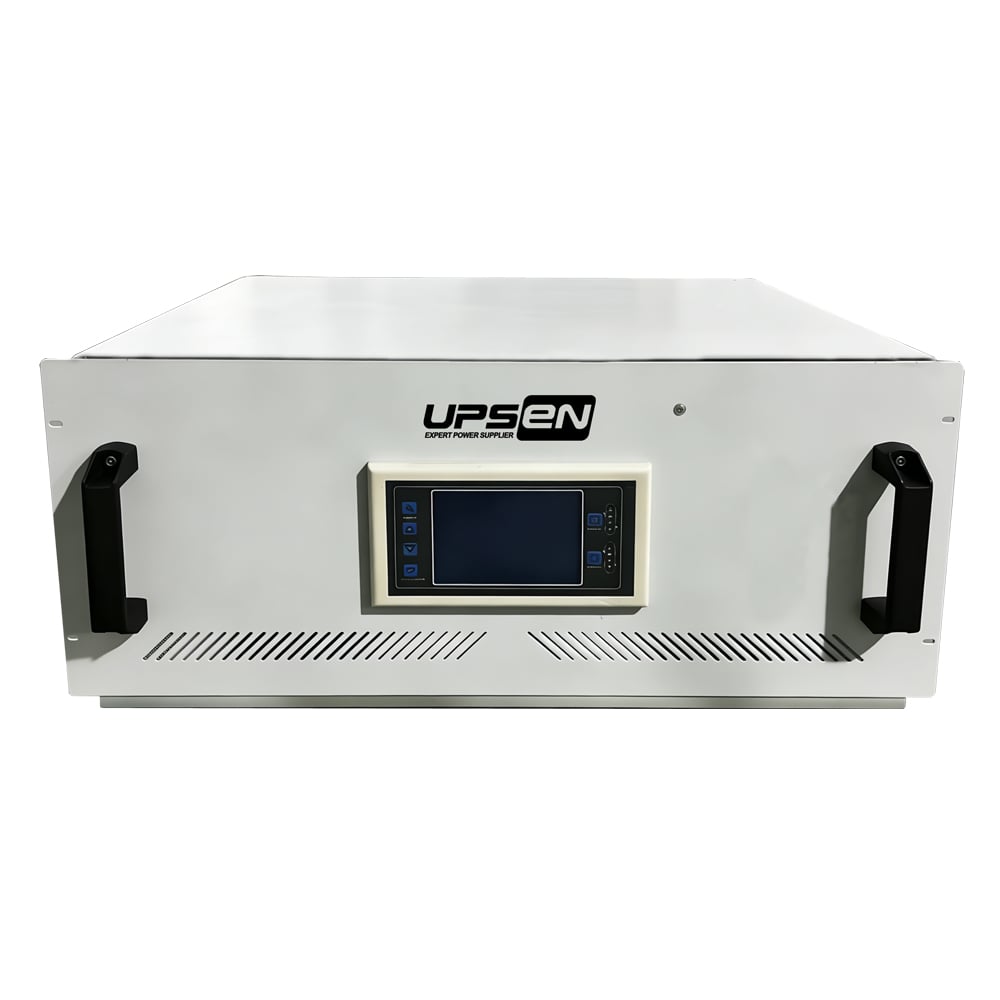
·Optionales Touchscreen-Display
·Einstellbare Ladungsspannung zur Anpassung an unterschiedliche Batterieladeanforderungen
·Ermöglicht netzgekoppelte Solarenergieerzeugung und senkt die Stromkosten
·Kommunikation: Externes WLAN für die Echtzeit-Datenüberwachung
·Unterstützt die BMS-Funktionality für Lithiumbatterien
| Modell | RS-VED 2012 | RS-VED 3024 | RS-VED 3624 | RS-VED 4024 | RS-VED 6248 | RS-VED 11048 | |
| Modell | Nenn-Eingangsspannung | 220 / 230 / 240 VAC | |||||
| Spannungsbereich | 90–280 VAC ±3 V (Normalbetrieb), 170–280 VAC ±3 V (USV-Betrieb) | ||||||
| Frequenz | 50 / 60 Hz (anpassungsfähig) | ||||||
| Ausgang | Batteriewechselrichter | 1600 W | 3000 W | 3600w | 4000W | 6200w | 11000w |
| Photovoltaik-Inverter | 1600 W | 3000 W | 4500W | 5000W | 6500w | 11000w | |
| Spitzenleistung | 3200VA | 6000VA | 7200VA | 8000VA | 12400va | 22000W | |
| Ausgangsspannung | 220 / 230 / 240 VAC ±5 % | ||||||
| Ausgangsfrequenz | 50 / 60 Hz ±0,1 % | ||||||
| Wellenform | Rein sinus-Welle | ||||||
| Umschaltzeit (einstellbar) | Computerausrüstung: 10 ms; Haushaltsgeräte: 20 ms | ||||||
| Überlastkapazität | Batteriebetrieb: 21 s bei 105–150 % Last; 11 s bei 150–200 % Last; 400 ms bei >200 % Last | ||||||
| Netzbetrieb | Ausgangsspannung | Keine Netzanschlussmöglichkeit | 220 / 230 / 240 VAC | ||||
| Netzspannungsbereich | 195–253 VA | ||||||
| Netzfrequenzbereich | 49–51 ±1 Hz / 59–61 ±1 Hz | ||||||
| Ausgangsstrom | 15.7a | 17,4A | 26,9A | 47,8 A | |||
| Leistungsfaktorbereich | >0.99 | ||||||
| (DC/AC)-Wirkungsgrad | 98% | ||||||
| AKKU | Nennspannung | 12VDC | 24VDC | 48VDC | |||
| Konstante Ladespannung (einstellbar) | 14,1 VDC | 28.2Vdc | 56.4vdc | ||||
| Schwebeladespannung (einstellbar) | 13.5VDC | 27Vdc | 54vdc | ||||
| LADGERÄT | Pv-Lademethode | Mppt | Mppt | Mppt | Mppt | Mppt | MPPT*2 |
| Maximale PV-Eingang | 2000W | 3000 W | 5000W | 5000W | 7500W | 2*5500W | |
| Mppt-Verfolgungsbereich | 40–500 VDC | 40–500 VDC | 60~500VDC | 60~500VDC | 60~500VDC | 90~500VDC | |
| Optimaler Vmp-Arbeitsbereich | 300~400 VDC | 300~400 VDC | 300~400 VDC | 300~400 VDC | 300~400 VDC | 300~400 VDC | |
| Maximale pv-Eingangsspannung | 500VDC | 500VDC | 500VDC | 500VDC | 500VDC | 500VDC | |
| MAX PV Eingangsstrom | 13a | 13a | 18a | 18a | 27a | 18a/18a | |
| Maximaler PV-Ladestrom | 100A | 100A | 120A | 120A | 120A | 150A | |
| Maximaler AC-Ladestrom | 60A | 60A | 60A | 60A | 100A | 150A | |
| MAX Ladestrom | 100A | 100A | 120A | 120A | 120A | 150A | |
| Display | LCD | Kann Betriebsmodus/Last/Eingang/Ausgang anzeigen | |||||
| Schnittstelle | RS232 | Baudrate 2400 | |||||
| Erweiterungsslot Kommunikationsinterface | Kommunikationskarte für Lithium-Akku-BMS, WLAN, 2×5-polig / Teilung 2,54 mm | ||||||
| Parallele Schnittstelle | Keine Parallelfunktion | Parallelfunktion | |||||
| Umgebungstemperatur | Betriebliche Umgebungstemperatur | -10°C~50°C | |||||
| Luftfeuchtigkeit der Betriebsumgebung | -15°C~60°C | ||||||
| Orts Höhe | Höhenlage nicht höher als 1000 m; bei weniger als 1000 m verringert sich die Nennleistung, maximal 4000 m | ||||||
| Luftfeuchtigkeit der Betriebsumgebung | 20 % bis 95 %, nicht kondensierend | ||||||
| Geräuschentwicklung | ≤45dB | ||||||
| Abmessung | Geräteabmessungen – L×B×H (mm) | 403*304*114 | 433*330*138 | 601*360*163.5 | |||
| Verpackungsabmessungen – L×B×H (mm) | 480*375*182 | 480*375*182 | 480*375*182 | 480*375*182 | 512*420*207 | 735*473*272 | |
| Nettogewicht (kg) | 6.42 | 6.53 | 7 | 7.5 | 9.38 | 19.2 | |
| Bruttogewicht (kg) | 7.53 | 7.6 | 8.07 | 8.55 | 10.76 | 21.4 | |
| Standards und Zertifizierungen | EN-IEC 60335-1, EN-IEC 60335-2-29, IEC 62109-1 | ||||||
| Hinweis: Die Produktspezifikationen können ohne weitere Benachrichtigung geändert werden. | |||||||
Nutzen Sie Ihre eigene Solarenergie, halten Sie den Netzbetreiber zufrieden und sitzen Sie niemals im Dunkeln
Hier ist die Realität für viele Hausbesitzer mit Solaranlagen: Sie haben viel Geld in diese Anlage investiert, und täglich erzeugt sie über mehrere Stunden hinweg mehr Strom, als Sie verbrauchen können. Ohne einen Hybrid-Wechselrichter wird dieser Überschuss entweder für einen Spottpreis ins öffentliche Netz eingespeist – vorausgesetzt, Ihr Versorgungsunternehmen erlaubt dies überhaupt – oder er geht ungenutzt verloren. Der RS VQD löst dieses Problem, indem er es Ihnen ermöglicht, Ihr Haus tagsüber direkt mit Ihrem eigenen Solarstrom zu versorgen, den überschüssigen Strom in Batterien zu speichern und Ihre wichtigsten Stromkreise auch bei Netzausfall weiterhin mit Strom zu versorgen. Und er bietet etwas, das ihn von vielen Hybrid-Wechselrichtern auf dem Markt unterscheidet: Er stellt sicher, dass niemals Strom unbeabsichtigt in die Versorgungsleitung des Netzbetreibers zurückfließt – es sei denn, Sie möchten dies ausdrücklich.
CT-Rückstau-Schutz: Einspeisung nur bei bewusster Wahl, nicht durch Zufall
Der VQD verfügt über CT-Rückstromeinschutz. Ein Stromwandler wird am Hauptstromanschluss befestigt, und der Wechselrichter überwacht kontinuierlich den Stromfluss. Sobald er erkennt, dass Strom rückwärts ins Netz eingespeist werden könnte, reduziert er die Ausgangsleistung sofort. Dies ist keine softwarebasierte Schätzung – es handelt sich um eine Echtzeit-Sicherheitsfunktion auf Hardware-Ebene, die sicherstellt, dass Sie stets den Vorschriften des Netzbetreibers entsprechen, ohne dass Sie eine Einspeisevereinbarung unterzeichnen oder Ihren Zähler austauschen müssen. Sie profitieren vollständig von der Eigenverbrauchsoptimierung durch Solarenergie – ohne regulatorische Komplikationen. Für Haushalte, bei denen ein Einspeisezähler nicht verfügbar ist oder bei denen die Einspeisevergütung so gering ist, dass der damit verbundene Verwaltungsaufwand nicht lohnt, stellt die Null-Einspeisung eine Funktion dar – und keine Einschränkung.
Wirkleistung – keine reinen Spezifikationswerte
Der Leistungsfaktor beträgt 1,0. Ein 11-kW-Gerät liefert volle 11 Kilowatt Wirkleistung. Damit passt es optimal zu modernen Haushaltsgeräten und Elektronikkomponenten, ohne ungenutzte Kapazität zu hinterlassen. Sie müssen Ihre Leistung nicht aufgrund eines veralteten Leistungsfaktors von 0,8 oder 0,9 herabsetzen – Sie nutzen jeden einzelnen bezahlten Watt.
Lithium-Akku-Automatik-Neustart: Keine manuellen Weckaufrufe
Lithium-Akkus bieten zahlreiche Vorteile, bergen jedoch auch eine Eigenheit: Nach einer Tiefentladung schaltet das Batteriemanagementsystem (BMS) den Akku häufig vollständig ab, um die Zellen zu schützen. Das Wiederinbetriebnehmen erfordert in der Regel ein spezielles Ladegerät, einen Tastendruck oder einen Technikerbesuch. Der VQD übernimmt dies automatisch. Er kommuniziert standardmäßig mit dem Lithium-BMS und kann bei Wiedereinsetzen der Netzspannung oder bei Wiederaufnahme der Solarenergieerzeugung automatisch eine Neustartsequenz auslösen. Kein manueller Reset, kein Serviceeinsatz, kein Heimkommen vor ein dunkles Haus – bei einem voll funktionsfähigen Solarstromsystem auf dem Dach.
Ladespannung entsprechend Ihrer Batteriebank
Nicht jede Batterie benötigt dieselbe Ladespannung. Über das LCD-Menü können Sie die Ladespannung an geflutete Blei-Säure-, versiegelte AGM-, Gel- oder Lithium-Eisenphosphat-(LiFePO4)-Batterien anpassen. Wenn Ihr Batteriehersteller eine bestimmte Absorptions- oder Floatspannung vorgibt, stellen Sie diese einfach ein. Der Wechselrichter passt sich der Batteriechemie an – nicht umgekehrt.
Touchscreen-Option für eine übersichtlichere Bedienoberfläche
Die Standard-Bedienoberfläche ist ein klares LCD-Display, das Ihnen die wesentlichen Daten anzeigt: PV-Erzeugung, Lastverbrauch, Batteriestatus und Netzstatus. Falls Sie jedoch eine modernere Lösung bevorzugen, steht optional ein Touchscreen-Panel zur Verfügung. Es ist größer, farbig und macht das Navigieren durch die Einstellungen sowie die Darstellung des Energieflusses deutlich intuitiver. Nicht zwingend erforderlich, aber durchaus zu erwägen, wenn der Wechselrichter an einer sichtbaren Stelle wie einem Technikraum oder einem Flur installiert wird.
Wi -Fi-Monitoring ohne Kabelchaos
Eine externe Wi -Das Fi-Modul ist im Lieferumfang enthalten; sobald es angeschlossen ist, können Sie alle Daten von Ihrem Smartphone aus überwachen: wie viel Solarenergie Sie erzeugen, wie viel Ihr Haus verbraucht, den Ladezustand der Batterie und ob das Stromnetz verfügbar ist. Die App bietet Ihnen ein übersichtliches Dashboard, das es Ihnen leicht macht, Ihre Energieströme in Echtzeit zu verfolgen. Für alle, die ihr System im Blick behalten möchten, ohne jedes Mal in die Garage gehen oder auf einem winzigen Bildschirm scrollen zu müssen, ist diese Funktion der entscheidende Vorteil, der die tägliche Nutzung tatsächlich erleichtert.
Die Hybrid-Zusage: Einsparungen im netzgekoppelten Betrieb, Notstromversorgung im Inselbetrieb
Während des Normalbetriebs arbeitet der VQD im netzgekoppelten Modus. Die Solarenergie versorgt Ihre Verbraucher, und jeglicher Überschuss lädt die Batterie auf. Sobald die Batterie vollständig geladen ist, verhindert der CT-Rückwärtsstromschutz, dass Energie ins Netz zurückgespeist wird. Dadurch kompensieren Sie Ihren Stromverbrauch, senken Ihre Stromrechnung und bauen gleichzeitig eine Energiereserve auf. Bei einem Netzausfall – etwa durch Sturm, Blackout oder geplante Abschaltungen – schaltet der Wechselrichter in den Notstrommodus um: Er trennt sich vom Netz, bezieht Energie aus Batterie und Solaranlage und versorgt weiterhin Ihre festgelegten Notstromkreise. Der Übergang erfolgt nahtlos – Computer und Router starten nicht neu.
Einsatzbereich des RS VQD
Dies ist ein Hybrid-Wechselrichter für Hausbesitzer mit Photovoltaikanlage (oder für solche, die kurz vor der Installation einer solchen Anlage stehen) und die den maximalen Nutzen aus ihrem System herausholen möchten:
`Häuser mit Zeitstaffel-Tarifen, bei denen der Eigenverbrauch während der Spitzenlastzeiten echte Kostenersparnisse bringt
`Häuser in Gebieten mit häufigen Stromausfällen, bei denen ein batteriegestützter Notstromkreis zwingend erforderlich ist
`Eigenschaften, bei denen der Export ins Netz nicht erlaubt ist oder sich aufgrund des Tarifs nicht lohnt
`Familien, die eine telefonische Übersicht über ihre Energieerzeugung und -verbrauch wünschen
`Jeder, der Lithiumbatterien mit Solarenergie kombiniert und keine manuelle Neustartprozedur nach einer Tiefentladung durchführen möchte
Die RS VQD-Serie Hybrid-Solarwechselrichter löst nicht jedes Energieproblem, aber sie bewältigt die großen Herausforderungen: Sie ermöglicht es Ihnen, Ihren eigenen Strom nach Ihren eigenen Bedingungen zu nutzen, hält die Schnittstelle zum Versorgungsnetz sauber, weckt Lithiumbatterien problemlos wieder auf und stellt Notstromversorgung bereit, wenn das Netz ausfällt. Für eine moderne häusliche Solaranlage ist dies die zentrale Aufgabenstellung.

1409–1410, Tongfang Center, Kreuzung Zhongxin Rd. und Haoxiang Rd., Xinqiao St., Bezirk Bao'an, Shenzhen, China.
Copyright © Shenzhen UPSEN Electronic CO., LTD. Alle Rechte vorbehalten Datenschutzrichtlinie
 EN
EN