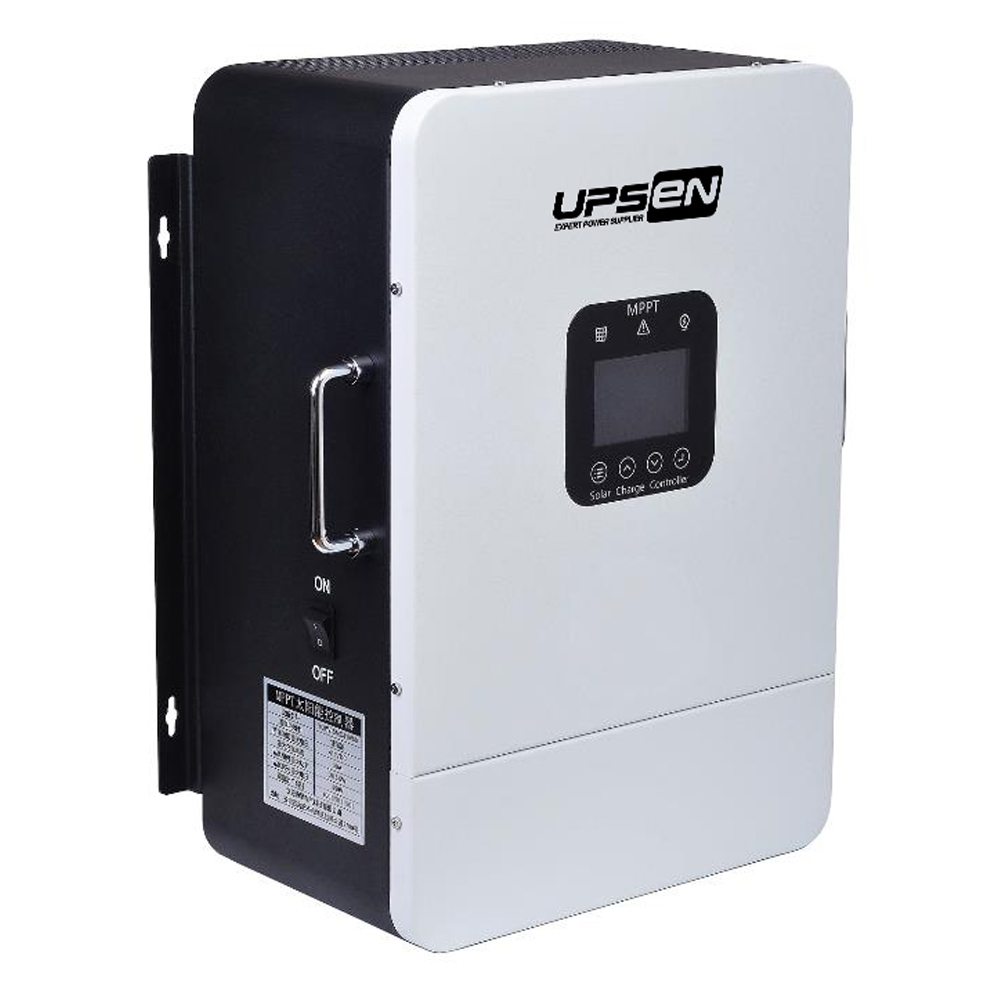
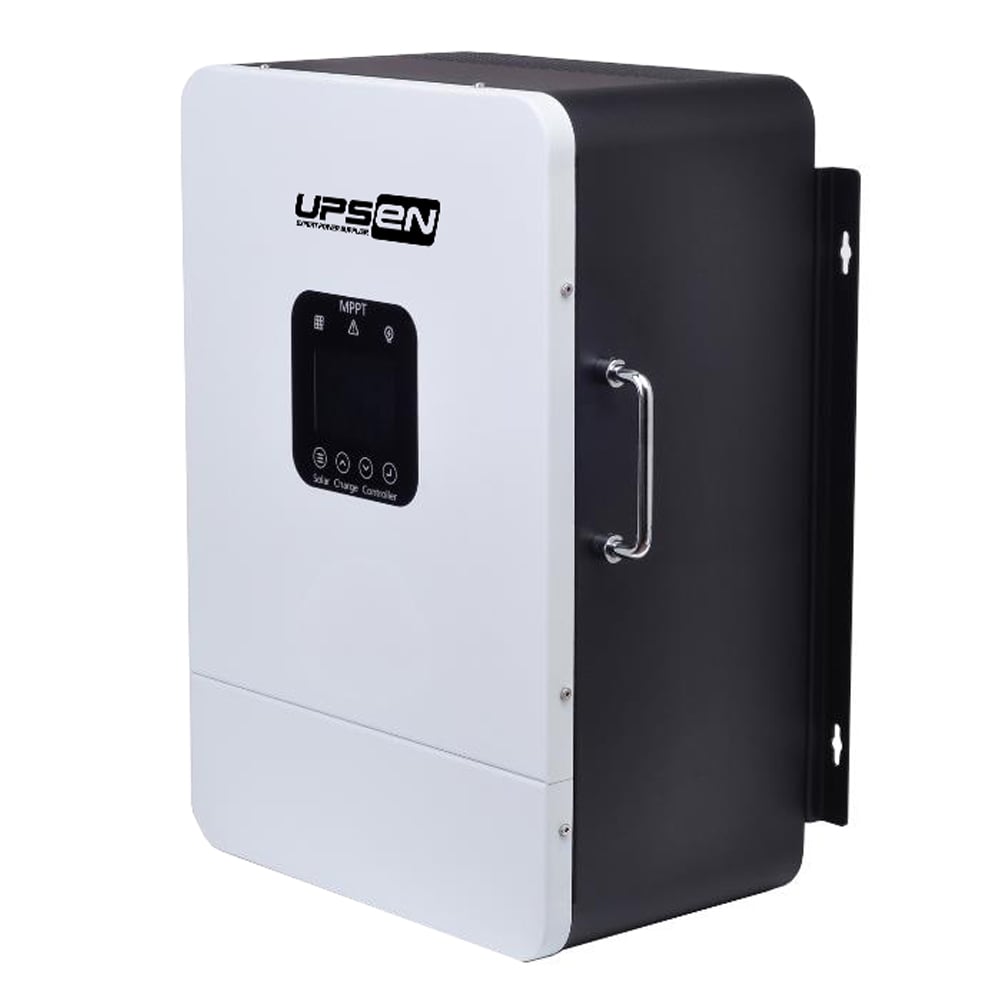
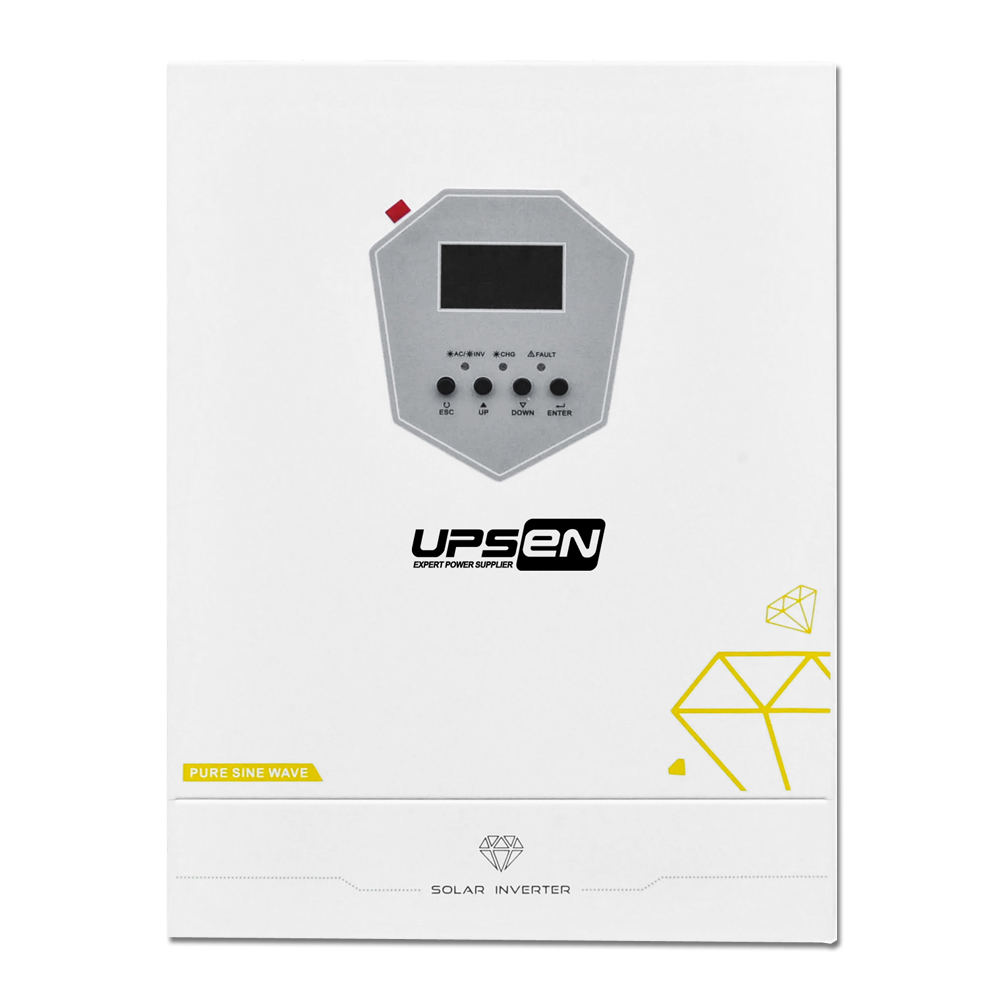
· MPPT Technology, >99.5% efficient
· Configure high-performance IGBT power modules
· Employing a four-stage charging mode (buck charging, equalization charging, float charging, and termination charging)
· The solar controller uses high performance 32-bit chips with excellent EMC design
· The controller also has temperature compensation function and RTC real time clock function
· Standard Modbus protocol for RS-485 communication
· User can control the charging of controller through RS485 or dry contact
| Model | MS 100A - 192VDC | MS 100A - 384VDC |
|---|---|---|
| Rated system voltage | 192V | 384V |
| Max. charging current | 100A | 100A |
| Max. input solar power | 19.2KW | 38.4KW |
| Max. input voltage | 400V | 800V |
| MPPT Starting voltage | 1.1 times of battery real voltage | 1.1 times of battery real voltage |
| Max. tracking efficiency | >99% | >99% |
| Max. conversion efficiency | >98% | >98% |
| Over voltage disconnect | 240.0V | 480.0V |
| Over voltage reconnect / End charging | 235.2V | 470.4V |
| Equalize charging voltage | 225.6V | 451.2V |
| Float charging voltage | 220.8V | 441.6V |
| Recovery to fast charging | 211.2V | 422.4V |
| Under voltage reconnect | 201.6V | 403.2V |
| Under voltage disconnect | 168.0V | 336.0V |
| Equalize charging time | 120 minutes | 120 minutes |
| Constant-current charging | ≤100A | ≤100A |
| These parameters can be adjusted according to demands of different type battery | ||
| Display | Colorful LCD screen + Touching keys | |
| Display language | English | |
| Terminal type | TC series barrier terminal | |
| Elevation | ≤2000M, should reduce power if the elevation high than 3000M | |
| Storage temperature | -25°C ~ +55°C | |
| Cooling method | Intelligent fan cooling | |
| IP (Ingress protection) | IP32 | |
| Communication | RS485 With standard MODBUS RTU Protocol | |
| Dimension | 500*384*228mm | |
| Net weight | 27KG | |
| *Product Specifications are Subject to Change Without Notice. | ||
The High-Voltage Brain for Big Solar Arrays
Walk through the solar aisle of any distributor and the shelves are packed with charge controllers for 12, 24, and 48 volt systems. That's fine for a cabin or a van. But when you're designing a large off-grid home, a remote telecom tower, or a solar water pumping station that's a kilometre from the panels, you're not running a 48-volt battery bank. You're running 192 or 384 volts DC. You do that to keep your currents low, your copper cable reasonably thin, and your power losses to a minimum. The MS Series MPPT Solar Controller is built specifically for those high-voltage, high-power sites. It's a 100-amp workhorse that talks Modbus, uses industrial IGBTs, and gets your panels to deliver nearly every watt they're capable of.
Why 192 Volts and 384 Volts Make Sense
When you double the battery voltage, you cut the current in half for the same power. That means you spend less on thick, expensive copper cable to connect your array to the controller and the controller to the batteries. It also means lower resistive losses, which can eat up several percent of your daily harvest on a long cable run. For a telecom site on a hilltop with the panels down by the access road, or a farm with panels on a barn and batteries in a pump shed a hundred metres away, running a 384V DC bus instead of 48V can save you a small fortune in cable and trenching. The MS Series comes in two voltage versions—192V nominal or 384V nominal—so you pick the one that matches your battery string. It's not a compromise controller trying to cover everything from 12V up; it's purpose-built for higher-voltage DC systems, with the insulation, switching speeds, and component ratings to match.
IGBT Power Modules: Industrial Muscle, Not Toy MOSFETs
Open up a typical 48V charge controller and you'll find a row of MOSFETs doing the switching. That's fine at lower voltages where the current is the main challenge. Push that same design to 384 volts and you start asking those MOSFETs to do things they weren't designed for—blocking high voltages, handling the thermal stress when a big array is cranking at midday. The MS Series takes a different approach. It uses high-performance IGBT (Insulated Gate Bipolar Transistor) power modules. IGBTs are the standard in motor drives and industrial inverters because they handle high voltage and high current simultaneously with much better thermal stability and reliability. In a charge controller that's going to sit in a hot equipment room and run at full tilt for hours every day, that choice means the power stage doesn't degrade gracefully; it just keeps working. You get industrial-grade hardware, not consumer electronics scaled up.
MPPT Efficiency Above 99.5%: Squeezing Every Photon
The whole point of an MPPT controller is to extract the maximum power from your solar array, even as the sun moves, clouds drift across, and panel temperatures soar. The MS Series does this with an MPPT tracking efficiency over 99.5%. In the real world, that means your 10kW array actually delivers close to 10kW into the batteries during peak sun, not 9.5kW. On a large system, the difference between a 99.5% MPPT and a 96% one can be hundreds of kilowatt-hours a year—energy you paid for with your panels and would otherwise leave on the table.
Four-Stage Charging That Extends Battery Life
The MS Series charges in four distinct stages: bulk (constant current), equalization, float, and termination. This is the correct profile for large flooded lead-acid banks, which need a controlled overcharge periodically to stir the electrolyte and prevent stratification. The bulk stage slams as much current as the array can provide until the voltage rises to the absorption setpoint. Equalization then holds a higher voltage for a programmed time to balance the cells. Float drops the voltage to a maintenance level that offsets self-discharge without gassing. Termination completes the cycle when the battery is fully saturated. Every one of these setpoints is adjustable, so if you're using sealed AGM, gel, or even a lithium bank with its own BMS, you can dial the profile to match. The controller doesn't assume you're running one particular battery chemistry.
Clean Signal, No Electrical Tantrums
Inside, a 32-bit processor runs the show, and the electromagnetic compatibility (EMC) design has been taken seriously. The MS Series resists the kind of high-frequency noise that big inverters and generators can dump onto shared DC lines. It also doesn't generate its own interference that could scramble sensitive telecom gear or radio equipment. If you're installing this at a site with microwave links, SCADA radios, or instrumentation, that clean operation isn't a luxury; it's a requirement.
Temperature Compensation and a Real-Time Clock
Battery chemistry is temperature-sensitive. The MS Series includes a temperature sensor input that adjusts charging voltage based on battery temperature, so you don't cook your cells in summer or undercharge them in winter. It also has a built-in real-time clock (RTC) that enables time-based logging and scheduling. You can review daily production data, see peak power times, and even schedule equalization charges for a specific day of the week. That's useful when you want to align maintenance charging with a generator run or a time when loads are low.
Modbus and Remote Control: Integration Without the Headaches
The MS Series speaks Modbus protocol over RS-485. That's the universal language of industrial control, building management systems, and SCADA networks. You can read real-time data—PV voltage and current, battery voltage and charge current, temperature, daily energy harvest—from a central controller or a remote terminal. Beyond monitoring, you can control charging via RS-485 commands or via simple dry contact signals. Want to remotely turn off charging during generator start-up, or trigger an equalization cycle from a control room? The MS Series lets you do it without any proprietary software or cloud dependency.
Where the MS Series Belongs
This controller is for the heavy lifting, not the weekend cabin:
`Large off-grid homes and ranches running 192V or 384V battery banks and big arrays
`Remote telecom towers and microwave relay stations where cable runs are long and voltage drop is the enemy
`Agricultural solar pumping systems with panels located far from the pump and battery shed
`Community microgrids where a central high-voltage battery bank distributes power to multiple inverters
`Any installation that demands industrial IGBT reliability, granular charge control, and Modbus integration
If you're running a 48V system, there are plenty of smaller controllers that will do the job for less. But when your battery voltage climbs into the hundreds and your array is measured in kilowatts rather than watts, the MS Series MPPT Solar Controller is the right tool. It converts high-voltage solar power with near-perfect efficiency, manages your battery bank with a proper four-stage algorithm, and talks to your monitoring system in a language it already understands. No adaptors, no hacks, no crossed fingers.

1409-1410, Tongfang Center, the intersection of Zhongxin Rd. and Haoxiang Rd., Xinqiao St., Bao'an Dist., Shenzhen, China.
Copyright © Shenzhen UPSEN Electronic CO., LTD. All Rights Reserved Privacy Policy
 EN
EN