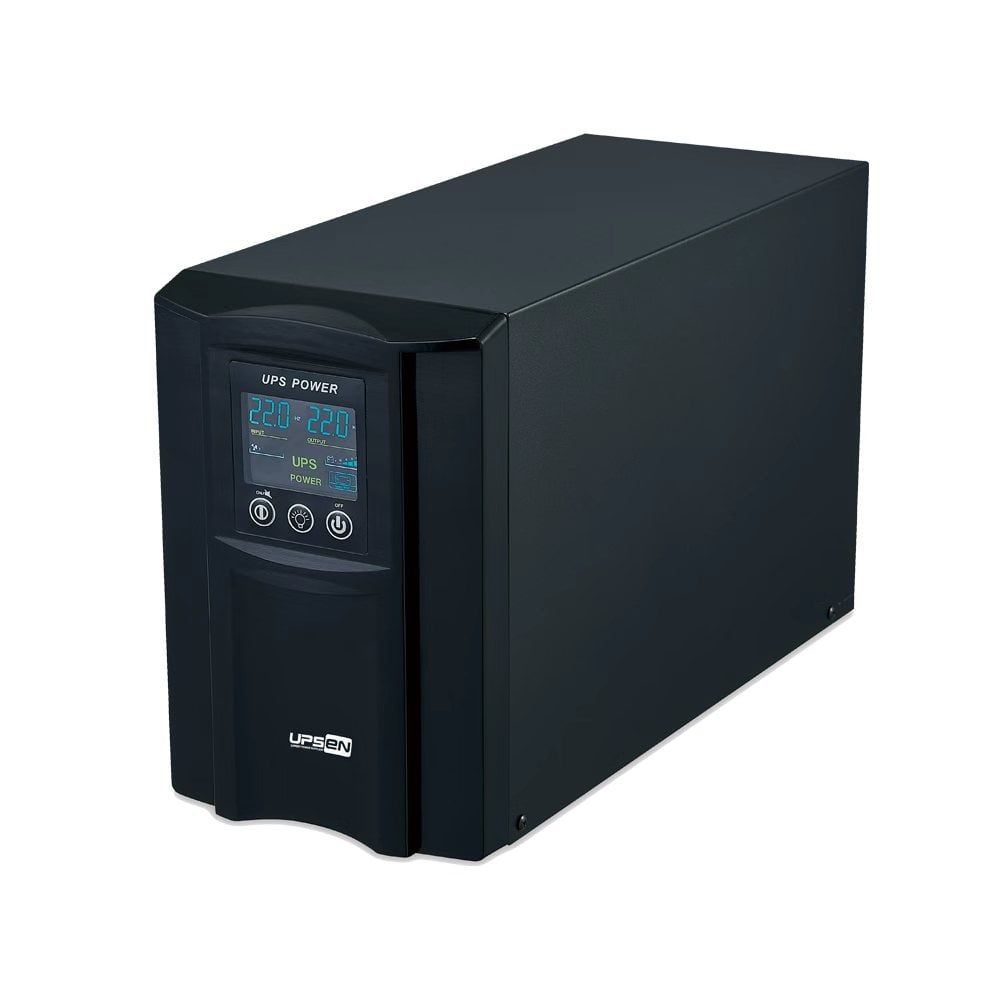
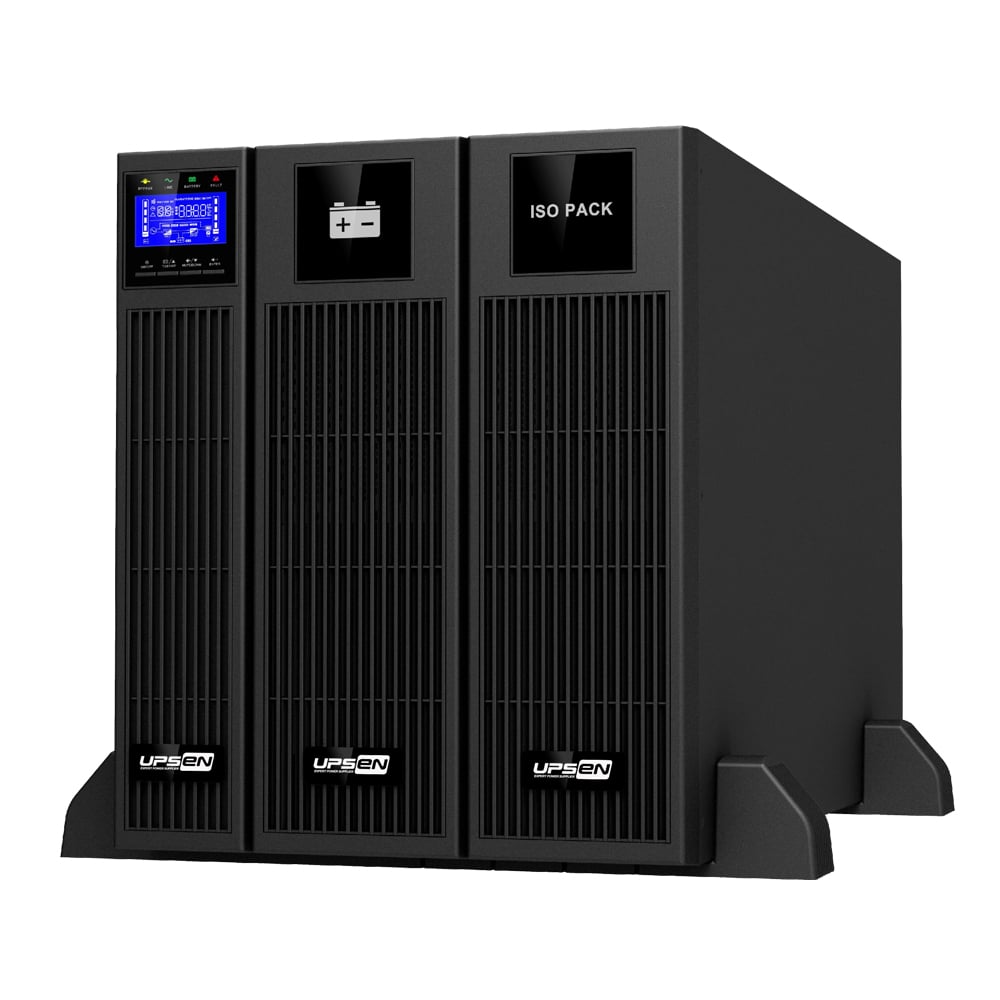
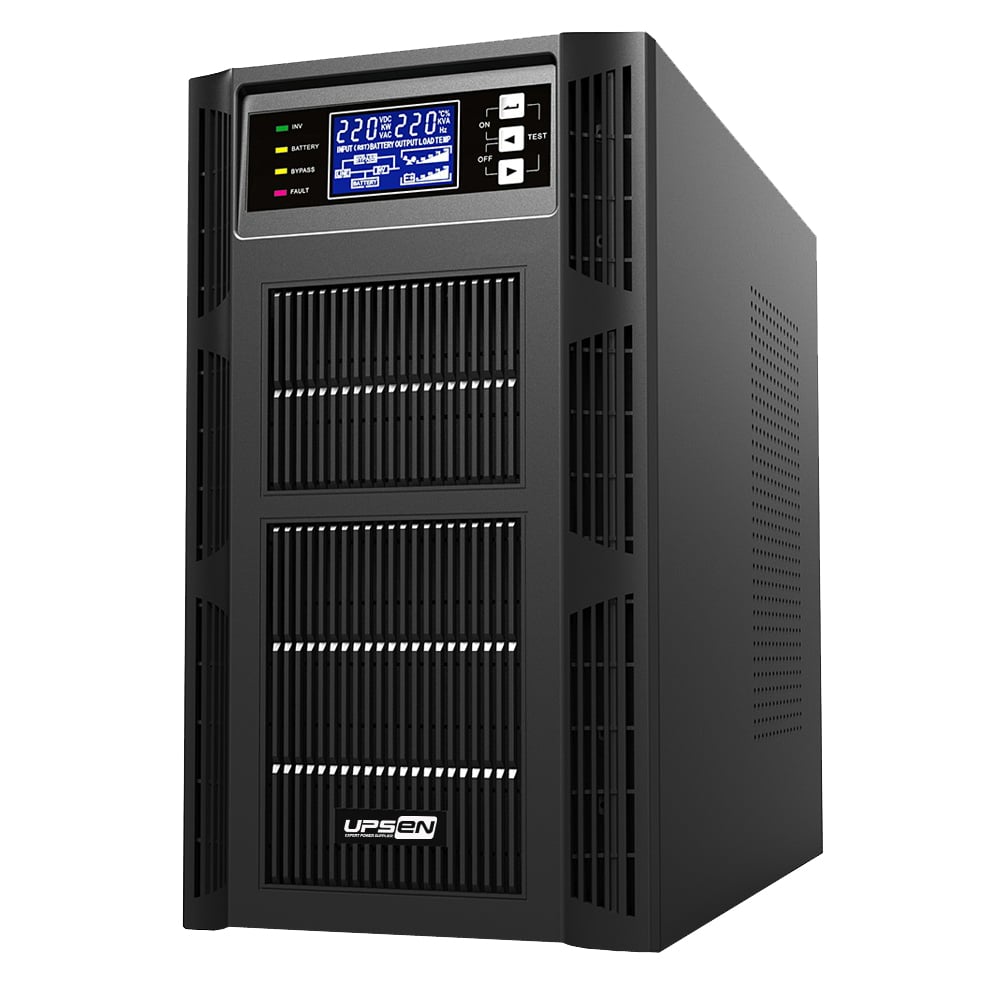
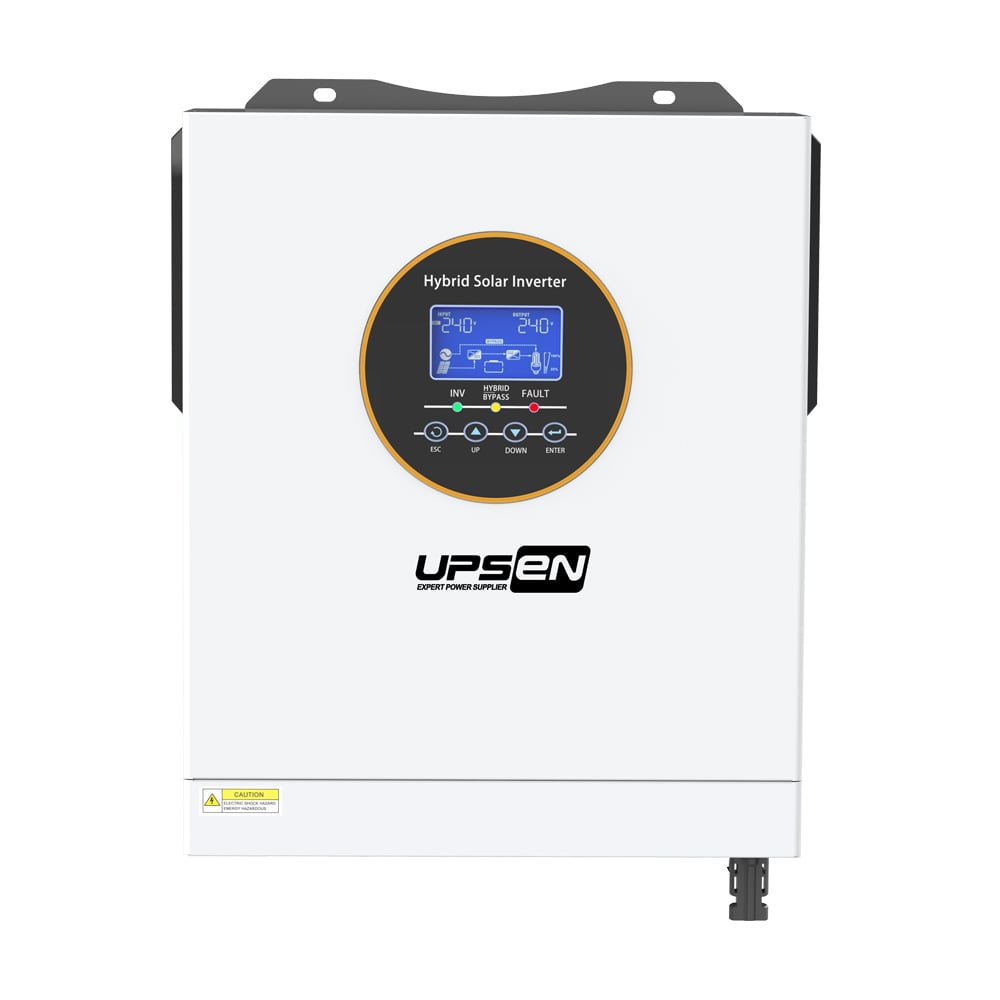
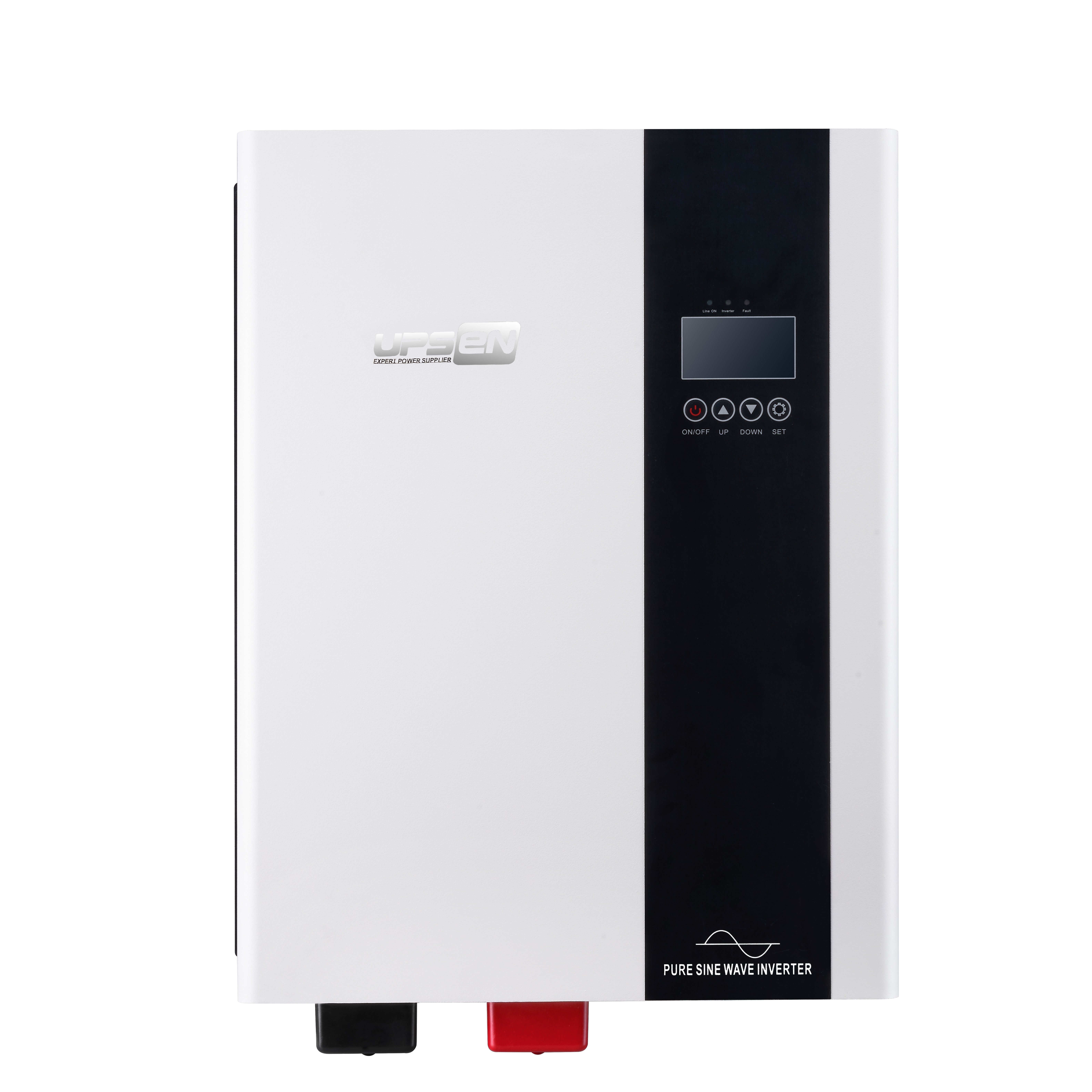
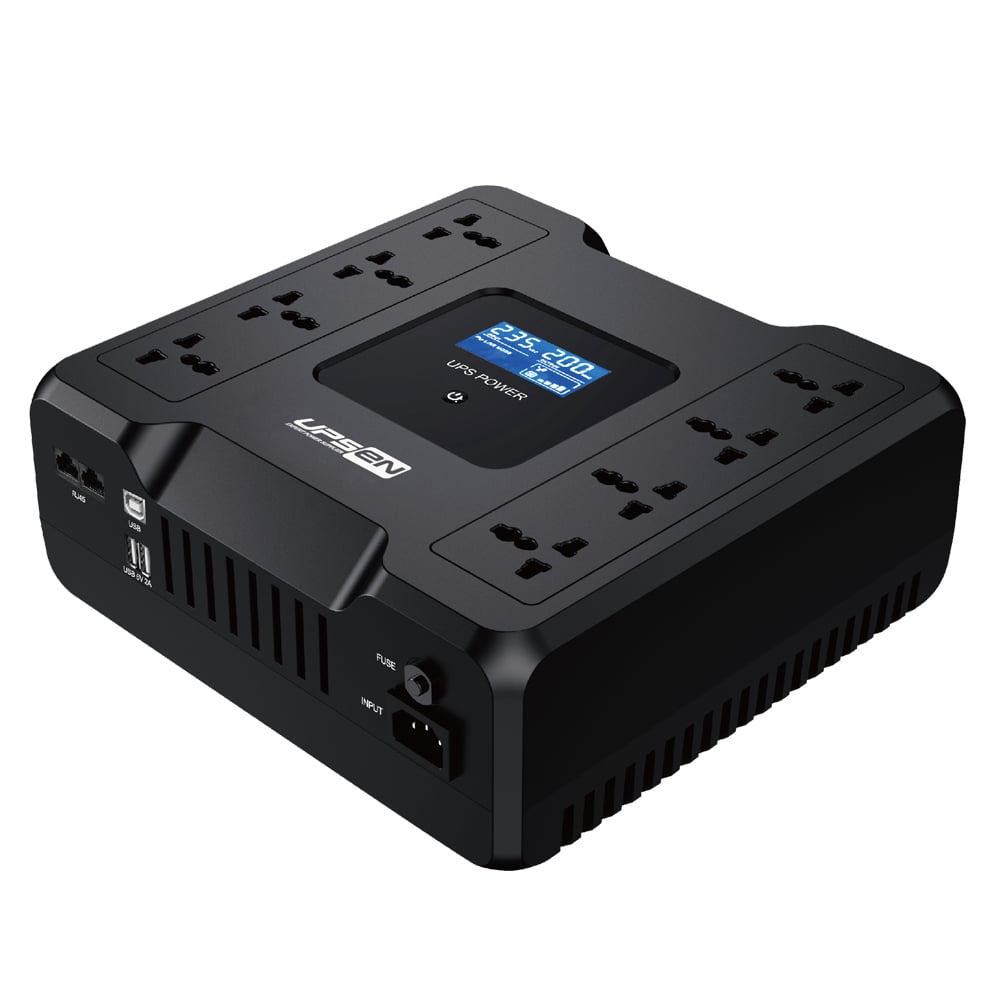
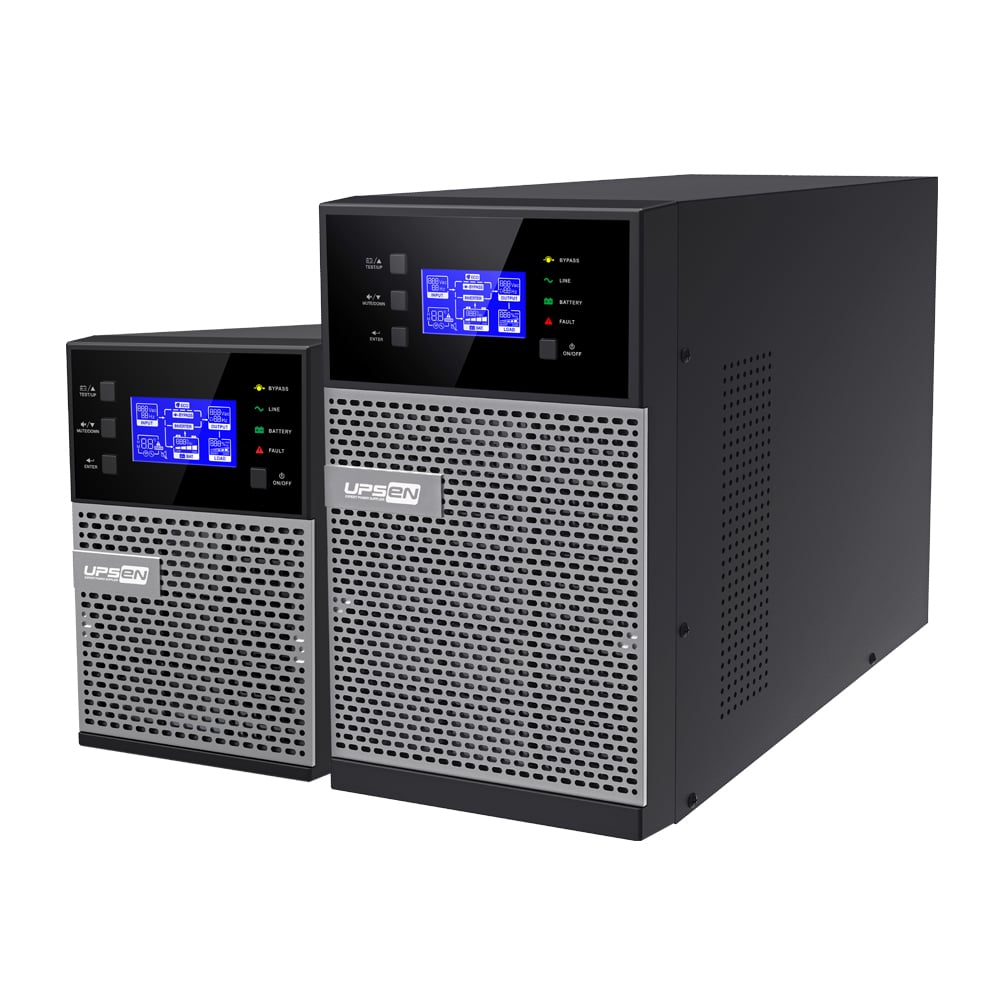
· Pure sine wave output
· DSP digital control
· Boost and buck AVR for voltage stabilization
· Cold start function
· Intelligent battery management
· Short circuit and overload protection
· Off-mode charging
· Offering LED and LCD panels for selection
· Optional USB/ RS232/RJ45/SNMP communication port
| MODEL | AP1K | AP1KL | AP2K | AP2KL | AP3K | AP3KL |
| Capacity | 1000VA / 700W | 2000VA / 1400W | 3000VA / 2100W | |||
| INPUT | ||||||
| Voltage Range | 145VAC ± 5% ~ 275VAC ± 5% | |||||
| Frequency Range | 45Hz ~ 65Hz | |||||
| Phase | Single-phase grounding type | |||||
| Power Factor | ≥0.99 @ 220 - 230VAC (Input Voltage) | |||||
| OUTPUT | ||||||
| Output Voltage | 220VAC | |||||
| Frequency Range (Synchronizing Range) |
If output is 50Hz and input 47~53Hz, then output is consistent with AC power; If output is 60Hz and input 57~63Hz, then output is consistent with AC power; |
|||||
| Frequency Range (Battery Mode) |
50Hz ± 0.25Hz or 60Hz ± 0.3Hz | |||||
| Overload | 100% - 110%: Only alarm 110%-130%: The UPS system is automatically turned off after 30 seconds More than 130%: The UPS system is turned off immediately |
|||||
| Current Peak Value Ratio | 3 : 1 | |||||
| Harmonic Distortion | ≤ 3% THD (Linear Load) ≤ 6% THD (Nonlinear Load) | |||||
| Output Waveform | Pure Sine Wave | |||||
| EFFICIENCY | ||||||
| AC Power Mode | 85% | 88% | ||||
| Battery Mode | 83% | 85% | ||||
| BATTERY | ||||||
| Battery Voltage of Long Run Time Model | 36VDC | 72VDC | 96VDC | |||
| Battery Voltage of Standard Model | 24VDC | 48VDC | 72VDC | |||
| Charge Time | Charge for four hours to 90% capacity (Internal Battery) | |||||
| Charge Current | Maximum 1A (Internal Battery) 1A / 2A (Externall Battery) | |||||
| Charge Voltage | 27.3V±1% / 41.0V±1% | 54.7V±1% / 82.1V±2% | 82.1V±1% / 109.4V±3% | |||
| APPEARANCE | ||||||
| Size:D*W*H(mm) | 360*147*220 | 440*192*340 | ||||
| Net weight(kg) | 11.9 | 8.5 | 22 | 16 | 27.9 | 18.2 |
| ENVIRONMENT CONDITIONS | ||||||
| Working Humidity | 20 - 95% RH @ 0 - 40℃ (No moisture condensation) | |||||
| Noise | Less than 45dBA @ 1m | |||||
| MANAGEMENT | ||||||
| Intelligent RS-232 or USB (Optional) | support Windows 2000 / 2003 / XP / Vista / 2008 / 7, Linux, Umix and MAC | |||||
| *Product Specifications are Subject to Change Without Notice. | ||||||
When Your UPS Needs to Run More Than Just Computers
Most UPS units in the 1kVA to 3kVA range share a secret they don't advertise very loudly: they output a simulated sine wave. For a desktop PC or a network switch, that's perfectly fine. Switch-mode power supplies are forgiving. They don't really care what the waveform looks like as long as the voltage is roughly right.
But the moment you plug in something with a motor, a compressor, or a transformer, the story changes. A microwave oven hums strangely and runs at half power. A fridge compressor struggles to start. A pedestal fan buzzes like an angry hornet. Some appliances won't turn on at all. Others will, but they'll run hotter, louder, and probably not for as long as they should.
The AP Series exists because we got tired of explaining to people that their UPS couldn't actually back up the things they most wanted to keep running during an outage—like the fridge full of food, the fan keeping the room bearable, or the TV keeping the family entertained while the storm passes.
It outputs a true pure sine wave. That is the headline, and it's what separates this unit from ninety percent of the UPS products in its size class.
Why Pure Sine Wave Actually Matters
Without getting too deep into electrical engineering: utility power from the wall is a smooth, rolling sine wave. Most electronics convert that to DC internally, so they don't care if you feed them a choppy, stepped approximation. But anything that relies on an AC motor, a compressor pump, or a transformer depends on that smooth waveform to operate efficiently and quietly.
Feed a simulated sine wave into a refrigerator compressor, and you're asking it to do its job with the equivalent of sand in the gears. It might work for a while. It might trip its thermal overload. It might simply refuse to start. None of those outcomes help you when the grid is down.
The AP Series produces a clean, utility-grade sine wave. Fans spin at the right speed. Microwaves heat at full power. Refrigerators run without complaint. And sensitive electronics—servers, medical devices, audio equipment—don't get the high-frequency noise that a simulated sine wave can introduce.
So yes, it still protects your computers. But it also handles everything else in the room.
DSP Control: Brains Behind the Smooth Output
Producing a clean sine wave from a battery takes more than just a good inverter. The AP Series runs on DSP digital control—a digital signal processor that monitors and adjusts the output in real time, thousands of times per second.
What you get from that is stability. The voltage stays locked in no matter how erratic the battery discharge curve gets. The frequency doesn't wander. And when the load changes suddenly—like when a fridge compressor kicks on—the DSP compensates fast enough that nothing downstream even notices.
It's the kind of control that used to be reserved for much more expensive online double-conversion systems. In a line interactive unit, it's still fairly rare.
AVR Does the Day-to-Day Heavy Lifting
Pure sine wave matters when you're on battery. But most power problems aren't full blackouts. They're sags, swells, and brownouts. That's where the Automatic Voltage Regulation (AVR) earns its keep.
If the incoming voltage drops—say, from 220V down to 170V—the AVR boosts it back up. If it climbs too high, the AVR bucks it down. All of this happens without touching the battery. Your equipment runs on regulated power, and the battery stays fully charged for when it's actually needed.
This is especially important in areas where the grid voltage tends to wander. A UPS without AVR in those conditions will cycle its battery constantly, wearing it out years before it should. The AP Series doesn't do that.
Battery Care That Extends Lifespan
Speaking of battery life, the AP Series includes intelligent battery management that goes beyond simple trickle charging. It monitors battery condition, adjusts the charge rate accordingly, and prevents both overcharging and deep discharge.
Overcharging is a silent battery killer. It generates heat, dries out cells, and shortens service life. Deep discharge—running the battery completely flat—is just as bad, especially for lead-acid chemistry. The AP Series shuts itself down before the battery gets to that point, which means you get more years out of the pack before replacement.
Practical Features You'll Actually Use
Beyond the waveform and the regulation, the AP Series packs the kind of features that make daily use less annoying:
`Cold start: Power it up from battery even when there's no grid. Need to charge a phone or run a radio during an outage? It starts without wall power.
`Off-mode charging: Plug it in, leave it switched off, and the battery still charges. Useful for spares or staged equipment.
`Short circuit and overload protection: If you accidentally overload the unit or something shorts downstream, it shuts down safely rather than cooking itself. Standard on the AP Series, but worth mentioning because not every unit in this price range includes both.
`Display options: Choose between a simple LED panel for at-a-glance status or an LCD screen that gives you voltage, load, and battery information. Your call.
`Communication ports: USB and RS232 come standard for local monitoring and graceful shutdown. RJ45 provides network surge protection. And there's an SNMP slot if you want full network management—remote monitoring, email alerts, the works.
What You Can Actually Plug Into This Thing
Most UPS product pages list "computers, routers, POS systems" and call it a day. The AP Series earns its keep with a much longer and more interesting list:
`TVs and home entertainment systems: No waveform noise in the audio. No screen flicker.
`Fans, pedestal and ceiling: Run at normal speed, no motor buzz.
`Microwave ovens: Heat food at full rated power, not half.
`Refrigerators and freezers: Compressors start and run as if on grid power.
`Air conditioners (within the unit's power rating): Some small window units or split systems are in range.
`Washing machines: Electronics and motor drive both happy.
`Electric tools: Drills, saws, shop gear—runs without that angry growl.
`Servers and workstations: Yes, it covers the IT side too.
The point is, this is a UPS that doesn't force you to segregate your loads into "things that can handle stepped sine" and "things that can't." It powers whatever you need to power.
Where It Fits
The AP Series spans 1kVA to 3kVA, which covers a lot of ground. At the lower end, you can back up a home office, a media center, and maybe a fridge. At the upper end, you can keep a small server room, a workshop, or a retail store's critical systems running through extended outages.
It's particularly suited for locations where the grid is unreliable and the outage might last more than a few minutes. That's when the pure sine wave really proves its worth—not in the first 30 seconds of backup, but three hours in, when the fridge is still cold, the fan is still spinning, and nobody's stressed about the food spoiling.
The Straightforward Choice
We could wrap this up with some grand statement about "power resilience in the modern age," but that's not what the AP Series is about. It's about solving a specific, practical problem: most affordable UPS units can't run appliances properly, and the ones that can usually cost a fortune. The AP Series bridges that gap.
If you need clean, utility-grade pure sine wave output from a line interactive UPS that doesn't break the bank, this is it. It runs your computers, your fridge, your tools, and your TV. It doesn't buzz, it doesn't flicker, and it doesn't make you choose between protecting your data and keeping the milk cold.

1409-1410, Tongfang Center, the intersection of Zhongxin Rd. and Haoxiang Rd., Xinqiao St., Bao'an Dist., Shenzhen, China.
Copyright © Shenzhen UPSEN Electronic CO., LTD. All Rights Reserved Privacy Policy
 EN
EN