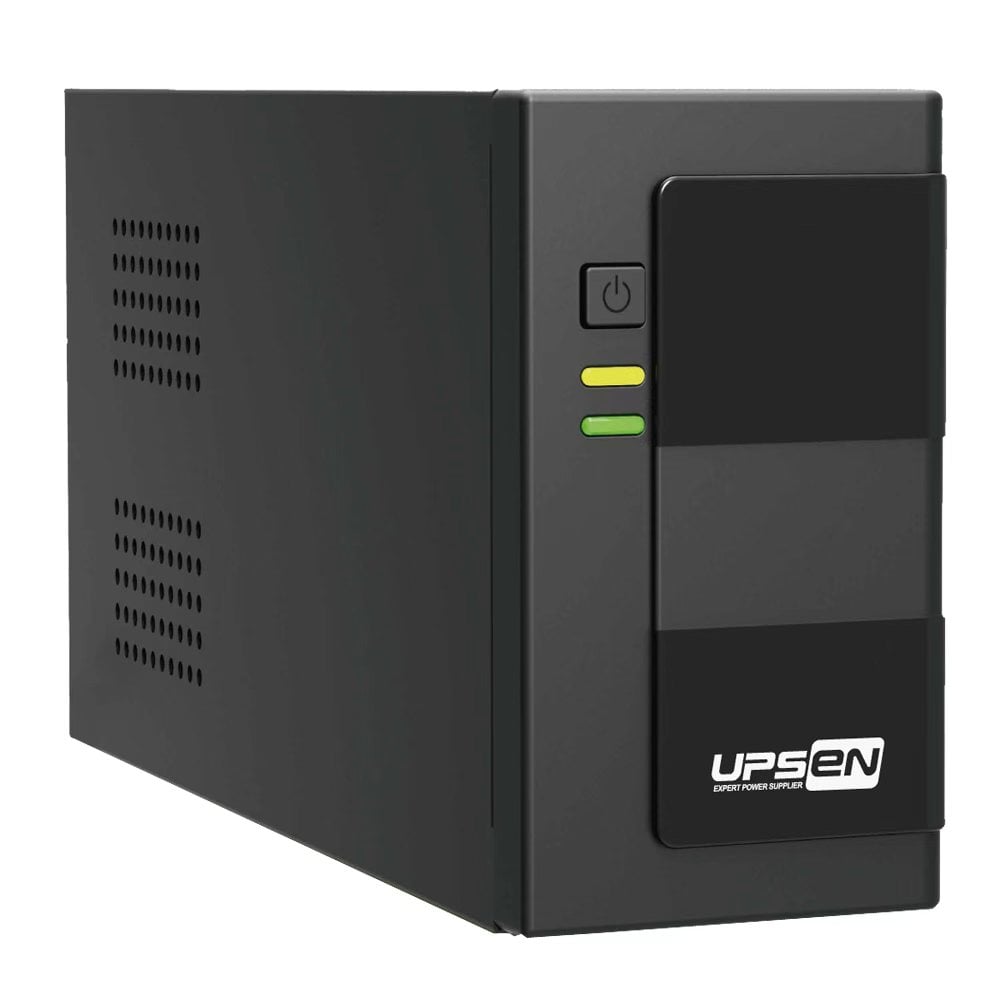
·Zero Transfer Time
True Double Conversion Online UPS,provide most comprehensive protect mission critical equipment from wide range power quality issues
·DSP Digital Control Based
Advance DSP base digital control bring high performance of high input Power factor, low distortion, supply the load with perfect sine wave AC power supply
·Li-ion Battery Powered
Provide up to 3x backup time in 50%dimension, comparing with regular Lead-acid UPS product
·Li-ion Battery Charger
Constant current, Constant voltage,Floating, Tum-Off 4 state charger for Li-ion battery, open to customize the logical behavior for customer- specified battery pack
·Ultra Wide Input Mains Range
Strong compatible with ultra with electric environment, stay well with ultra wide range mains of 90V~300V,40~70Hz,dramatically reduce battery discharge ,prolong battery life.
·Best Loading Capability
Up to 0.9 Output Power Factor,50/60 Hz Automatically adapting, selectable voltage, perfectly match all kind of application
·Genset Compatible
Capable of work with wide range of Genset, isolate fluctuation and noise from Genset, provide stable and clean power supply to the user equipment.
·High Input Power Factor
Thanks to digital controlled PFC Technology,>0.99 input power factor, effectively avoid power pollution, save energy expense for customer
·Reliable Design
Made with strong Glass fiber base (FR4) double side PCB,company with large span component, greatly improve reliability in harsh environment, Well designed ventilation and conformal coating.avoid dust accumulation,improve resistant to corrosion.
·Open to Customization
Based on powerful controller and open architecture,the product is able to be customized to match need of integration of automatic system or intelligent supervisory system.
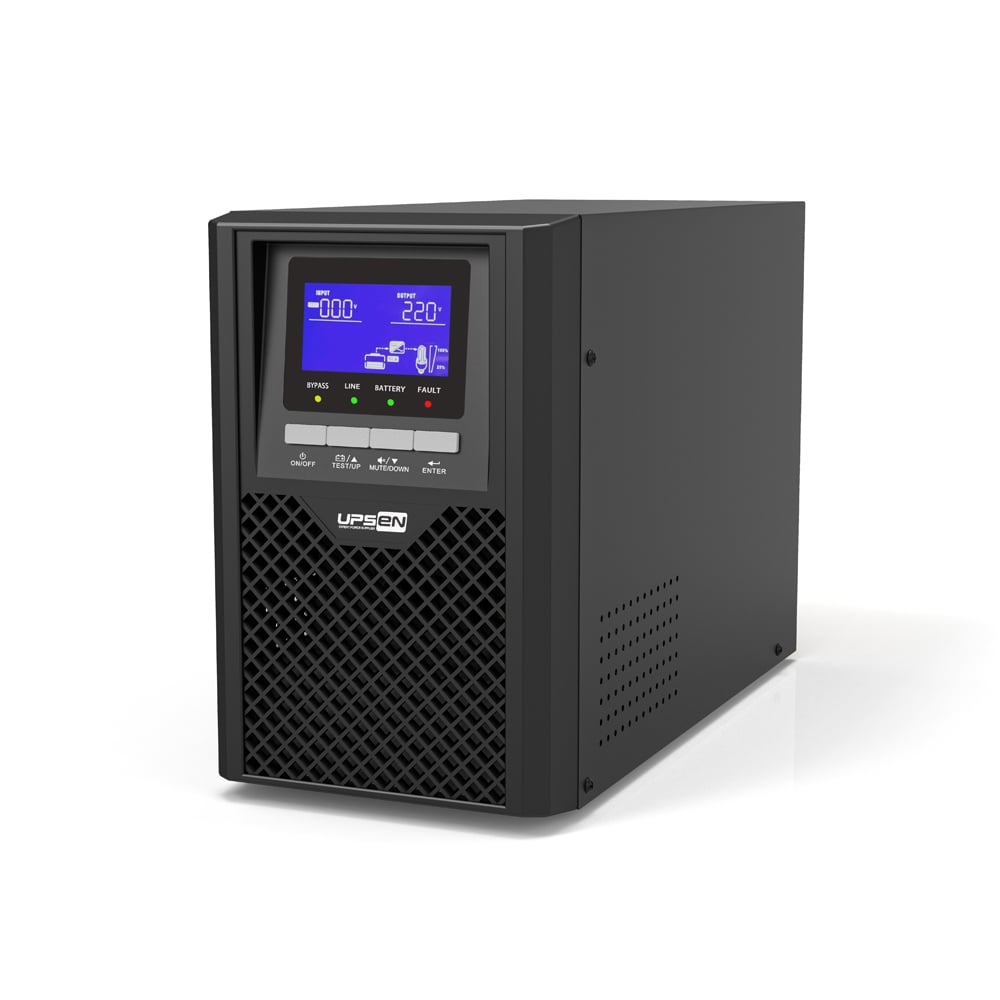
| Tower Model | S1K-Li | S1KL - Li | S2K-Li | S2KL - Li | S3K-Li | S3KL -Li | |
| Capacity | VA / W | 1KVA / 900W | 2KVA / 1.8KW | 3KVA / 2.7KW | |||
| Topology | Double Conversion Online UPS | ||||||
| Phase | Single Phase Input Single Phase Output | ||||||
| Mains Input | Wiring | L/N+PE | |||||
| Rated Voltage | 208 / 220 / 230 / 240VAC | ||||||
| Voltage Range | 90~300VAC | ||||||
| Frequency Range | 40Hz-70Hz | ||||||
| Input Power Factor | ≥0.99 | ||||||
| AC Output | Wiring | L/N+PE | |||||
| Output Voltage | 208 / 220 / 230 / 240VAC | ||||||
| Voltage Regulation | ±1% | ||||||
| Output Frequency | 50 / 60Hz ± 4Hz (Sync Mode) / 50 / 60Hz ± 0.1%(Free Run) | ||||||
| Waveform | Sine Wave | ||||||
| Distortion (THDV%) | <2%(Linear Load); <8%(None-Linear Load) | ||||||
| Over load capability | 100%~105% continuous. 60Sec.@105%~130% Rated Load 10Sec.@130%~150% Rated Load 0.3Sec.@>150%Rated Load |
||||||
| Efficiency | Line Mode | 90% | 91% | 92% | |||
| Battery Mode | 87% | 88% | 89% | ||||
| Battery & Charger | Rated Battery Voltage | 48 / 51.2VDC (Default for 15 / 16cell of LiFePO4 ) | |||||
| Battery Capacity | 615WH | External Battery Depends | 920WH | External Battery Depends | 1250WH | External Battery Depends | |
| Backup Time | >30mins @ Full Load | >20mins @ Full Load | >20mins @ Full Load | ||||
| Backup Time 2 (External Battery Module) |
51.2V30AH-90mins 51.2V50AH-150mins 51.2V100AH-300mins @ Full Load |
51.2V30AH-45mins 51.2V50AH-75mins 51.2V100AH-150mins @ Full Load |
51.2V30AH-30mins 51.2V50AH-50mins 51.2V100AH-100mins @ Full Load |
||||
| Charging Current | Standard Model with Internal Battery:4A Long Backup Time Model :4A / 8A(Optional)/ 16A(Optional) |
||||||
| Charging Voltage | 56.8V(default for 16cell of LiFePO4 ) / Customized according to battery request | ||||||
| Charger Behavior & Protection | CC. CV. Floating. Turn-Off 4 states 3 over voltage protection loop, preserve interface for over temperature/over pressure switch off interface |
||||||
| Physical | Chassis Style | Tower | |||||
| Tower Dimension | 1K - 3K: 190*323*420mm 1KL - 3KL: 190*318*368mm | ||||||
| Tower Net Weight(KG) | 10.8 | 7 | 16.5 | 7.3 | 18 | 7.9 | |
| HMI | LED Display | Mains / Battery status, Load level, battery level, Operation Mode | |||||
| LCD Display with LED indicator | Input Mains Voltage, Frequency, Load level, Operation Mode, Health Status | ||||||
| Standards Communication |
1. RS232 PORT/USB Card (not HID) 2. Dry Contact Interface for BMS control 3. ModBUS For BMS interface |
||||||
| Optional Extension Card | 1. Network Card: Support SNMP/TCP/IP for remote monitoring the UPS via Smart Phone APP, Web page,PC Monitor Software , Support Server / NAS shutdown 2. RS485-Modbus Card, LAN(TCP IP)-ModBUS Card, 3. Mini AS400 Relay Card |
||||||
| Operating Environment Endurance | Temperature Range | -10~50℃ | |||||
| Relative Humidity | 0-98%(Non-condensing) | ||||||
| Acoustics Noise | <55dB @ 1 meters | ||||||
| *Product Specifications are Subject to Change Without Notice. | |||||||
The Lithium UPS for Normal Power, Extraordinary Runtime
Most of the time, your building's power isn't terrible. It sags a little when the HVAC kicks on. It swells when the factory down the street shuts off its heavy machinery. But it doesn't plunge to 60 volts and stay there. If your site falls into that category—utility power that's mostly well-behaved—then the Sun Star Series Li (standard version) is probably the sweet spot. You get all the lithium benefits: up to triple the runtime in half the space, thousands of cycles instead of hundreds, and true online double-conversion protection. You just don't pay the extra engineering overhead for the ultra-low voltage tolerance that the LV variant brings.
True Online Double Conversion: The Inverter Never Sleeps
This is not a line-interactive UPS that wakes up when the power goes out. It's a genuine online double-conversion unit. The inverter is running full-time, regenerating a brand-new, pure sine wave. The grid power comes in, gets rectified to DC, and then the inverter builds a perfect AC waveform from scratch. Your equipment never sees the raw utility. When the grid fails, there's no transfer time. Zero. The battery takes over the DC bus, and the output sine wave doesn't twitch. For sensitive servers, lab instruments, or network gear that generates a log entry every time the power blinks, that's the level of protection you want.
DSP Keeps Everything in Line
Behind the front panel, a DSP controller is constantly sampling voltage and current, making microsecond adjustments to keep the inverter locked on target. It's the same digital precision we put in our larger industrial units, crammed into a 1–3kVA chassis. High input power factor (better than 0.99) means the UPS draws current cleanly from the wall. Low harmonic distortion, no reactive power bouncing around, and a perfect sine wave on the output. You don't need to think about any of it; the DSP just handles it.
The Lithium Difference: Runtime, Footprint, Life
The battery is the star of this series—literally in the name. Instead of lead-acid, you get a lithium-ion pack. What does that actually mean for a 1–3kVA UPS?
`Up to three times the runtime compared to a same-size lead-acid unit. If your old 1500VA UPS gave you 8 minutes, this one might push 20 or more. Enough to ride out most outages without rushing for a shutdown.
`Half the footprint. Lithium cells pack more energy into less space. The UPS itself ends up shallower and lighter. For a wall-mount rack or a crowded desk, that's the difference between fitting and not.
`Thousands of charge-discharge cycles. Lead-acid batteries start fading after a few hundred cycles. Lithium holds its capacity for years longer. You're not swapping batteries every two or three years. Over the unit's service life, the total cost tilts in lithium's favor.
4-Stage Charging That's Actually Smart
The built-in charger isn't just a trickle charger. It follows a proper 4-stage lithium profile: constant current to bring the battery up quickly, constant voltage to top it off, then a float stage, and finally a clean turn-off when the pack is full. No overcharging. No floating at high voltage for weeks, which kills lithium cells early. If you're using a custom battery pack—different cell count, different capacity—the charging logic can be tuned to match. You're not locked into a one-size-fits-all curve.
Input Range: Wide Enough for Real Life, Without the LV Overkill
The input voltage window is 90V to 300V, with a frequency range of 40–70Hz. That's plenty wide to cover the vast majority of commercial and light industrial power environments. Brownouts that dip to 100V? Handled without touching the battery. Surges that push 280V? Also handled. The UPS stays on utility power longer, keeping the battery charged and ready for a genuine blackout rather than wasting cycles on minor sags.
And if you're running a backup generator, the wide frequency tolerance really helps. A portable genset with sloppy regulation won't confuse this UPS. It accepts the rough input and cleans it up through the double-conversion stage, so your load always sees a stable sine wave. You won't end up in that annoying situation where the generator is running but the UPS refuses to sync and just beeps angrily until the battery dies.
Output Power Factor 0.9: Real Watts for Your Gear
Output power factor is 0.9. That means a 1000VA unit delivers 900 watts. Modern servers, switches, and storage arrays with active PFC power supplies can actually use that capacity. You're not leaving a third of the rating on the table because of a legacy 0.7 design. The unit auto-senses 50 or 60Hz, and the output voltage is selectable, so it fits into deployments across different regions without manual jumpers or workarounds.
Hardware That Lasts Past the Warranty Period
Inside, you'll find an FR4 glass fiber double-sided PCB with conformal coating. It's more resistant to moisture, dust, and temperature swings than standard phenolic boards. The components are large-span, chosen to handle thermal cycling without cracking solder joints over time. Ventilation is designed to pull air through efficiently while keeping dust accumulation to a minimum. These aren't headline features, but they're the reason the unit is still running quietly in a hot, dusty electrical closet four years after installation.
Open to Your System, Not Locked Down
For system integrators and facilities with custom monitoring needs, the architecture is open. The controller has enough headroom to accommodate custom firmware tweaks, communication protocol integration, and supervisory platform hooks. Whether you're building a control panel for a manufacturing cell or tying the UPS into a building management system, you can usually get it talking without having to work around a sealed black box.
Who Picks This One vs. the LV
The choice between the Sun Star Li and the Sun Star Li (LV) really comes down to how bad your incoming power gets. If your mains voltage routinely dips below 90V—say, down to 60V or 70V during heavy loads—then the LV version with its 60–145V window is the safer bet. It'll stay on utility power through deeper brownouts without eating into the battery. But if your power company delivers a relatively stable 100–240V, the standard 90–300V window covers everything you'll encounter, and you save a bit of cost and complexity by not over-specifying the input stage.
Common deployments for the standard Sun Star Li:
`Small server rooms and IT closets in office buildings with decent grid power
`Network cabinets in retail stores, schools, or professional offices
`Medical carts and diagnostic stations that move between rooms with standard outlets
`Digital signage and kiosk systems in airports, malls, or transit hubs
`Home offices or studios with high-end equipment that demands clean power
You still get true online double-conversion. You still get the lithium runtime and lifespan. You still get the DSP stability and the clean sine wave. You just get it in a package calibrated for the kind of power most buildings actually have, most of the time.
The Practical Choice
The Sun Star Series Li isn't trying to be the most extreme UPS on the market. It's the sensible option: lithium where lithium makes sense, online protection where online protection matters, and an input window that covers 99% of commercial power scenarios without over-engineering the front end. If you've been nursing along lead-acid UPS units that take up too much room and need new batteries every two years, this is the straightforward upgrade. Smaller, longer-lasting, and cleaner power from day one.

1409-1410, Tongfang Center, the intersection of Zhongxin Rd. and Haoxiang Rd., Xinqiao St., Bao'an Dist., Shenzhen, China.
Copyright © Shenzhen UPSEN Electronic CO., LTD. All Rights Reserved Privacy Policy
 EN
EN