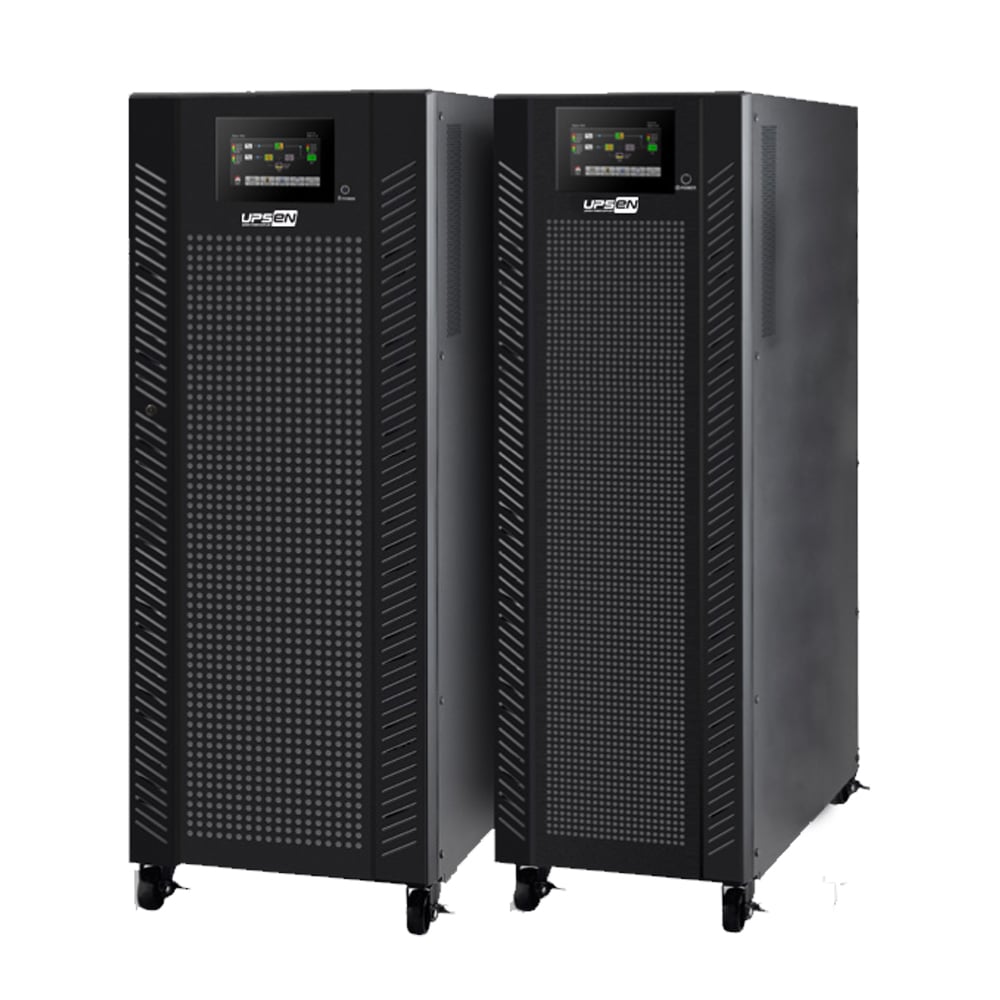
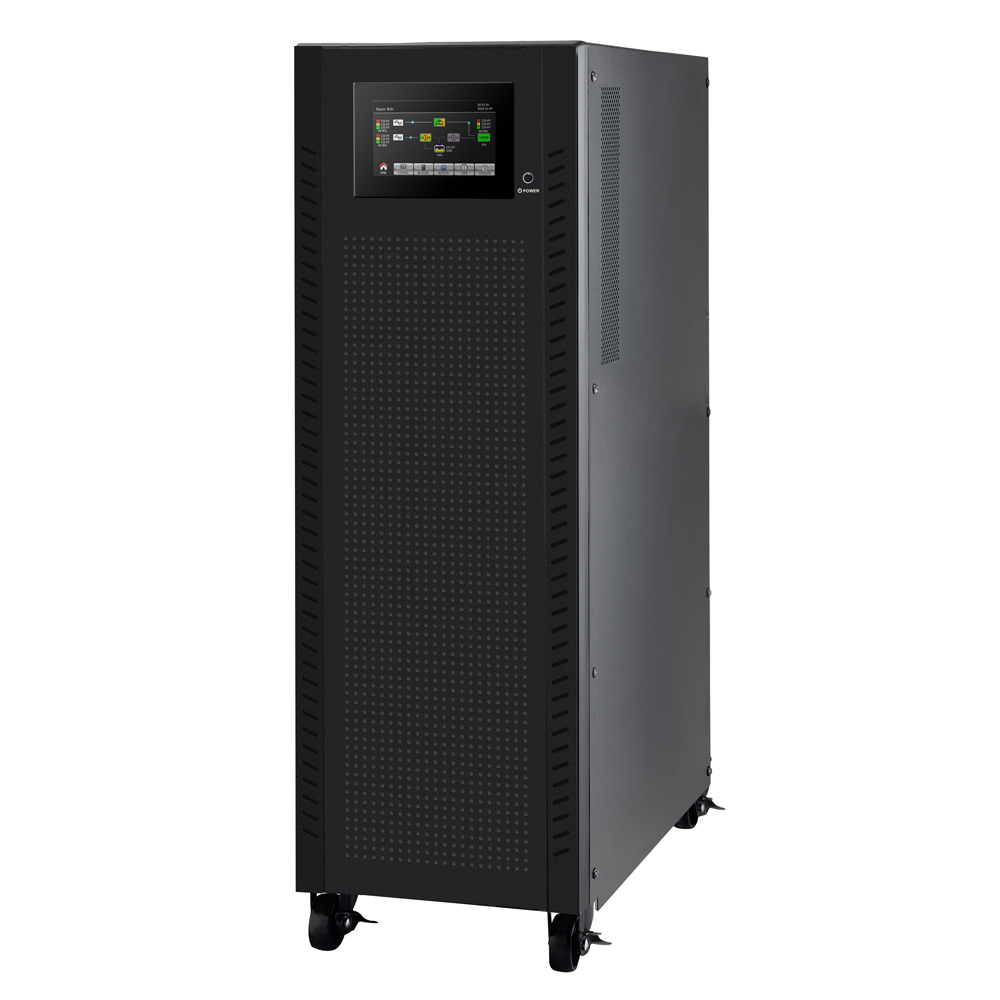
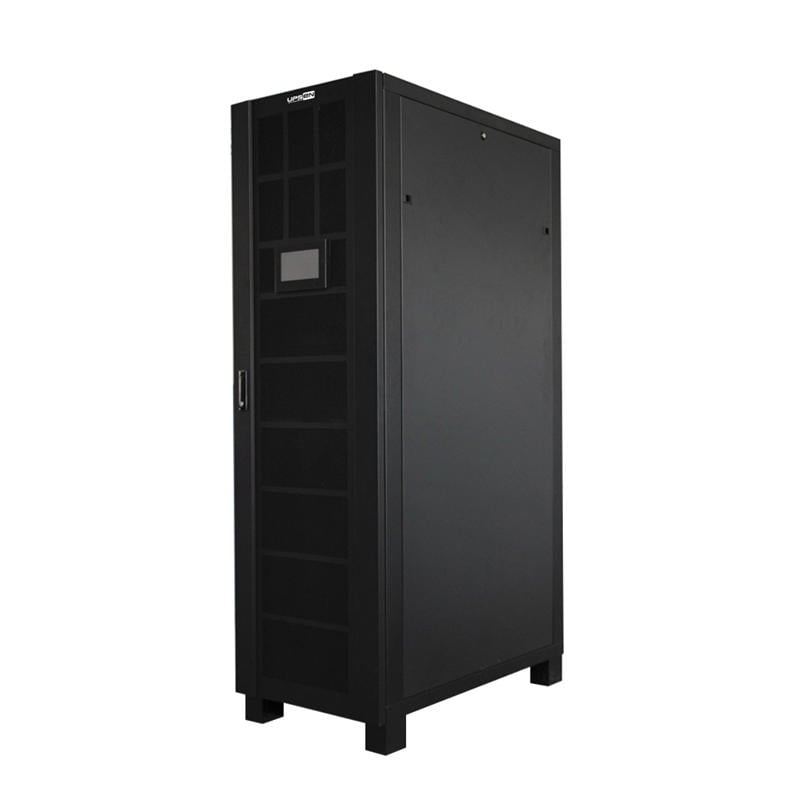
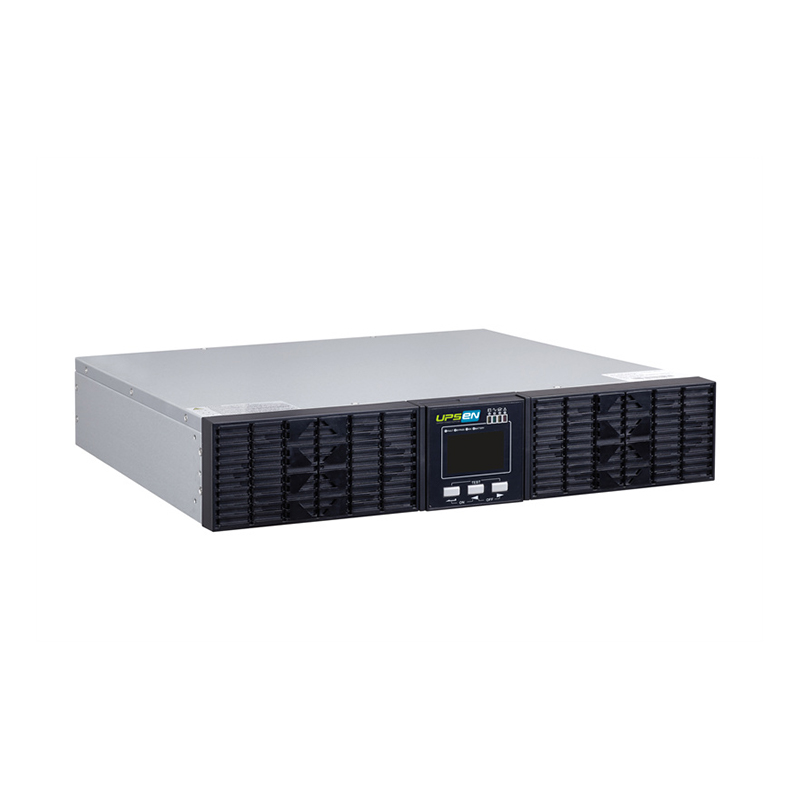
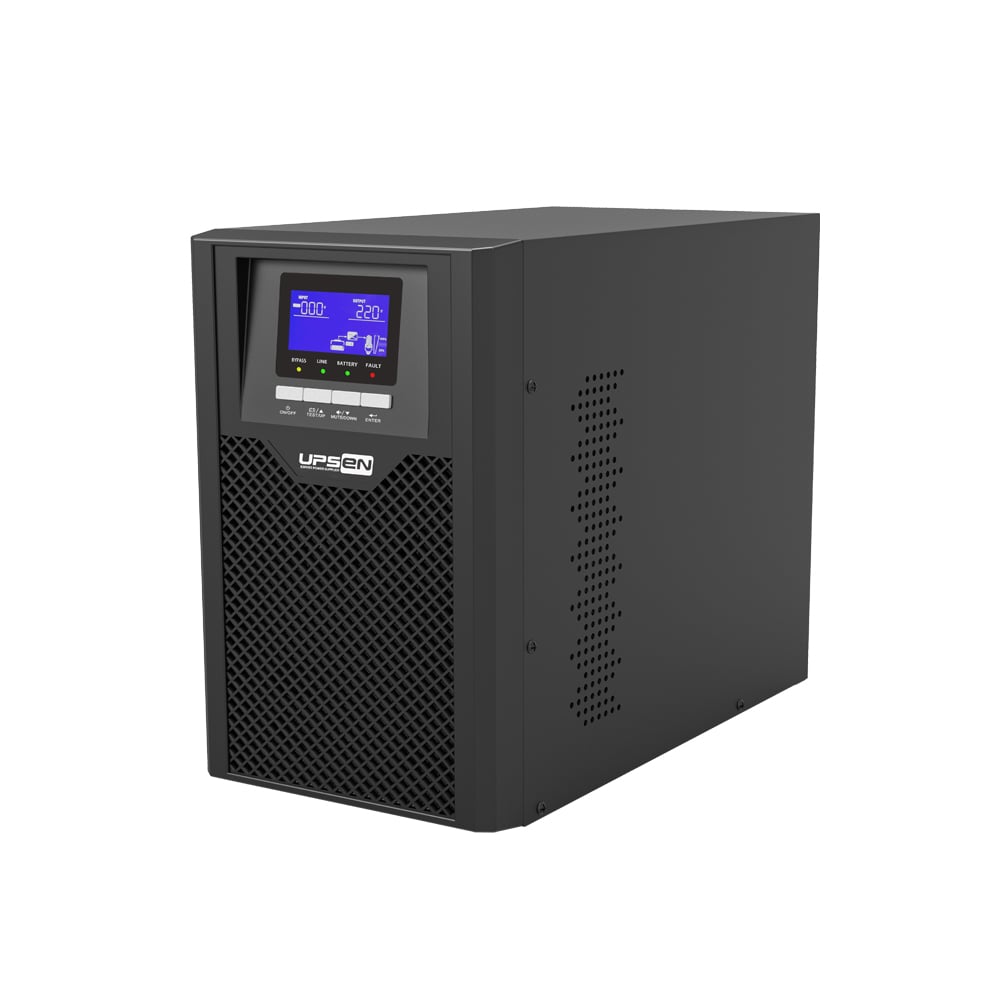
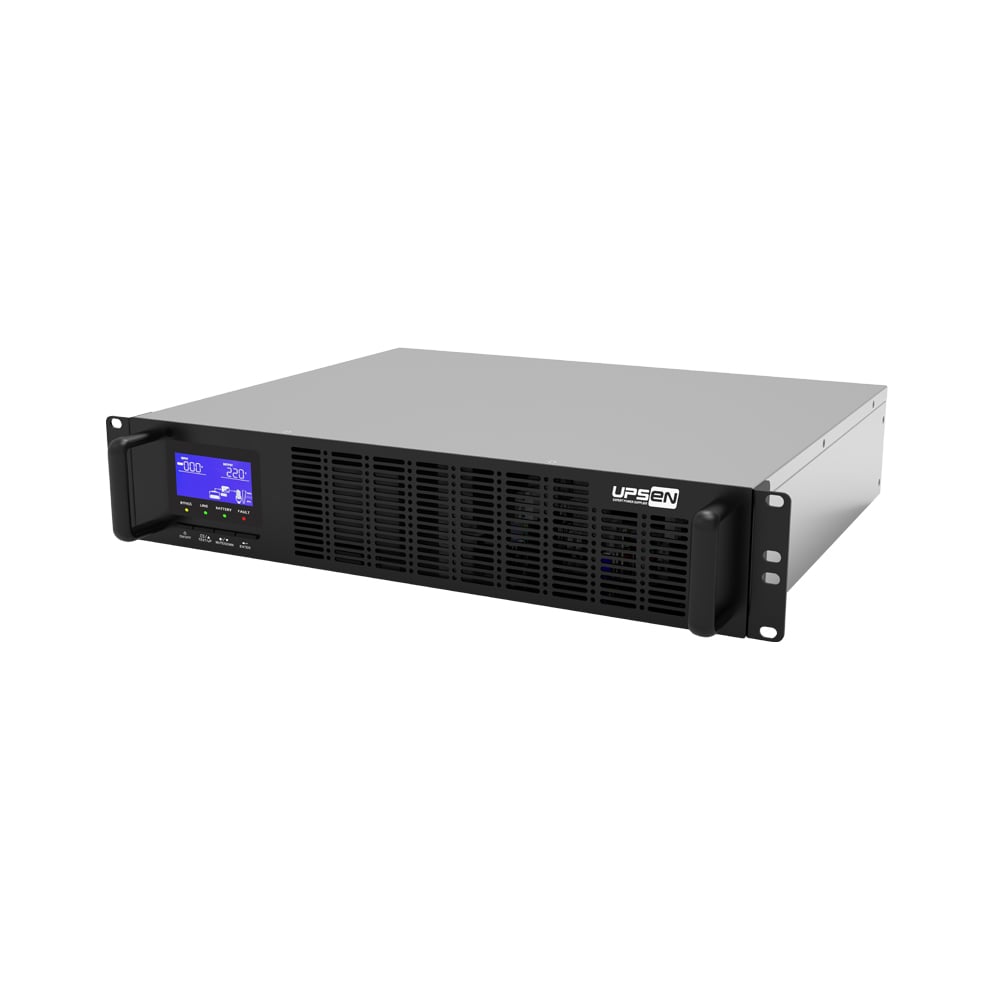
·DSP technology guarantees high reliability
·Output power factor 1
·Adapting the latest Silicon carbide diodes to enhance the system efficiency
·Dual Inputs
·Very powerful charger to shorten the recharge time
·Adjustable charging current
·Parallel up to 6 units with common battery pack
·5" color touch type LCD display
·Optional programmable relay dry contact card
·Voice warning / error code notice
·High overload capability
·Adjustable battery design
·Dynamic password feature optimizes service performance
·Power walk-in function
| MODEL | 10K(L) | 15K(L) | 20K(L) | 30K(L) | 40K(L) | 60K(L) | 80K(L) | |
|---|---|---|---|---|---|---|---|---|
| Phase | 3-phase in / 3-phase out | |||||||
| Capacity | 10KVA / 10KW | 15KVA / 15KW | 20KVA / 20KW | 30KVA / 30KW | 40KVA / 40KW | 60KVA / 60KW | 80KVA / 80KW | |
| Parallel Capability | Up to 6 units in parallel | |||||||
| INPUT | ||||||||
| Nominal Voltage | 3 * 380 / 400 / 415 VAC (3Ph +N) | |||||||
| Voltage Range | -30% ~ +20% | |||||||
| Frequency Range | 40 – 70Hz | |||||||
| Power Factor | ≥ 0.99 @ 100% Load | |||||||
| Harmonic Distortion (THDi) | < 3% at full linear load | |||||||
| OUTPUT | ||||||||
| Output Voltage | 3 * 360 / 380 / 400 / 415 VAC (3Ph+N) | |||||||
| AC Voltage Regulation (Batt. Mode) | ± 1% | |||||||
| Frequency Range (Synchronized Range) | 46 – 54Hz or 56 – 64Hz | |||||||
| Frequency Range (Batt. Mode) | 50 / 60 Hz ± 1% | |||||||
| Current Crest Ratio | 3 : 1 (max.) | |||||||
| Harmonic Distortion | ≤1 % THD (Linear Load); ≤ 3 % THD (Non-linear Load) | |||||||
| Transfer Time | AC Mode to Batt. Mode: Zero | |||||||
| Inverter to Bypass: Zero | ||||||||
| Waveform (Batt. Mode) | Pure Sine wave | |||||||
| Overload Capability | 100-110% for 60 min, 111-125% for 10 min, 126%-150% for 1 min; >150% or 400ms | |||||||
| BYPASS | ||||||||
| Nominal Voltage | 3 * 380 / 400 / 415 VAC (3Ph+N) | |||||||
| Voltage Range | -30% ~ +20% (Adjustable) | |||||||
| Frequency Range (Synchronized Range) | 46 – 54Hz or 56 – 64Hz | |||||||
| Overload Capability | > 130% 1 minute (default) Continuously working until breaker protection (optional) | |||||||
| EFFICIENCY | ||||||||
| AC Mode | 96.0% | |||||||
| ECO Mode | 99.0% | |||||||
| Battery Mode | 96.0% | |||||||
| BATTERY | ||||||||
| Standard Model | Battery Type | 12V / 9Ah | 12V / 9Ah | 12V / 9Ah | 12V / 7Ah | 12V / 9Ah | N / A | |
| Numbers | (10+10) pcs | (16+16) pcs | (16+16) pcs | (16+16) pcs * 2 strings | ||||
| Typical Recharge Time | 9 hours recover to 90% capacity | |||||||
| Charging Current (max.) | 1A ~ 12A (Adjustable) | |||||||
| Charging Voltage | +/-136.5 VDC ± 10% | |||||||
| Long-run Model | Battery Type | Depending on the applications | ||||||
| Numbers | +/- 10 pcs | +/-16 pcs ~ +/- 20 pcs (Adjustable) | +/-16 pcs × N (N=16–20) | |||||
| Charging Current (max.) | 1A ~ 12A (Adjustable) | 1A ~ 16A (Adjustable) | 2A – 24 A(Adjustable) 2A – 32A(Adjustable) | |||||
| Charging Voltage | +/-136.5 VDC ± 10% | +/-218 VDC ± 10% | ||||||
| INDICATORS | ||||||||
| LCD Panel | UPS status, Load level, Battery level, Input/Output voltage, Discharge timer, and Fault conditions | |||||||
| PHYSICAL | ||||||||
| Standard Model | Dimension,D*W*H (mm) | 630*250*826 | 815*300*1000 | N / A | ||||
| Net Weight (kgs) | 124 | 139 | 225 | 250 | N/A | N/A | N/A | |
| Long-run Model | Dimension,D*W*H (mm) | 630*250*826 | 815*300*1000 | 790*360*1010 | ||||
| Net Weight (kgs) | 28 | 43 | 60 | 67 | 108 | 113 | ||
| ENVIRONMENT | ||||||||
| Operation Temperature | 0 – 40℃ | |||||||
| Operation Humidity | < 95% and non-condensing | |||||||
| Altitude | 0 – 1500m at full load | |||||||
| Noise Level | < 60 dB @1 Meter | Less than 63 dB @1 Meter | Less than 65 dB @1 Meter | |||||
| MANAGEMENT | ||||||||
| Smart RS-232 / USB | Supports Windows 2000 / 2003 / XP / Vista / 2008, Windows 7 / 8 / 10, Linux and MAC | |||||||
| Optional SNMP | Power management from SNMP manager and web browser | |||||||
| *If output voltage is set as 3 x 360VAC, the output power of the unit will be de-rated to 90%. | ||||||||
| *If the UPS is installed or used in a place where the altitude is higher than maximum height, the output power will be derated 1% per 100m. | ||||||||
| Product specifications are subject to change without further notice. | ||||||||
The Smart Upgrade That Talks Back
If you've ever been woken up by a UPS alarm at two in the morning and found yourself squinting at a row of blinking LEDs, trying to remember which flash pattern means "battery low" and which means "something expensive is about to fail," the ES33 II was designed with you in mind. It keeps all the things that made the original ES33 line a workhorse—DSP-controlled stability, a full 1.0 output power factor so every kVA gives you a kilowatt of real power—but then it layers in a set of upgrades that genuinely change how you interact with the machine day to day.
Silicon Carbide: The Quiet Efficiency Leap
The biggest change under the lid is the move to silicon carbide (SiC) diodes in the power stage. If that sounds like semiconductor industry jargon, here's the practical translation: SiC switches faster and wastes less energy as heat than traditional silicon. For the UPS, that means higher overall efficiency, less strain on the cooling fans, and a lower electric bill at the end of the month. Over a 40kVA or 80kVA system running 24/7, those efficiency gains are real money. It's not a flashy feature—it doesn't come with a bigger screen or a new badge—but it's the kind of engineering choice that separates a five-year asset from a ten-year one.
Dual Inputs as Standard
The ES33 II expects that you might have two separate power sources. Dual inputs are built in: connect one to the main utility feed and the other to a backup generator, or run two independent utility lines if the site has that luxury. If one source drops, the UPS draws from the other without so much as a flicker on the output. That's front-end redundancy before the rectifier even starts working.
Charges Fast, Adapts to Your Battery Setup
After a long outage, the last thing you need is a UPS that limps along for hours trying to refill its batteries. The charger in the ES33 II is deliberately oversized to cut recharge time down significantly. And it's adjustable—you can set the charging current to match whatever battery bank size and type you're using. Whether you've got a small string of VRLA cells or a larger lithium-ion array with specific current limits, the charger can be dialled in. No one-size-fits-all guesswork.
Parallel up to Six Units, One Battery Bank
If your load grows, the ES33 II grows with it. You can parallel up to six units for capacity or redundancy, and they can share a single common battery pack. That's a big saving compared to isolated battery strings per unit—fewer cabinets to buy, fewer cells to maintain, and a cleaner installation overall. N+X redundancy comes standard in parallel mode; lose one unit, the others carry the load without blinking.
A Touchscreen That Doesn't Hide Information
The front panel is a 5-inch colour touch LCD. It's not the biggest screen on the market, but it's clear, responsive, and the menus are laid out so you're not digging through four submenus to find battery status. Voltage per phase, load percentages, alarm history—it's all a few taps away. More importantly, there are two communication features that separate this UPS from most of its competitors.
It Talks. Actually Talks.
The ES33 II has a voice warning system. When a fault occurs, instead of just lighting up an error code, it announces the problem audibly. Imagine hearing "Battery low" or "Overload on phase B" instead of trying to decode a cryptic "F07" on a monochrome display while the alarm beeps in the background. For technicians who aren't intimately familiar with the specific unit, or for sites where the UPS is in a dark corner and the LCD is hard to reach, this is a practical godsend. If voice isn't your thing, it'll still fall back to beep codes, but the option is there.
Dynamic Passwords: Security Without the Sticky Note Problem
Here's a scenario: a service tech needs access to the UPS settings, but you don't want a permanent admin password floating around on a sticky note inside the electrical room door. The ES33 II supports dynamic passwords—one-time or time-limited access codes that you can generate for a specific visit. Once the work is done, the credential expires. No password management headaches, no unauthorized access after the contractor leaves. For facilities with tight security policies, or for sites that are audited regularly, this small feature closes a surprisingly common gap.
Handles Overloads Gracefully
Temporary surges—like a motor starting or a laser printer fuser cycling on—won't force the unit into bypass. The ES33 II has high overload capability, so it can ride out those short spikes while staying on inverter power. That keeps your load protected and avoids unnecessary switching. Coupled with the adjustable battery configuration (you're not locked into a rigid cell count or voltage), the system adapts to your site rather than demanding the site adapt to it.
Power Walk-In Keeps the Generator Happy
When utility power returns after a prolonged outage, the UPS's rectifier can pull a huge inrush of current if it tries to charge the batteries and power the load all at once. The ES33 II's power walk-in function ramps up the load gradually. This prevents the kind of sudden current draw that can trip an upstream breaker or destabilise a generator that's already running near its limit. It's a thoughtful touch that spares you from secondary failures during what should be a routine recovery.
Optional Dry Contact Card for Custom Integration
Need to tie the UPS into a custom alarm panel, a building management system, or an industrial controller? An optional programmable relay dry contact card gives you hard-wired outputs for whatever control logic you need to implement. It's a no-fuss way to integrate the UPS into larger systems without relying on SNMP or network connectivity.
Where the ES33 II Makes Sense
The ES33 II fits into the gap between compact rack-mount UPS units and the massive multi-hundred-kVA fortress systems. It's for mid-size data centers, medical diagnostic suites, light manufacturing lines, telecom switching centres, and commercial buildings where the IT load is substantial but not hyperscale. The combination of SiC efficiency, fast recharge, parallel scalability, and genuinely useful service features (voice alarms, dynamic passwords) makes it a compelling option for sites where the UPS is mission-critical but the support staff isn't specialized in power electronics.
It's the kind of UPS where the small engineering choices—like replacing silicon diodes with silicon carbide, or adding a voice prompt instead of another blinking LED—add up to a machine that's easier to live with for the next decade. And when you're the one who gets called when the power goes out, that ease of living is exactly what you want.

1409-1410, Tongfang Center, the intersection of Zhongxin Rd. and Haoxiang Rd., Xinqiao St., Bao'an Dist., Shenzhen, China.
Copyright © Shenzhen UPSEN Electronic CO., LTD. All Rights Reserved Privacy Policy
 EN
EN