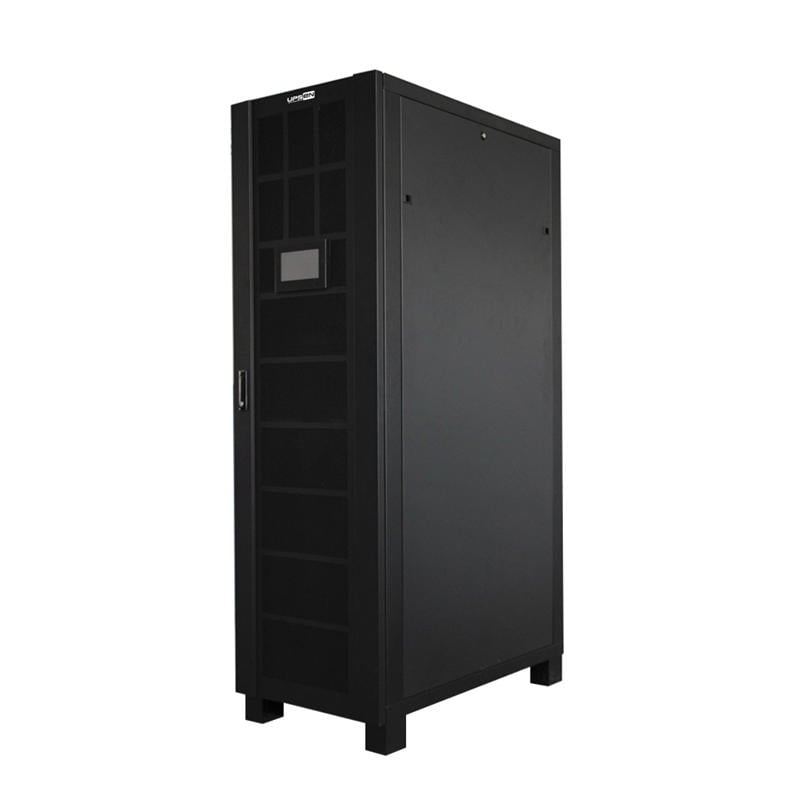
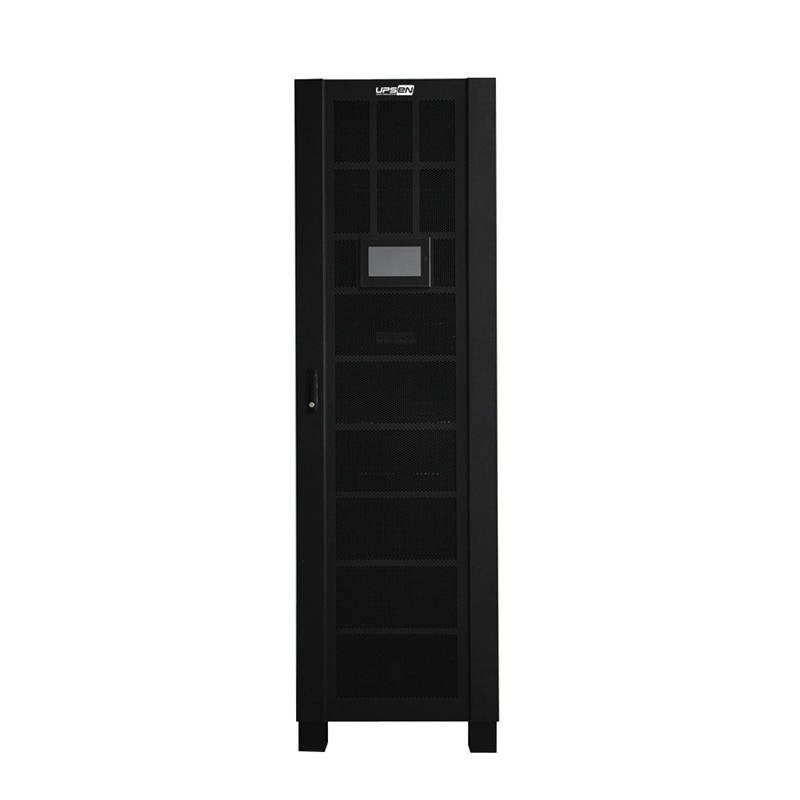
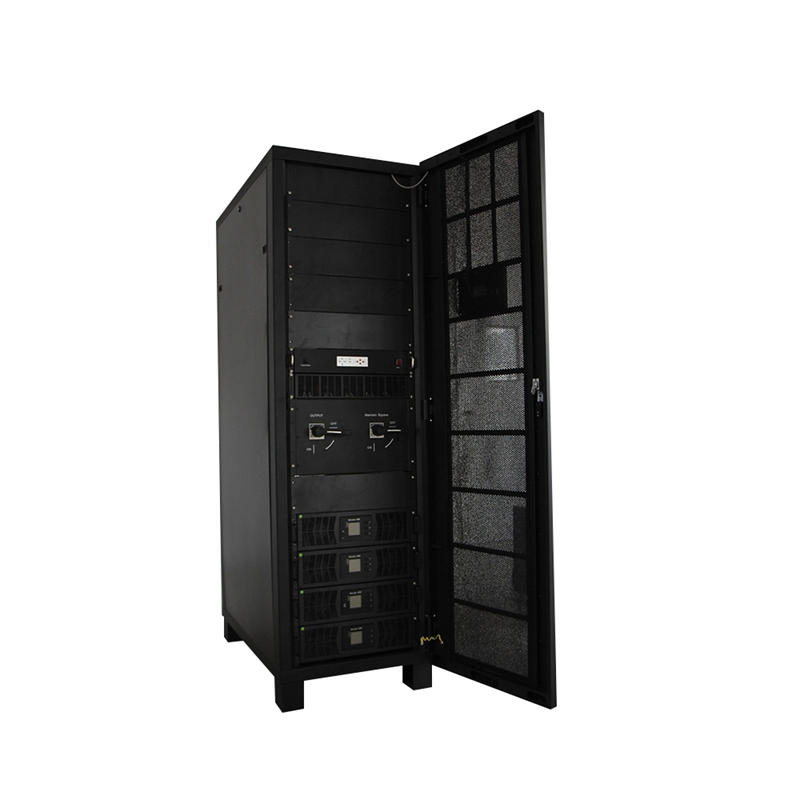
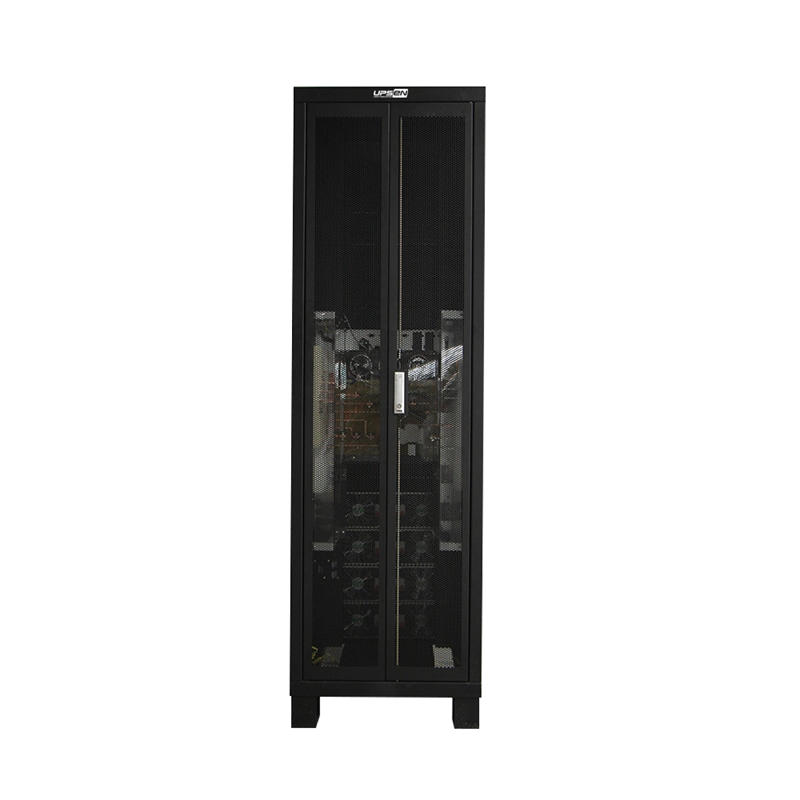
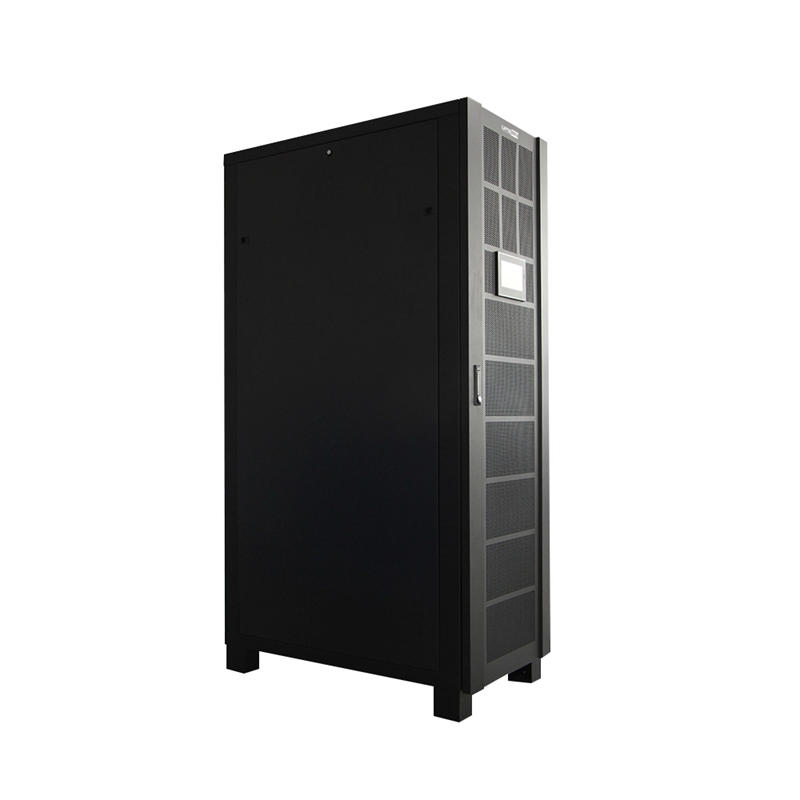
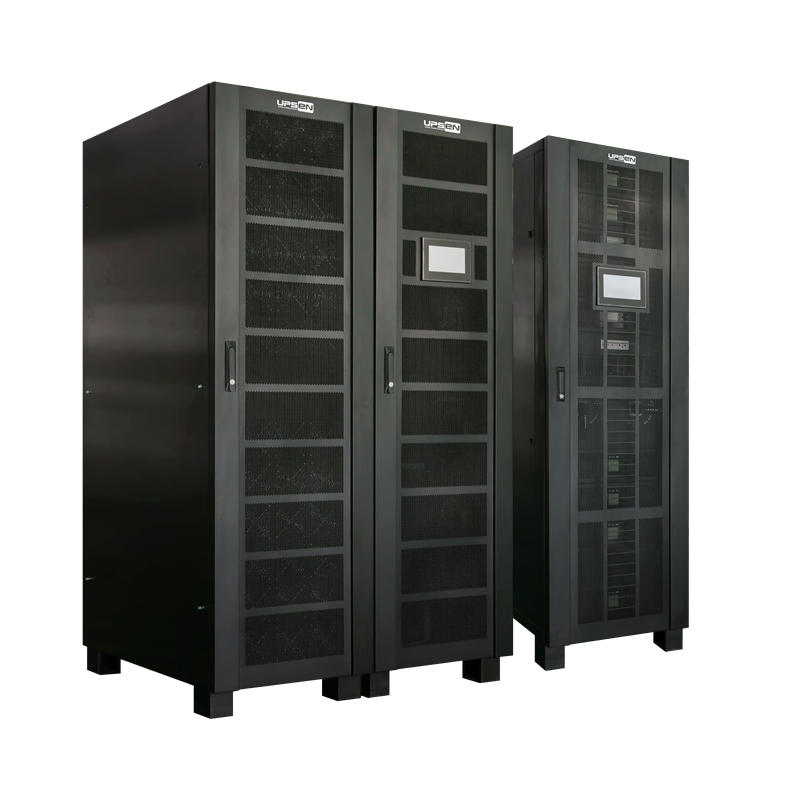
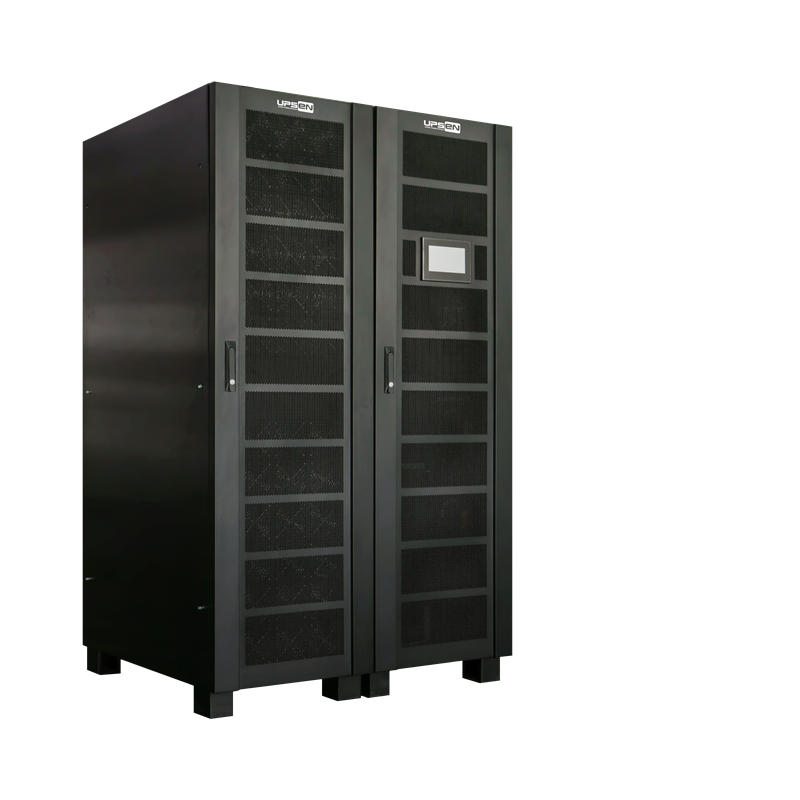
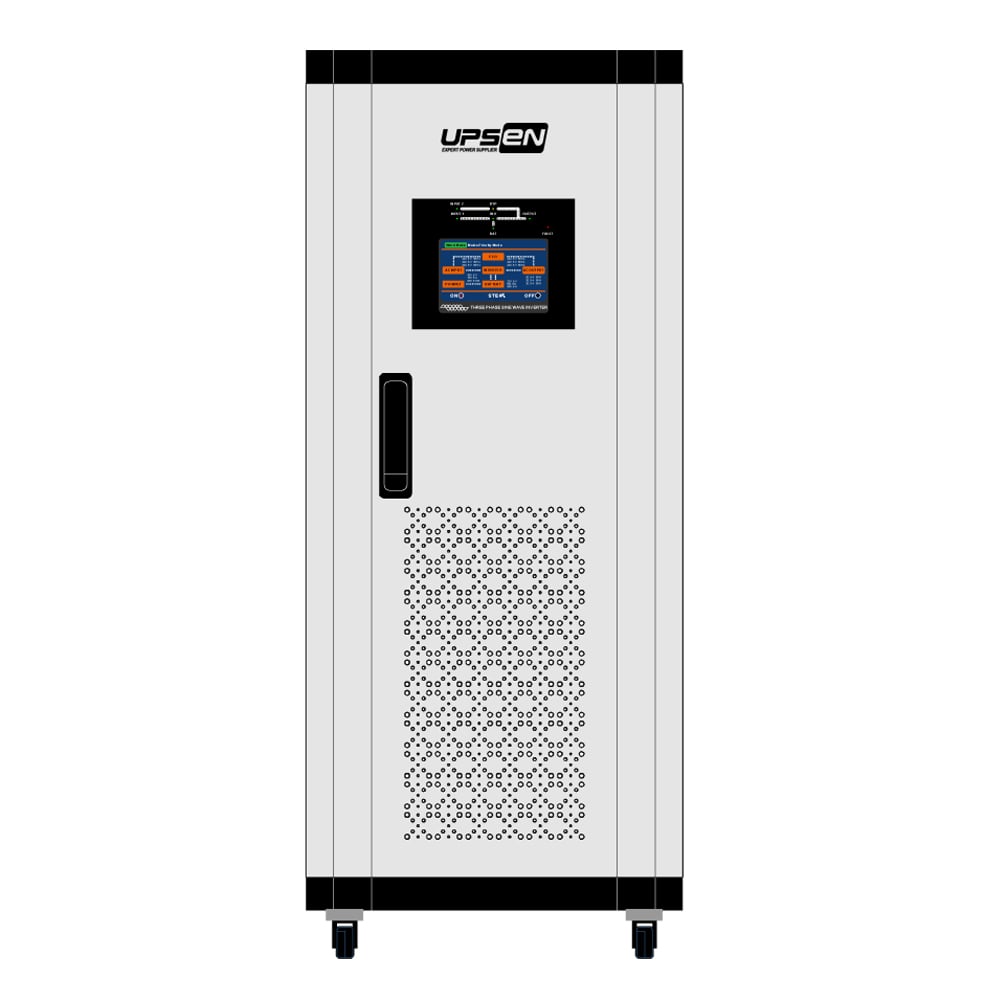
This one is built around the idea that power needs change. Instead of buying a giant monolithic UPS and hoping you sized it right, the MS Series lets you start with what you need now and add modules as demand grows.
The input voltage range is remarkably wide—138 to 485Vac (or 80 to 280Vac phase voltage). And here’s the practical part: above 305Vac, it doesn’t derate. That means you get full performance even when utility voltage runs high, no automatic capacity reduction.

·High Reliability Design
Ultra-wide input voltage range 138~485Vac(phase voltage 80~280Vac), no derating is used above 305Vac
·Energy Saving And Environmental Protection
High input PF value,up to 0.99,adopts three-level topology, and the efficiency of the whole machine is as high as 96.5%
·Parallel Redundancy Function
Parallel directly,6 units can be connected in parallel, supporting parallel sharing of battery packs
·Flexible Battery Configuration Scheme
The number of battery cells is 30~50,and the single machine has large capacity charging power to meet the backup demand of long delay.
·Super Load Capacity
The output power factor is 0.9,can carry 100%unbalanced load, the load adaptability is strong,can carry the pure inductive load and the capacity load close to full load
·Compatible With Generator Operation
The Power Walk In function reduces the inrush current of system startup and reduces the demand for generator capacity of the parallel system
·LBS Synchronization Function
With LBS synchronization function,realize the synchronization of two independent UPS systems,and provide system reliability
·Intelligent Management Function
Support RS485,SNMP,dry contact,CAN interface
|
Model |
MS 200KVA/MS 240KVA |
MS 300KVA/MS 360KVA |
MS 400KVA/MS 480KVA |
MS 600KVA/MS 600KVA |
MS 600KVA/MS 720KVA |
|
|
Capacity |
UPS Cabinet |
50-200KVA/60-240KVA |
50-300KVA/60-360KVA |
50-400KVA/60-480KVA |
50-600KVA/60-600KVA |
50-600KVA/60-720KVA |
|
|
Module |
50KVA/60KVA |
||||
|
INPUT |
||||||
|
Input Method |
Three-Phase Four-Wire+Ground Wire |
|||||
|
Rated Voltage |
380/400/415VAC |
|||||
|
Voltage Range |
±25% |
|||||
|
Frequency Range |
40~70Hz |
|||||
|
Power Factor |
≥0.99 |
|||||
|
Input Current Harmonics |
≤3%(100%Linear Load) |
|||||
|
Bypass Input |
||||||
|
Input Voltage |
380/400/415VAC |
|||||
|
Bypass Range |
Upper Limit of Bypass Protection Voltage:+15%(Optional +5%,+10%,+2%) |
|||||
|
|
Lower Limit of Bypass Protection Voltage:-45%(Optional-20%,-30%) |
|||||
|
Wiring System |
Three-Phase Five-Wire |
|||||
|
Bypass Synchronization Tracking Range(Hz) |
±10% |
|||||
|
Power Walking In |
Support |
|||||
|
Bypass Back Irigation |
Support |
|||||
|
Generator Access |
Support |
|||||
|
Output |
||||||
|
Rated Voltage |
380/400/415VAC |
|||||
|
Power Factor |
Power Module 50KVA:1.0 PF;Power Module 60KVA:0.9 PF |
|||||
|
Voltage Accuracy |
±1% |
|||||
|
Output Frequency |
Mains Mode |
Synchronize with the input,when the mains frequency exceeds the maximum±10%(can be set to±1%,±2%,±4%,±5%),the output frequency is 50*(±0.2)Hz |
||||
|
|
Battery Mode |
(50/60±0.1%)Hz |
||||
|
Load-to-Peak Ratio |
3:1 |
|||||
|
Switching Time |
Mains mode to bypass mode:Oms (tracking); Mains mode to battery mode:Oms |
|||||
|
Overload Capacity |
Load ≤110%,60min,≤125%,Maintain 10min,≤150%,Maintain 1min |
|||||
|
Output Voltage Distortion |
≤2%Linear Load |
|||||
|
|
≤4%Non-linear Load |
|||||
|
Efficient |
||||||
|
Normal Mode |
≥96.5% |
|||||
|
Communication interface |
||||||
|
UPS Cabinet |
RS232、RS485、2Pcs Intelligent slot (Smart card slot),Dry contact |
|||||
|
Battery |
||||||
|
DC Voltage |
±180VDC~±300VDC Adjustable |
|||||
|
Working Environment |
||||||
|
Operating Temperature |
0℃~40℃ |
|||||
|
Relative Humidity |
0~95%Non-Condensing |
|||||
|
Stored Temperature |
-25℃~55℃ |
|||||
|
Altitude |
<1500m |
|||||
|
Noise(Db) |
70(1m) |
|||||
|
Physical Characteristics |
||||||
|
W*D'H(MM) |
UPS Cabinet |
600*850*1650 |
600*850*2000 |
1200*850*2000 |
||
|
|
|
700*950*1800 |
700*950*2180 |
1300*950*2180 |
||
|
|
Power Module |
440*620*130 |
||||
|
|
|
580*870*250 |
||||
|
N.W. (KG) |
UPS Cabinet |
230 |
260 |
280 |
650 |
700 |
|
G.W. (KG) |
|
280 |
310 |
320 |
730 |
800 |
|
N.W. (KG) |
Power Module |
33 |
||||
|
G.W. (KG) |
|
36 |
||||
|
Executive Standard |
|
CE、EN/IEC 62040-2、EN/IEC 62040-1-1、YD/T1095-2010 |
||||
|
*Product specifications are subject to change without furthe notice |
||||||
Efficiency hits 96.5% thanks to a three-level topology, and input power factor is up to 0.99. That translates to less waste heat and lower operating costs, which matters when you’re running hundreds of kilowatts around the clock.
Parallel redundancy is straightforward—you can connect up to six units directly, no extra cabinets or complex wiring. They can even share a common battery bank, which simplifies installation and cuts down on battery costs.
Battery configuration is unusually flexible. You can set the number of cells anywhere from 30 to 50, and the built-in charger has enough capacity to handle long runtime requirements without needing external chargers.
Load handling is solid. Output power factor is 0.9, and it can carry 100% unbalanced loads without complaining. If you’re running pure inductive loads or near full-capacity loads, it handles them—no derating games.
For sites running on generators, there’s a Power Walk‑In function. It gradually ramps up the load when the system starts, so you don’t get a massive inrush current that trips a generator or forces you to oversize it.
If you need even higher redundancy across separate systems, the LBS (Load Bus Synchronization) function keeps two independent UPS systems synchronized. That lets you build a distributed architecture where multiple UPS units support the same critical bus.
Communication options cover RS485, SNMP, dry contacts, and CAN interface, so it fits into most building management or data center monitoring setups without adapters.
The modular design also simplifies maintenance—if a power module needs attention, you swap it out without taking the whole system offline. No downtime, no juggling loads to a bypass.
In short, it’s built for environments where uptime is critical but the future is uncertain. You scale it, you protect it, and you don’t lock yourself into a fixed capacity from day one.

1409-1410, Tongfang Center, the intersection of Zhongxin Rd. and Haoxiang Rd., Xinqiao St., Bao'an Dist., Shenzhen, China.
Copyright © Shenzhen UPSEN Electronic CO., LTD. All Rights Reserved Privacy Policy
 EN
EN