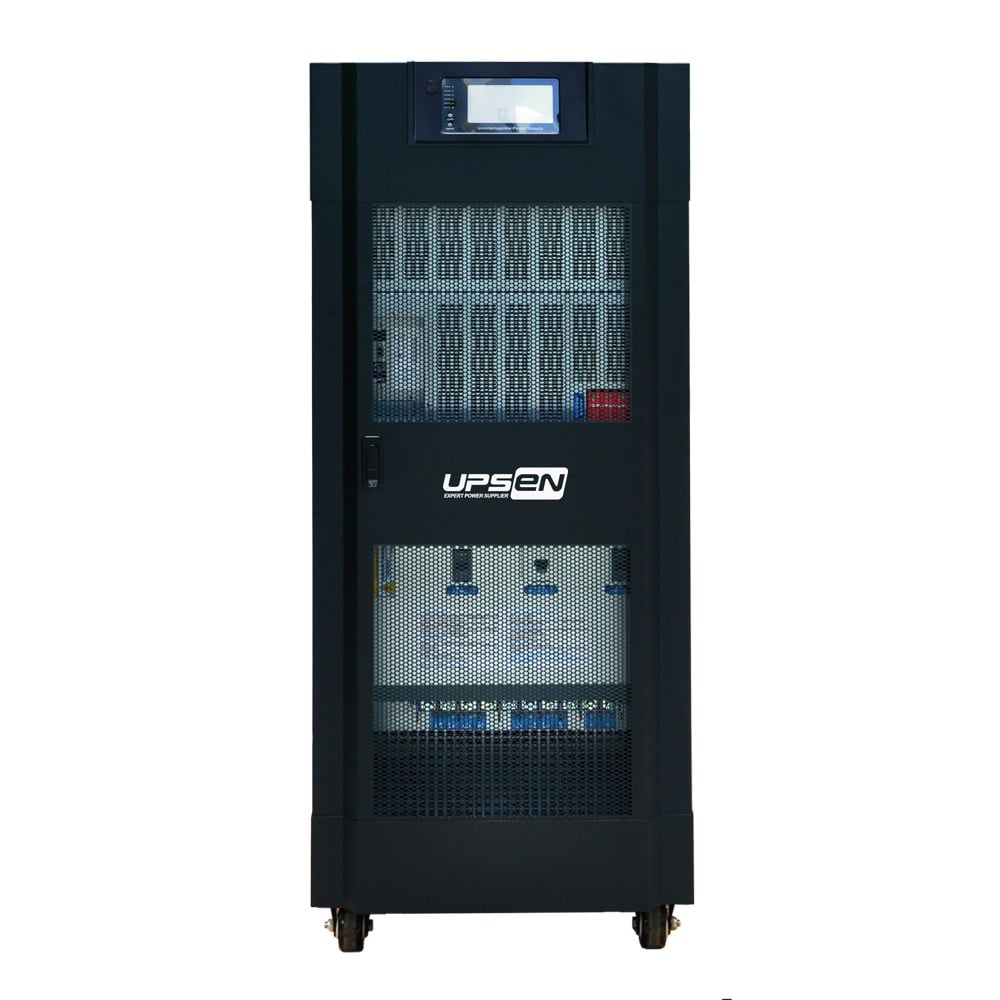
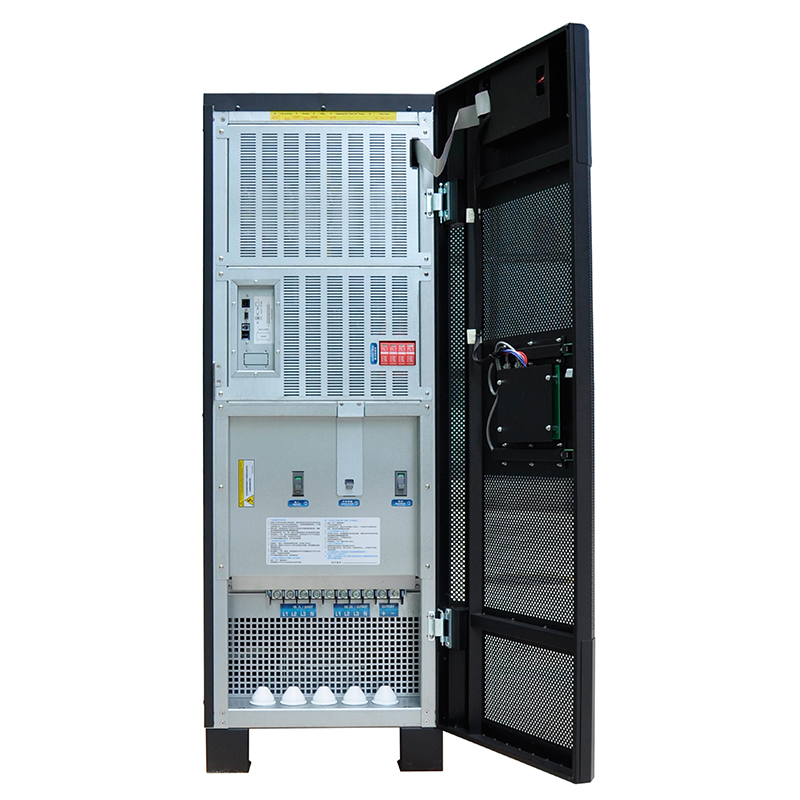
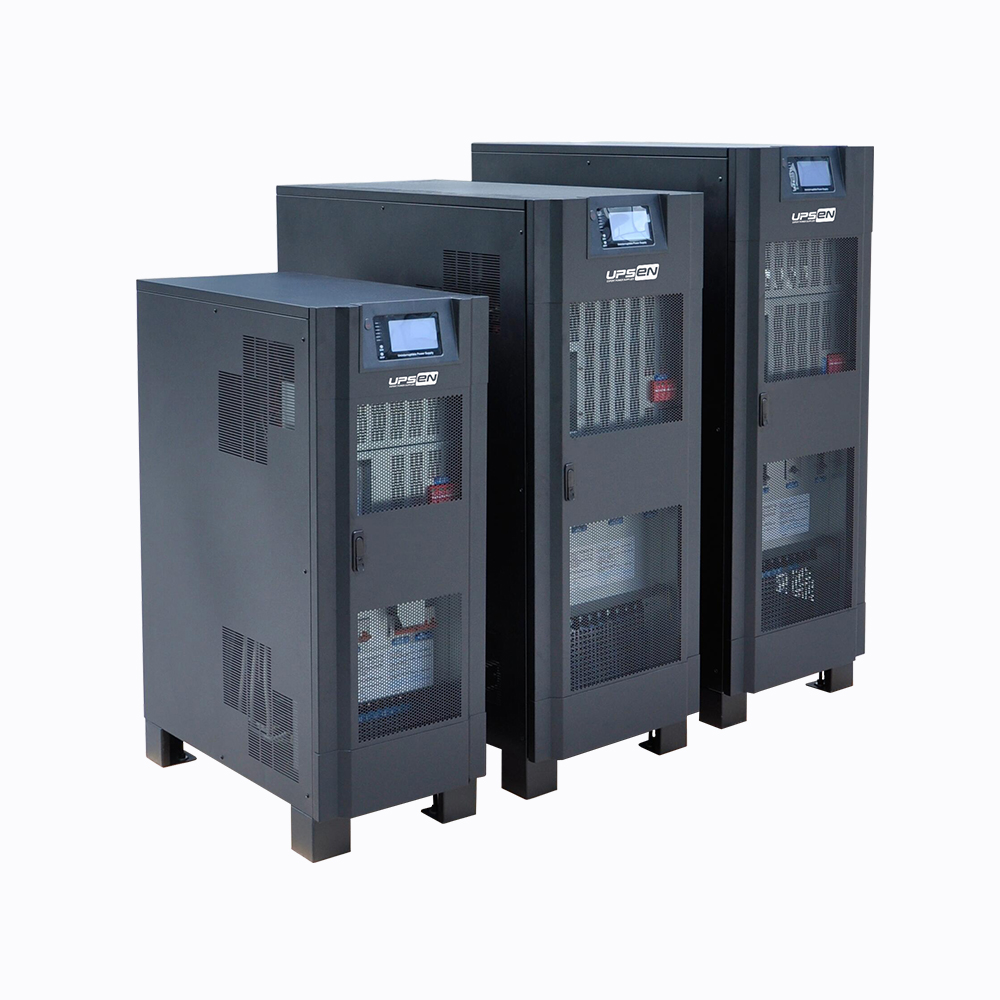
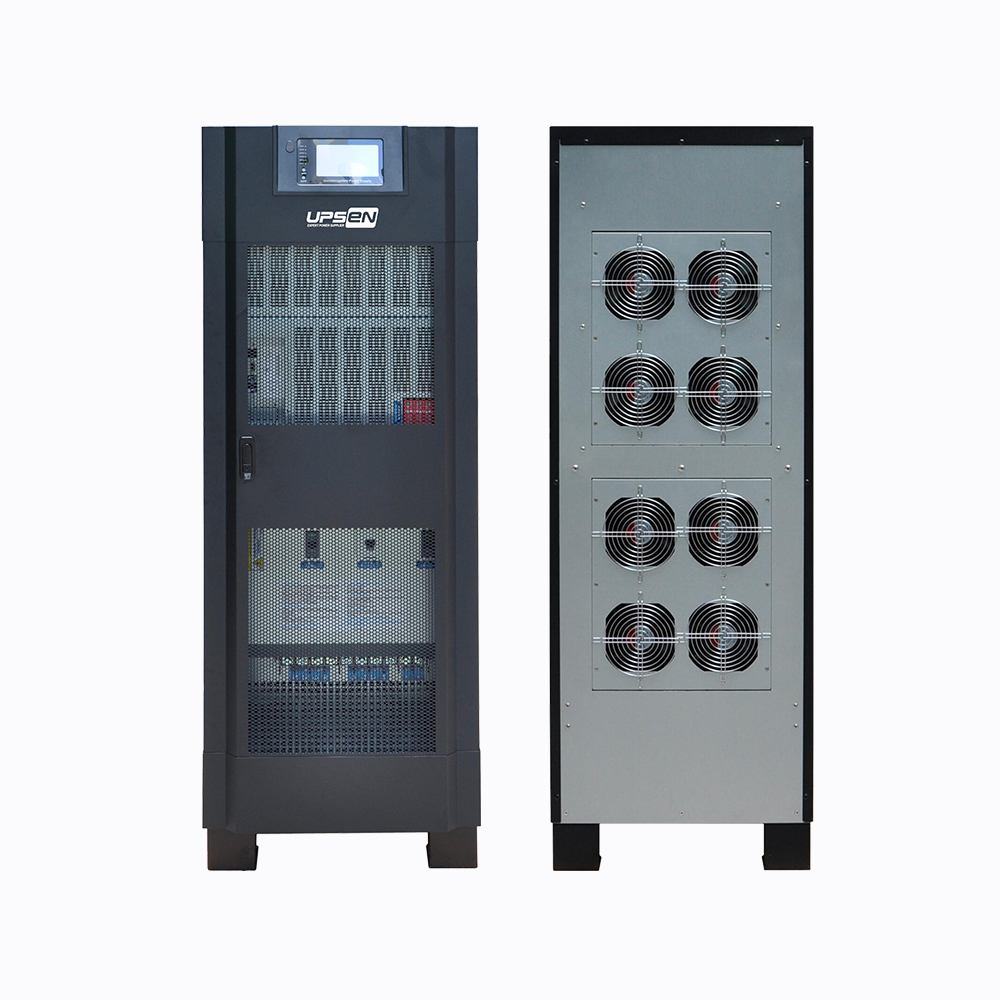
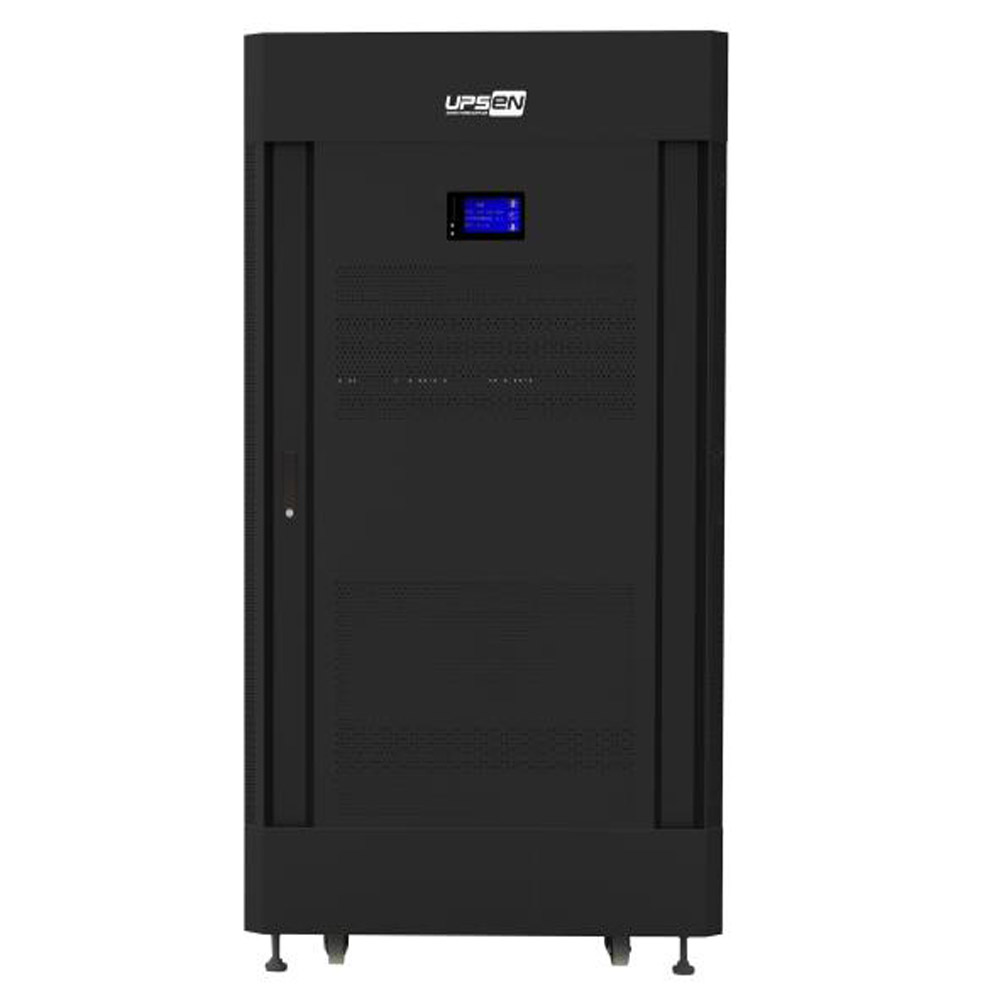
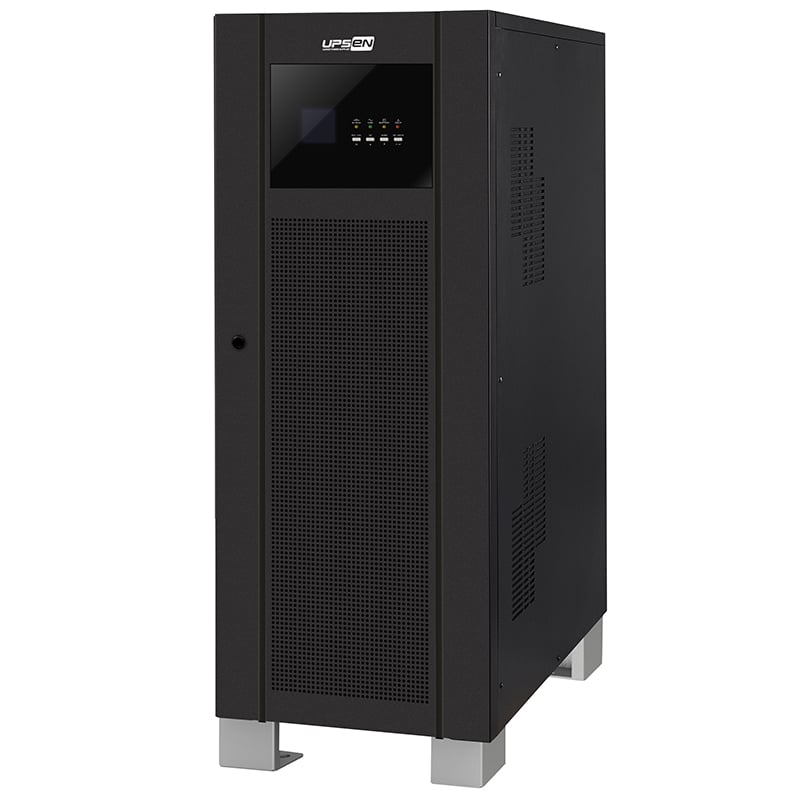
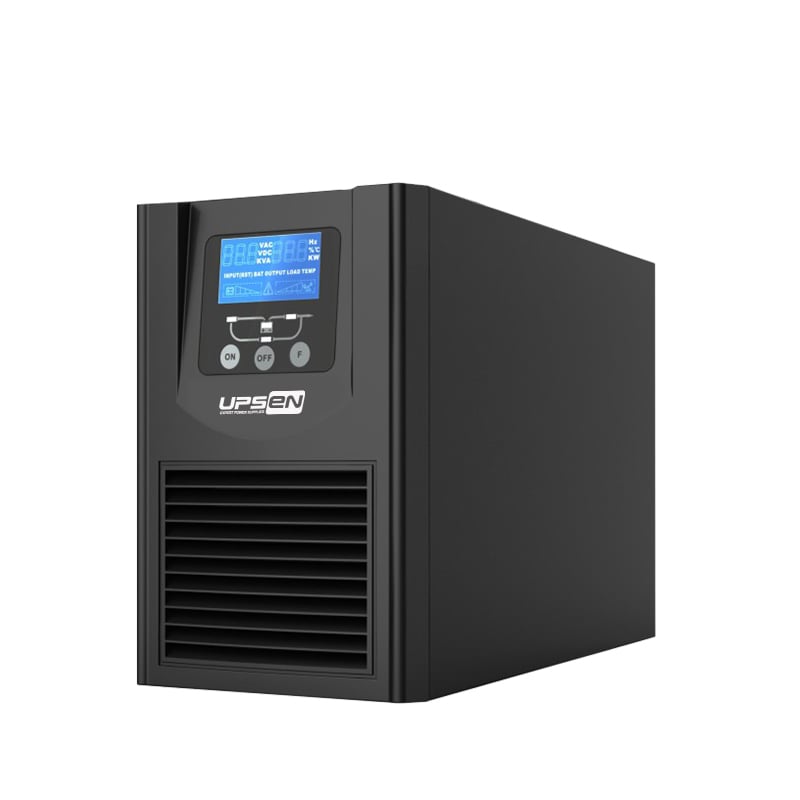
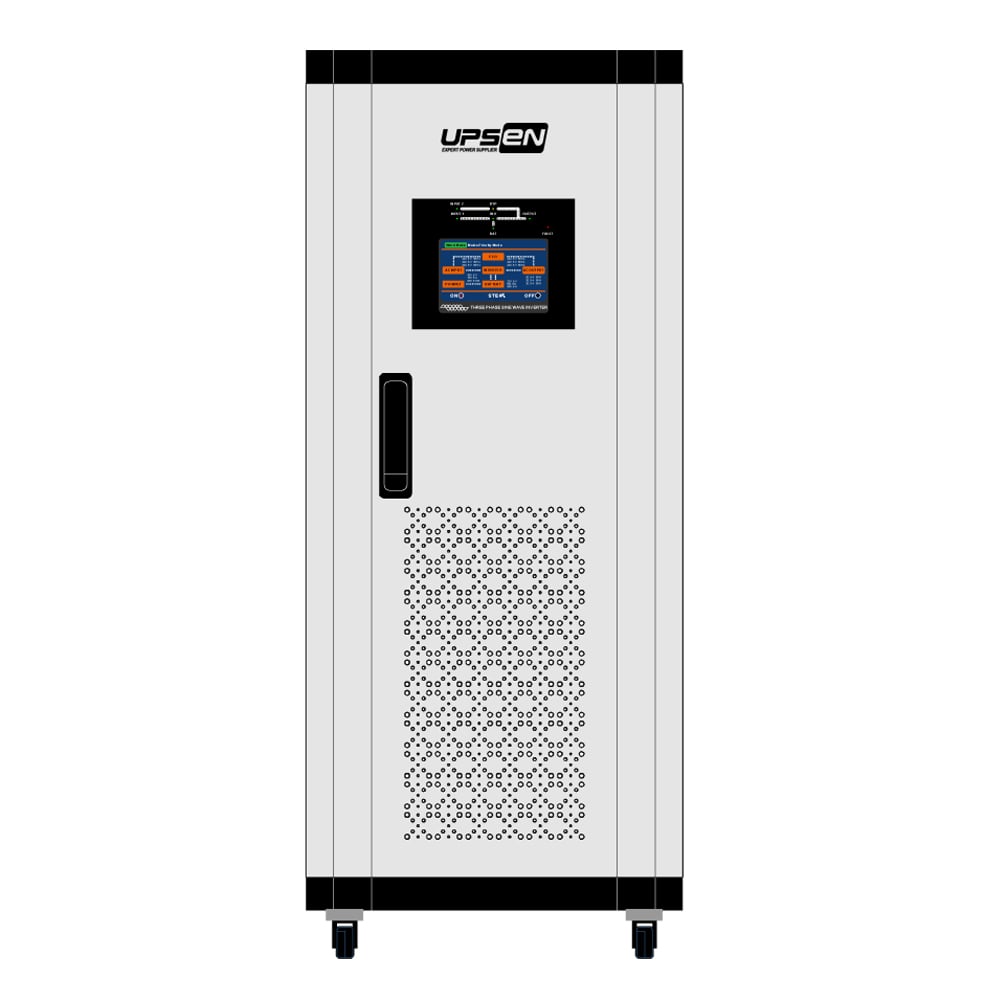
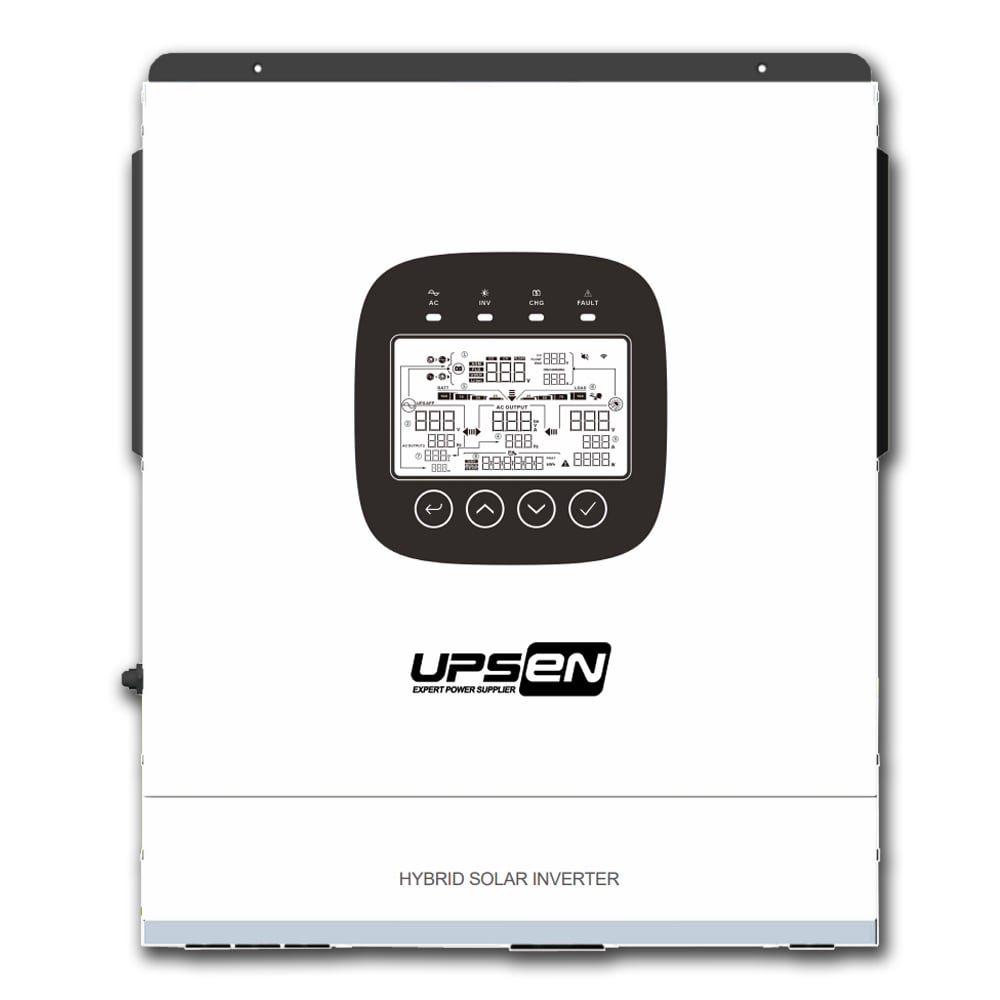
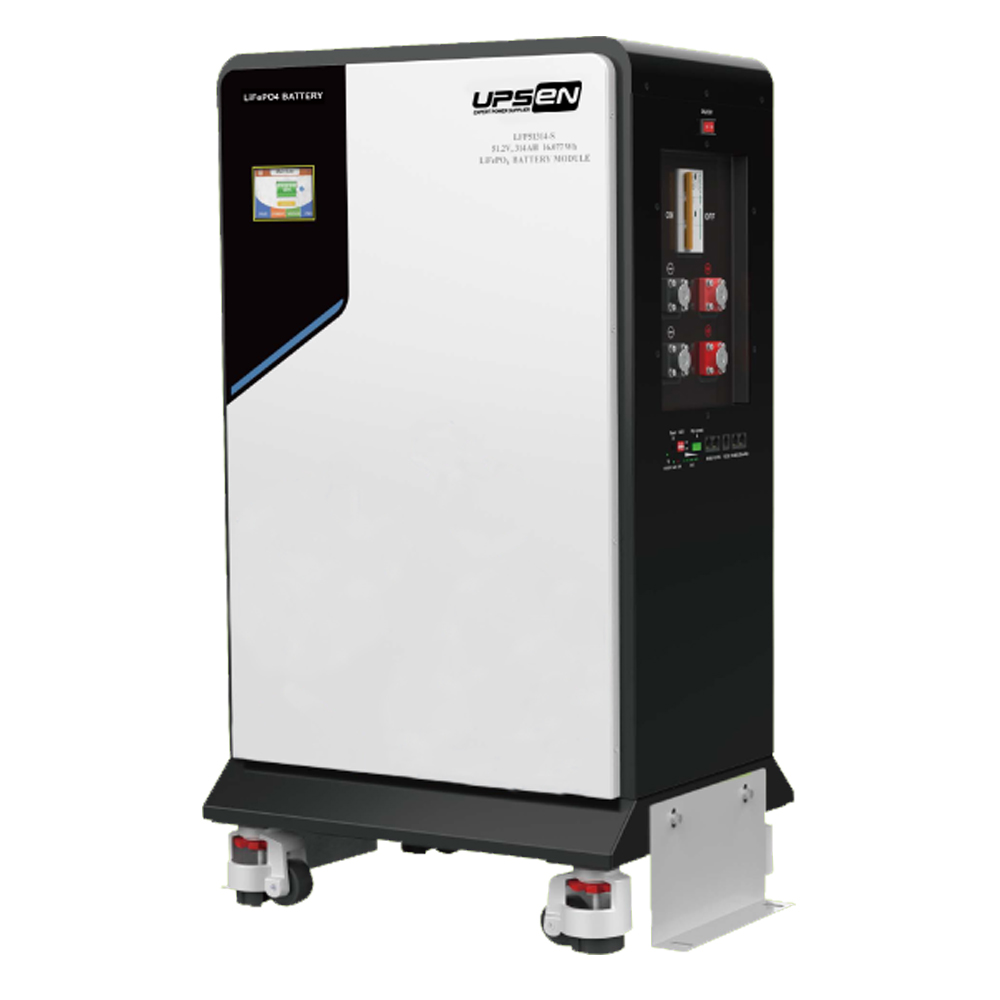
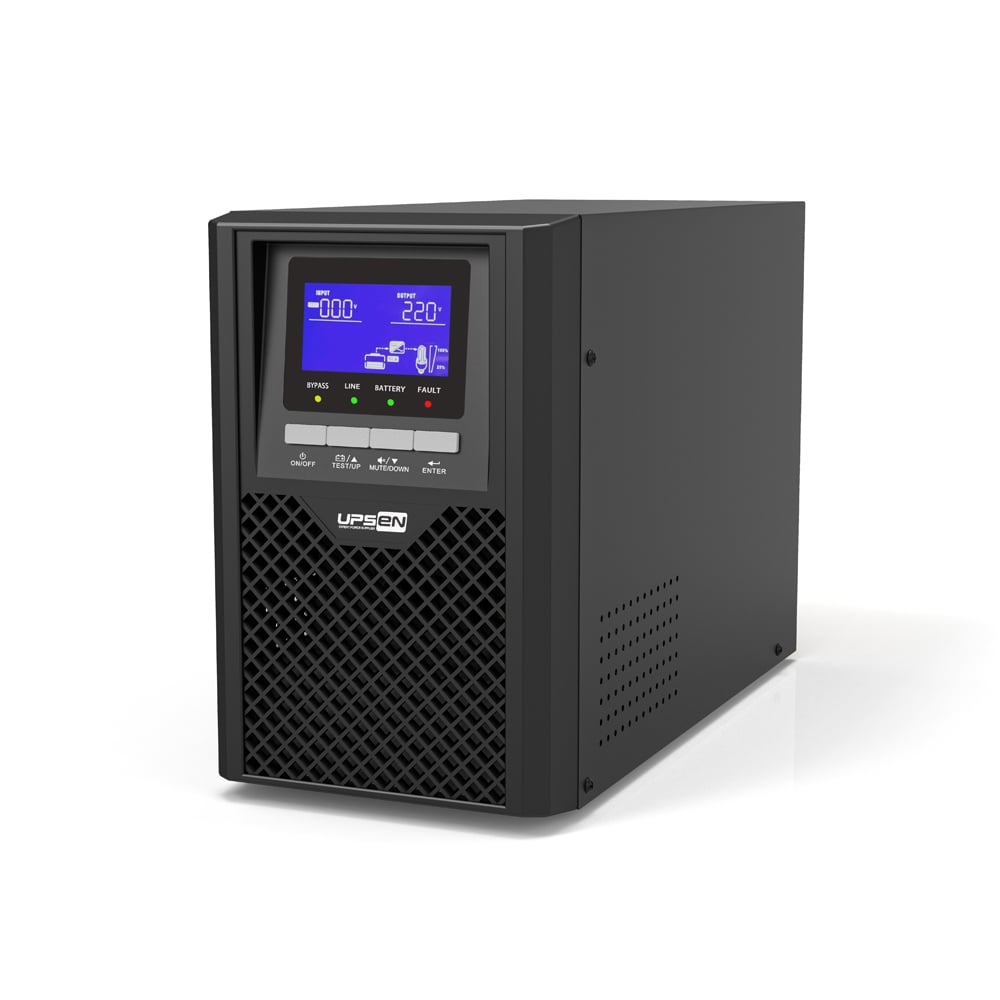
.True double-conversion online technology
.Output PF-0.9
.DSP 100% micro controlled
.Strong overload capacity,125% for 10minutes /150% for one minute
.Dual power supply(selectable)
.Accept 100% unbalanced load
.N+1 parallel redundant connection
.Cold start function
.High efficiency>92%
.Intelligent battery control
.Compatible with generators
.Good protections with Fast acting fuses in DC, Fans, Redundant power supplies, Temperature, Temperature sensors
.Powerful communication system(RS232.SNMP.GPRS)
| Specification \ Model | LP33 20K | LP33 30K | LP33 40K | LP33 60K | LP33 80K | LP33 100K | LP33 120K | LP33 160K | LP33 200K |
| G | eneral | ||||||||
| Capacity | 20KVA | 30KVA | 40KVA | 60KVA | 80KVA | 100KVA | 120KVA | 160KVA | 200KVA |
| Features | Scalable Power/UPS Parallel With Another Of The Same Capacity And Brand/100% Microcontroller/Redundantforced Ventilation/ Immune To Phase Rotation Input/ Dual Input Type Input (Optional) |
||||||||
| Estimated Useful Life | 15 Years | ||||||||
| Efficiency Ac/Ac | Greater Than 92% | ||||||||
| Transfer | 0 Seg. No Transfer Time | ||||||||
| Invertir Technology | True Online (Double Conversion), Inverter Based On Igbt's | ||||||||
| Input | |||||||||
| Voltage () | 460/265 or 480/277 Vac±20% (The Dimensions Could Change On Each Model). | ||||||||
| Frecuency(*) | 50 or 60Hz±10% | ||||||||
| Filers | Emi,Rfi | ||||||||
| Lead Wires (*) | 3 Phases+ Neutral + Ground | ||||||||
| Output | |||||||||
| Voltage (Selectable)() | 460/265 Or 480/277 Vac±1%(The Dimensions Could Change On Each Model). | ||||||||
| Frecuency | 50 or 60Hz±0.1% | ||||||||
| Waveform Type | Sine Wave Generated By The Inverter With High Frequency Pwm | ||||||||
| Harmonic Voltage Distortion T.H.D | <2% For Linear Load/<5% For Non-Linear Load | ||||||||
| Crest Factor | 3:1 | ||||||||
| Power Factor | From 0.9 Leading to 0.9 At Full Load. | ||||||||
| Overload Recovery. | The Ups Autotransferencia | ||||||||
| Isolation Transformer | Dry Type.Voltage 460V/265V or 480/277V | ||||||||
| Voltage Regulation | ± 1% For Balanced Load. | ||||||||
| Overload Capacity () | 125% For 12 Minutes./ 150% For One Minute | ||||||||
| Lead Wires(") | 3 Phases +Neutral+Ground | ||||||||
| Batteries | |||||||||
| Type(*) | 40Pcs For 20 To 200Kva.Sealed And Maintenance Free. Technology Vrla (Valve Regulated Lead Acid) | ||||||||
| Autonomy At Full Load (") | 5 to 15 Minutes. Extended Range Capability. | ||||||||
| Typical Recharge Time. | 4 Hours 90% | ||||||||
| Battery Management. | Auto-Test, Adjustable Battery Transfer Point And Settings Of Alarm. | ||||||||
| Battery Protection. | Breaker Protection.Turn The System Off When The Battery Is Low. Battery Test.Smart Charger. | ||||||||
| Charger | Soft Start To Fuill Load. Current Limiter For Charging Batteries. | ||||||||
| Protections | |||||||||
| Hardware Protection | Breaker (Termomagnetic) For Input, Output, Battery, Bypass, Fast-Acting Fuses In Dc And Bypass, Fan, Powerredundant Temperature Sensors,On-Off Switch, Audible Alarms. |
||||||||
| Bypass | Static,Solid State,Automatic And Uninterrupted Operation Manual For Maintenance. External Bypass (Optional) | ||||||||
| Emergency Breaker. | Local Epo and / or Remote | ||||||||
| Monitoring And Communications | |||||||||
| Front Panel | Lcd Display 4 Rows X 20 Columns For Reading Electrical Parameters. Touchscreen (Optional). Led Mimic. | ||||||||
| Alarms | Audible And Visual Alarms For Non-Normal Conditions. | ||||||||
| Communications | RS232 Serial Port."SNMP-RJ45" For Remote Monitoring (Optional). Gprs Module For Remote Monitoring Viacellular Network (Optional). | ||||||||
| UPS Conditions | |||||||||
| Temperature | 0℃ to 40℃ | ||||||||
| Relative Humidity. | 0'℃ to 95% Noncondensing | ||||||||
| Audible Noise | |||||||||
| Batteries Conditions | |||||||||
| Temperature | 0℃ to 25℃ | ||||||||
| Relative Humidity. | 0 to 95% Noncondensing | ||||||||
| Dimensions And Weights | |||||||||
| Ups Dimensions In Mm (Front"Deep*High) |
535*995*1100 | 645*1070*1320 | 705*1135*1418 | 1160*1043*1900 | |||||
| UPS Weight In"Kg" | 270 | 308 | 380 | 432 | 485 | 608.5 | 650 | 1120 | 1320 |
| *Product Specifications are Subject to Change Without Notice. | |||||||||
The Inverter That Laughs at Inrush Current
A laser cutter fires up and pulls six times its rated current for a fraction of a second. A conveyor motor stalls momentarily and the phase draw goes completely lopsided. A metal halide lamp in a tunnel lighting system demands a clean, stable voltage while its ballast does weird things to the waveform. If you've ever watched a high-frequency UPS throw a fault code and drop to bypass the moment something like that kicked on, you know the frustration. The LP33 Series is the antidote. It's a true online double-conversion UPS built around low-frequency inverter technology—the kind with a big iron transformer at its core that doesn't just tolerate abuse, it expects it.
Double Conversion with a Transformer: The Foundation
Like any serious online UPS, the LP33 takes incoming AC, rectifies it to DC, filters it clean, and then the inverter rebuilds a pristine sine wave. But in a low-frequency design, that inverter drives an output transformer, and that transformer is the secret weapon. It provides galvanic isolation between the DC bus and your load, blocking common-mode noise and ground-loop currents that would sail right through a transformerless high-frequency unit. More importantly, it acts as a massive electrical flywheel. When a motor starter or a laser power supply yanks a huge slug of current, the transformer's magnetic field sags slightly and then shoves back—the inverter doesn't have to supply the entire inrush spike from its semiconductors in one brutal instant. That's why the LP33 can start loads that would cause a high-frequency UPS to buckle.
0.9 Output Power Factor and Overload Numbers You Can Actually Use
Output power factor is 0.9, so a 100kVA unit delivers 90kW of real power. But the overload specs are where this machine separates itself from the pack. It handles 125% overload for a full ten minutes—not ten seconds. And 150% for sixty seconds. In plain terms, that means a temporary surge won't force the unit into bypass. A pump that draws locked-rotor current for a few seconds when it starts, a bank of solenoids that all fire at once, a piece of test gear that momentarily shorts its own power supply during a fault—the LP33 rides through it and keeps delivering clean output. You're not scrambling to reset alarms or wondering if the bypass SCRs are going to weld shut under the stress.
100% Unbalanced Load? No Problem.
Three-phase loads in the real world aren't perfectly balanced. One rack might pull more from L1, another from L2, and L3 is lightly loaded because someone moved a server last week. The LP33 handles 100% unbalanced loading without the output voltage drifting or the inverter waveform distorting. That means you can connect a mix of single-phase and three-phase equipment without derating the unit or nervously watching the phase currents on the display.
DSP Control and Dual Inputs
Everything is orchestrated by a fully digital DSP controller. It samples input voltage, output voltage, load current, and battery status thousands of times a second, keeping the output locked on frequency and voltage regardless of what the grid does. There's no analog drift to chase over time.
For redundancy at the front end, you can configure dual mains inputs—two independent utility feeds, or one utility and one generator. If the primary source fails, the UPS switches to the alternate without a hiccup. And if your load grows or the site demands N+1 redundancy, you can parallel multiple LP33 units. The architecture supports it without requiring a centralised system controller.
Intelligent Battery Management That Earns Its Keep
Batteries are consumable, but how fast they get consumed depends heavily on how they're treated. The LP33 includes intelligent battery management that monitors temperature and battery condition, adjusts charge voltage accordingly, and avoids the kind of chronic overcharging that kills lead-acid cells years before their time. It also supports cold start, so you can fire the unit up from battery alone when the grid is completely dead—useful in remote sites or during extended blackout recovery where you need to bring systems online before the generator stabilises.
Generator Compatibility: No Fighting the Genset
The wide input window means the LP33 doesn't reject generator power as unstable. Where a fussy high-frequency UPS might cycle between battery and bypass while the genset governor hunts, the LP33 just syncs, cleans the power through the double-conversion path, and keeps the load protected. It's one less thing to troubleshoot during a prolonged outage.
Protection That Goes Beyond the Basics
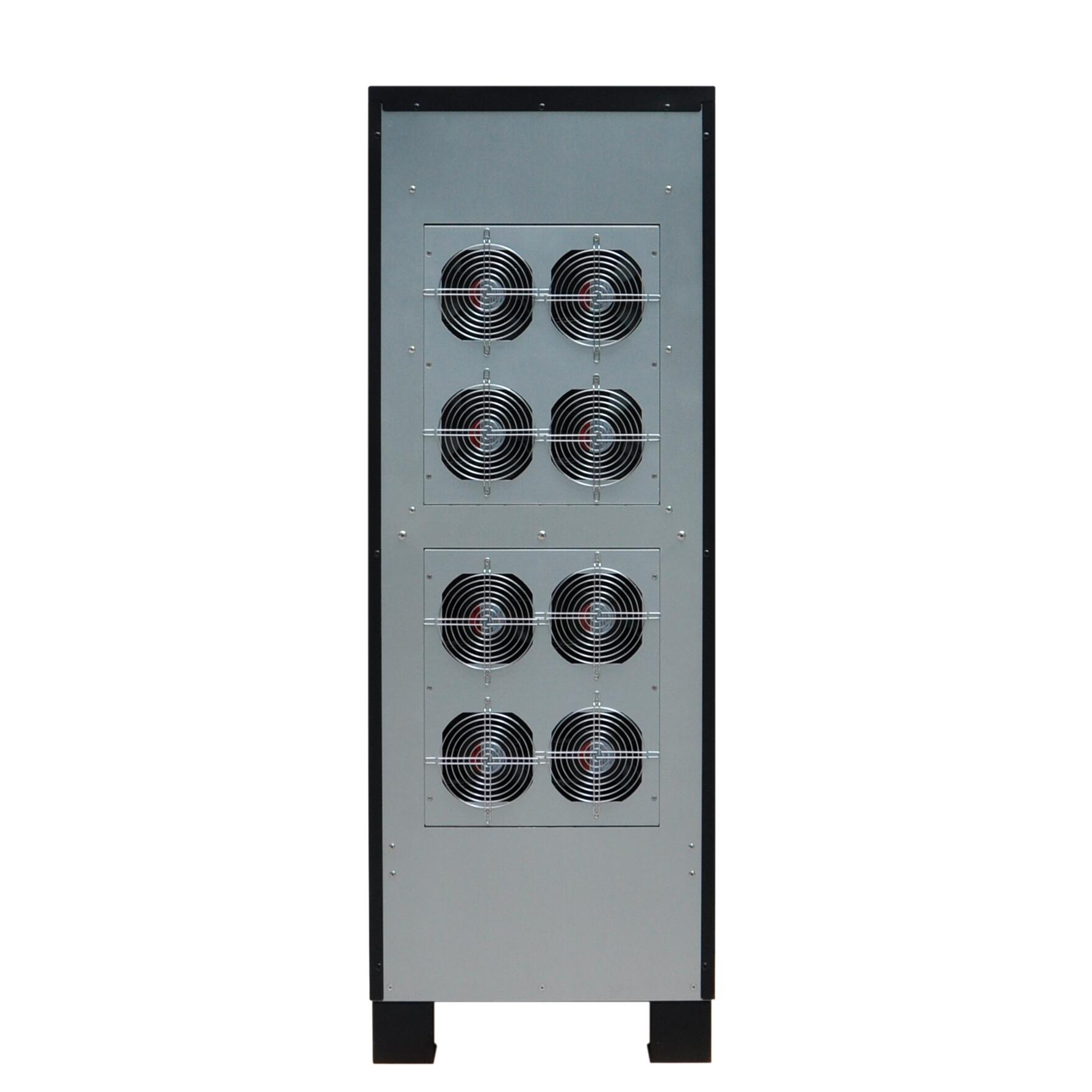
On the DC side, fast-acting semiconductor fuses protect the battery bank and inverter from fault currents. The cooling system uses redundant fans with independent ventilation paths—if one fan stops, the others keep air moving and the unit doesn't overheat. There are temperature sensors monitoring critical components, and the fans themselves are protected against overcurrent. These aren't flashy features, but they're why the LP33 keeps running in hot, dirty electrical rooms long after lesser units have cooked themselves.
Communication Options for Any Site
Standard communication includes RS232 for local monitoring, with optional SNMP and GPRS cards. Whether you're plugged into a building management system, a centralised NOC, or just want to receive SMS alerts when the grid goes down, the LP33 covers it. The interface is straightforward—no nested menus that require a decoder ring to navigate.
Where the LP33 Earns Its Place
The LP33 isn't a UPS for a quiet office server room. It's for environments where the loads are heavy, the power is rough, and the consequences of a trip to bypass are serious. Common deployments include:
`Large IDC rooms where racks of servers need clean, isolated power and the UPS has to handle substantial inrush when rows of equipment power up simultaneously
`Industrial automation lines with a mix of PLCs, servo drives, motor starters, and control electronics all on the same bus
`Bank and securities settlement centres where uptime is non-negotiable and isolation protects sensitive transaction hardware
`Semiconductor fabrication where voltage fluctuations during wafer processing mean scrapped product
`Laser cutting and welding systems that draw punishing current spikes every time the beam fires
`Highway and railway tunnel lighting where metal halide or sodium lamps need clean, regulated power and the UPS has to survive in a hot, dusty, vibration-heavy environment
The Practical Choice for Heavy Loads
The LP33 Series Low Frequency Online UPS doesn't chase the highest efficiency number on a spec sheet. It hovers above 92%, which is solid for a transformer-based design that prioritises fault tolerance and load-handling over squeezing out every last fraction of a percent. What it delivers instead is raw capability: the ability to start motors, ride through overloads, accept unbalanced phases, and keep running when the environment is less than ideal. If your loads are polite servers in an air-conditioned room, there are more compact and efficient options. But if your site is rough on power electronics, the LP33 is the machine that takes the beating and asks for more.

1409-1410, Tongfang Center, the intersection of Zhongxin Rd. and Haoxiang Rd., Xinqiao St., Bao'an Dist., Shenzhen, China.
Copyright © Shenzhen UPSEN Electronic CO., LTD. All Rights Reserved Privacy Policy
 EN
EN