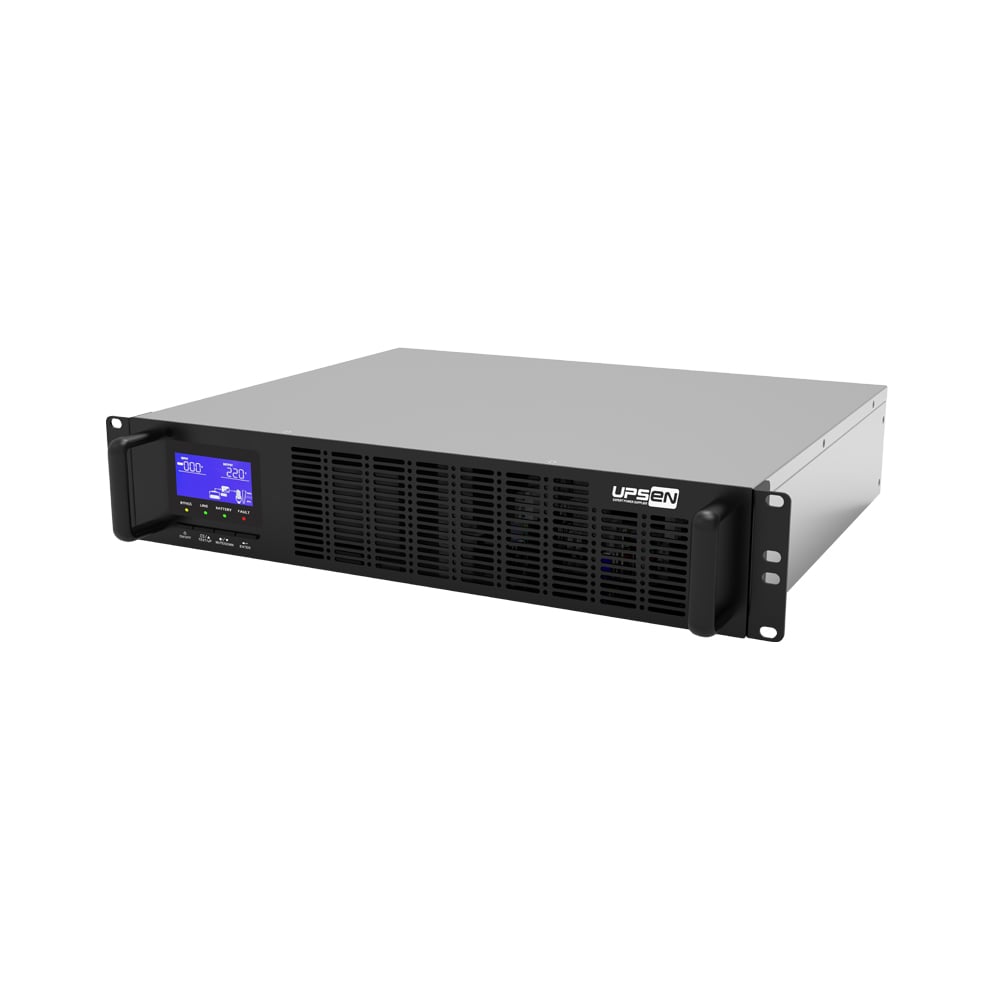
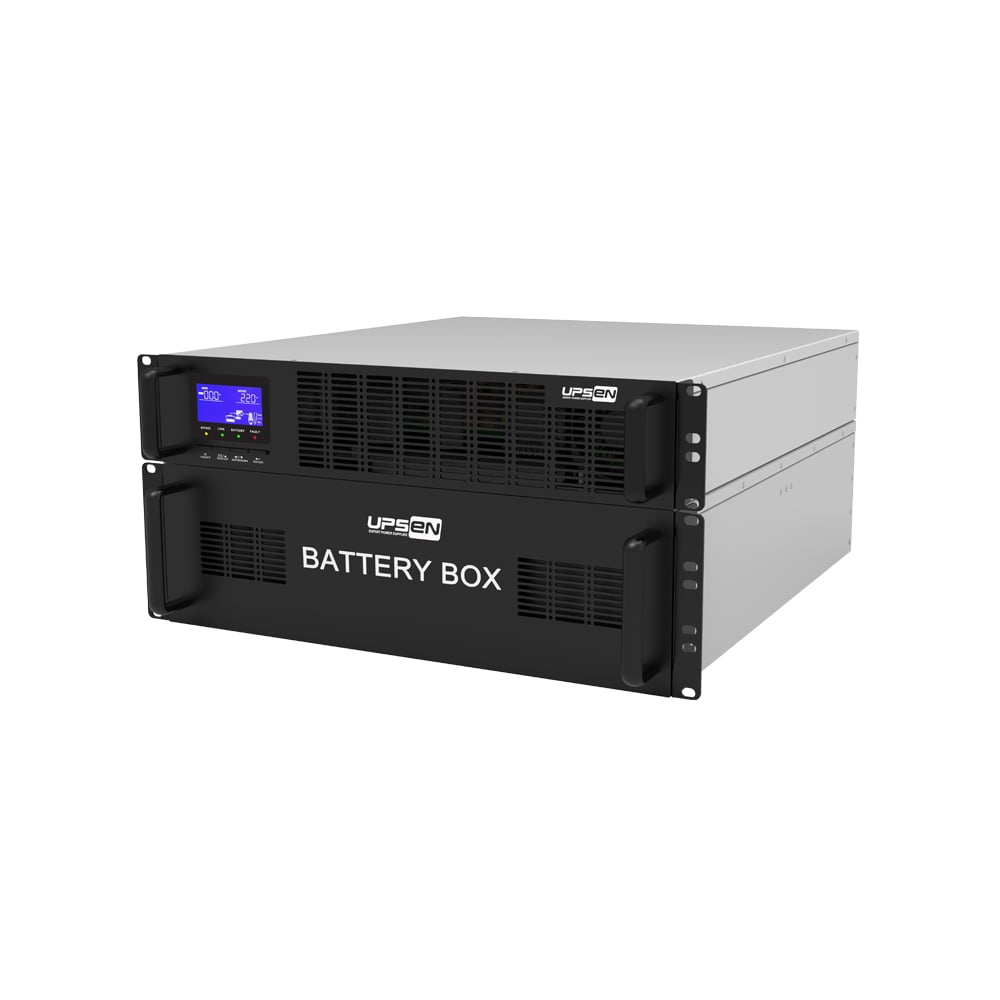
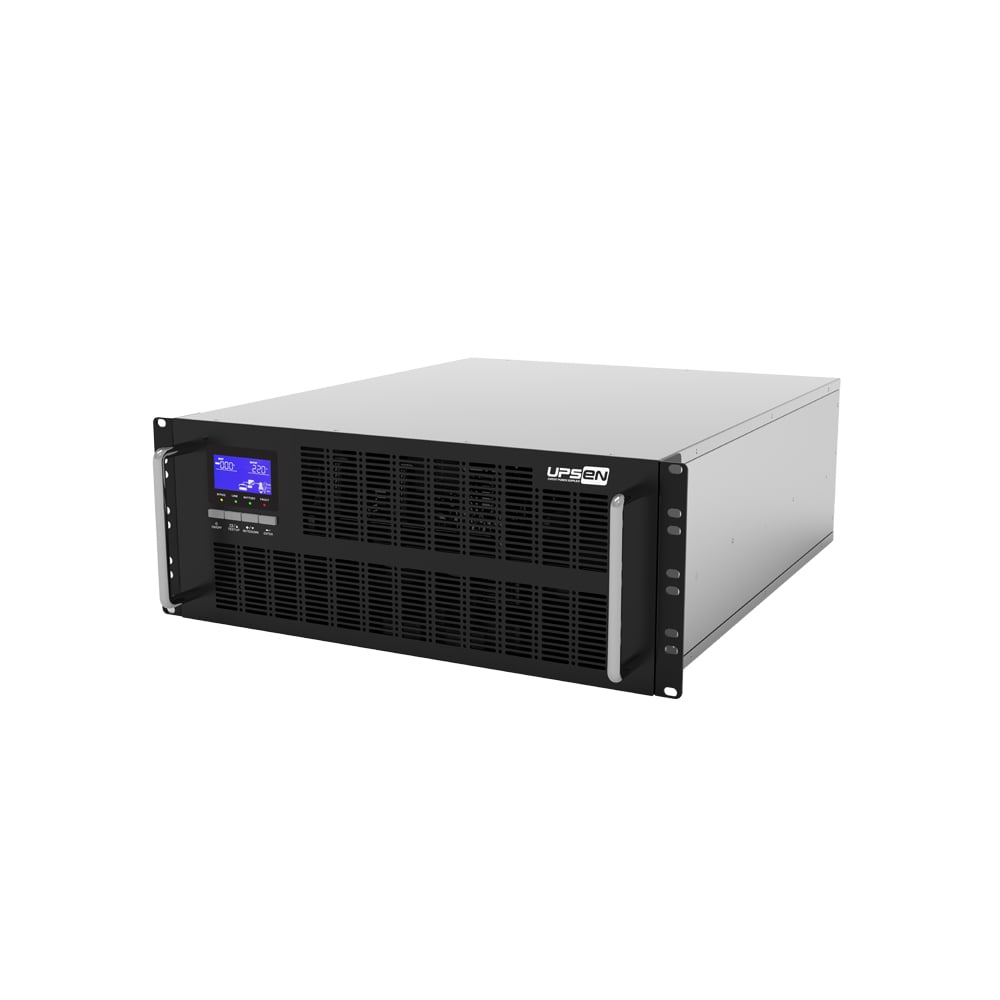
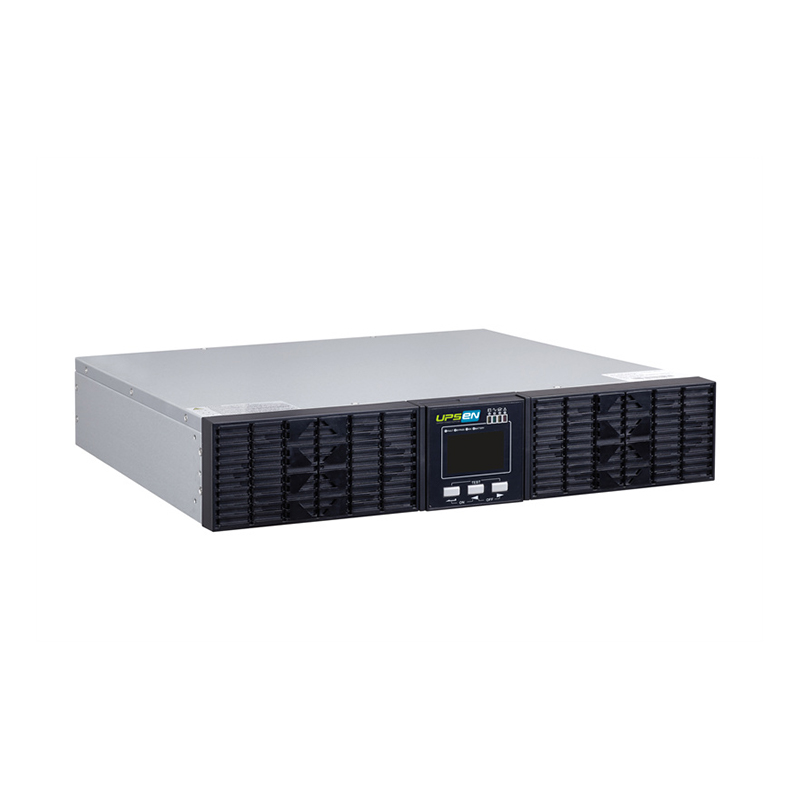
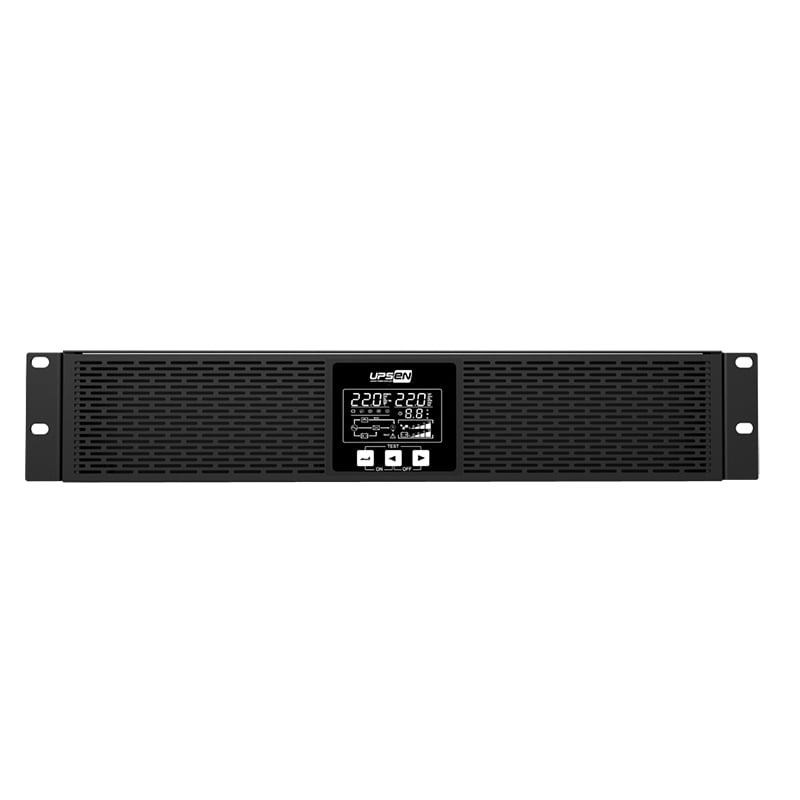
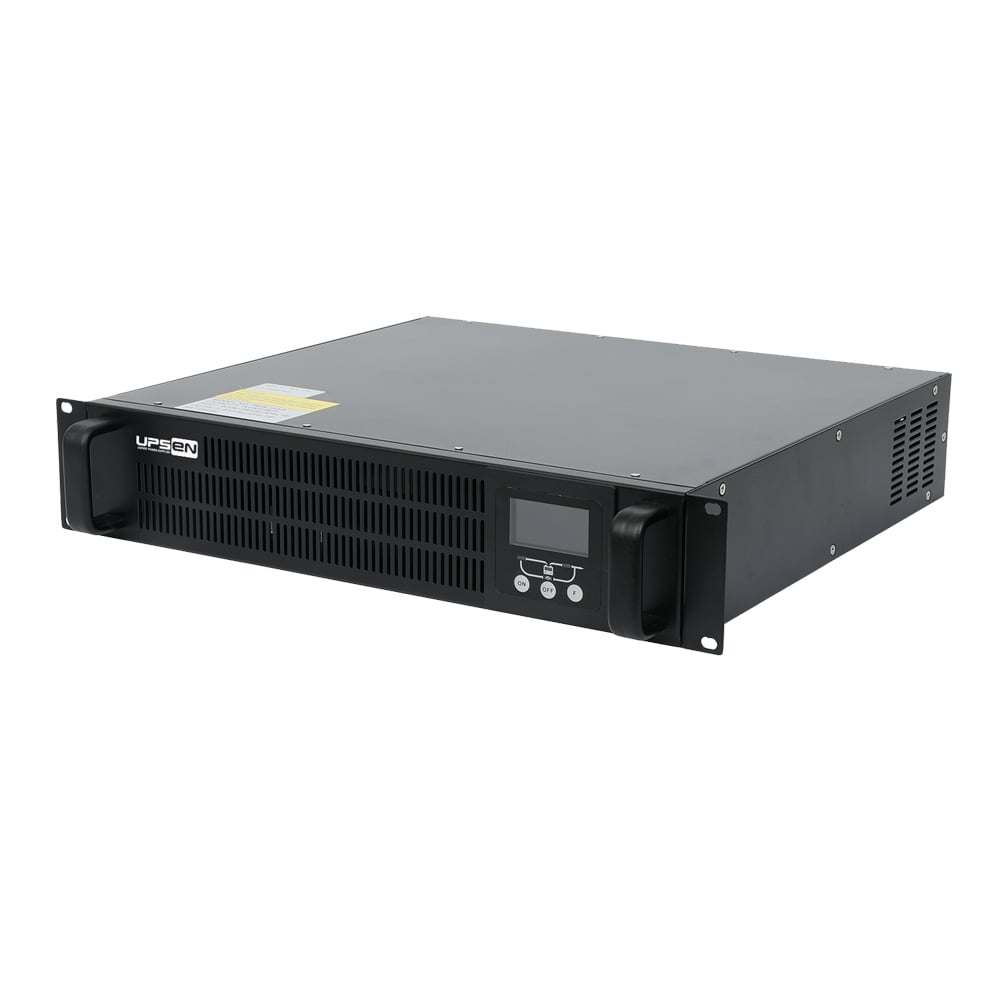
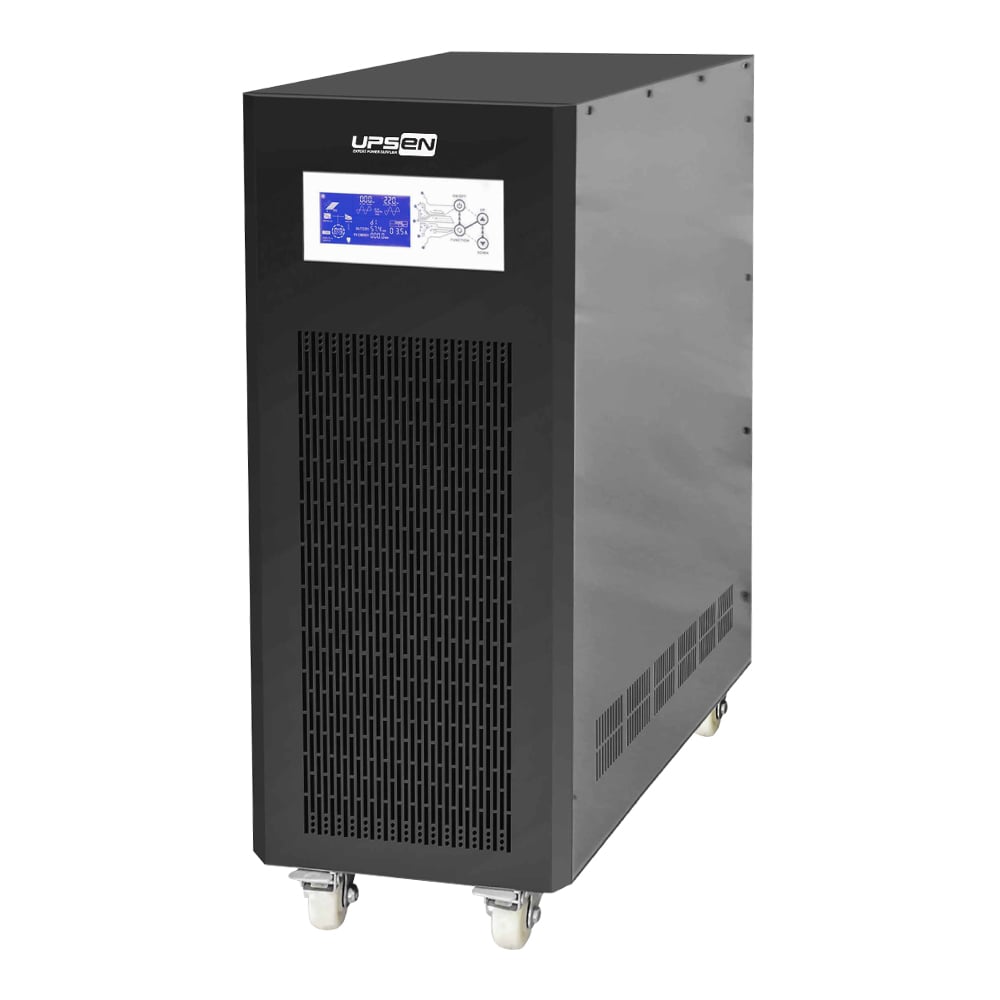
●Zero Transfer Time
True Double Conversion Online UPS (IEC62040-3:VFI-SS), providing the most comprehensive protection for mission-critical equipment from a wide range of power quality issues.
●3-level Inverter for the Best Loading Capability
3 level inverter topology, supports with extensive range of load, including half-wave rectifier load (blow dryer, Solenoid valves, Laser printer etc.), Induction motors load.
●High Efficiency
With up to 93% efficiency in double conversion online mode and 97% ECO mode.
●Li-ion Battery Powered
Provide up to 3x backup time in 50% dimension, comparing with regular Lead-acid UPS product
●Dry Contact Control Interface for BMS
Incorporated a Dry Contact interface for BMS-oriented control of charging and discharging based on in-depth BMS information.
●ModBUS interface with BMS
Incorporated a ModBUS(RS485)interface with BMS to achieve precise battery information (voltage/soc soh, etc.) or rational UPS & battery pack behaviour coordination and backup time prediction. TheModBUS works with BMS Dry Contact as communication redundancy, avoiding the critical communication crashes caused by any single fault.
●Li-ion Battery Charger
Constant current, Constant voltage, Floating, Turn-Off 4 state charger for Li-ion battery, open to customize the logical behavior for customer- specified battery pack
●Ultra Wide Input Mains Range
Strong compatible with ultra with electric environment, stay well with ultra wide range mains of 65V~145V, 40~70Hz,dramatically reduce battery discharge, prolong battery life.
●Best Loading Capability
Up to 0.9 Output Power Factor,50/60 Hz Automatically adapting, selectable voltage, perfectly match all kind of application
●DSP Digital Control Based
Advanced DSP-based digital control brings high performance of high input Power factor, low distortion, supplying the load with perfect sine wave AC power supply.
●High Input Power Factor
Thanks to digital controlled PFC Technology,>0.99 input power factor, effectively avoid power pollution, save energy expense for customer
●Reliable Design
Made with strong Glass fiber base (FR4) double side PCB,company with large span component, greatly improve reliability in harsh environment, Well designed ventilation and conformal coating,avoid dust accumulation, improve resistant to corrosion.
●Open to Customization
Based on powerful controller and open architecture, the product is able to be customized to match need of integration of automatic system or intelligent supervisory system.
| Model | RS 1K-LI(LV) | RS 1KL-LI(LV) | RS 2K-LI(LV) | RS 2KL-LI(LV) | RS 3K-LI (LV) | RS 3KL-LI(LV) | |
| Power Rating (VA/W) | 1KVA/ S0OW | 2KVA/1800W | 3KVA/2700W | ||||
| Topology | Double Conversion Online UPS | ||||||
| Phase | Single Phase Input Single Phase Output | ||||||
| Mains Input | Wiring | 1 Phase 3wtes (L/N+PE) | |||||
| Rated Voltage | 110/115/120/127VAC | ||||||
| Voltage Range | Line-Neutra:60-145VAC | ||||||
| Input Frequency Range | 40Hz-70Hz | ||||||
| Input Power Factor | 20.99 | ||||||
| AC Output | Wiring | L/N+PE | |||||
| Output Vatage | 110/115/120/127VAC | ||||||
| Output Wiring | ±1% | ||||||
| Output Frequency Range | 50/60Hz±4Hz(Sync Mode) 50/60Hz * 1% (Fix Freq Mode) |
||||||
| Output Waveform | Pure Sine Wave | ||||||
| Output Distortion (THDV%) | *2% (Linear Load): <8% (Non-Linear Load) | ||||||
| Overload Capabilty | 1 minutes @ 105%~125% Rated Load | ||||||
| 105ec.@125%-150% Raded Load | |||||||
| 0.55ec@>150% Rated Load | |||||||
| Erficency | AC/AC Mode | 88% | 89% | 90% | |||
| Battery and Charger |
Rated Battery Volage | 51.2 | /4BVDC (Defaut for 16 Call of LF | ePO4) | |||
| Battery Capacty | 615WH | External Batter tery Depends |
920WH | External Battery Depends |
1230WH | Extermal Battery Depends |
|
| Backup Time | >30mins @ Ful Load |
>20mins @ Ful Load |
>20mins @ Full Loed |
||||
| Backup Time 2 (Extemal Battery Module) |
51.2V30AH-90mins 51.2V50AH-150min 50mins 51.2V1D0AH-300mins @Ful Load |
51.2V30AH-45mins scmins 51.2V50AH-75mir 51.2V100AH-150mins @Ful Load |
51.2V30AH-30mins 51.2V50AH-50mir 51.2V100AH-10mins @Ful Load |
||||
| Charging Curent | 1-3K Standard Model with Internal Battery: 4A 1-2K Long Backup Time Model:4A/8A(Opticnal)/12A(Optional) 3K Long Backup Time Modet: 4A8A(Optional)/12A(Optional) |
||||||
| Charging Voltage | 56.8V(default for 16cel of LiFePO4)/Customerized according to batiery request | ||||||
| Charger Behavior & Protection | CC./CV/Floating/Turn-Off 4 States 3 Over voltae protection loop,preserve interfacfor over temperature / over pressure switch off interface |
||||||
| Machine Size-WD'H(mm) | 438~400*88(2U) | 438~400~88(2U) | 438*500-88(2U) | 438~400~88(2U) | 438*650~88(2U) | 438~400~88(2U) | |
| Net Weight(CG) | 13.6 | 7.7 | 16.7 | 82 | 21 | 83 | |
| HMI | LCD Display | Mains/Battery Status, Load Level,Batery Level, Operation Mode | |||||
| LCD Dinplay with LED Indicator | Input Mains Votage,Frequency, Load lovel, Operation Mode, Health Status, Battery SOC | ||||||
| Communication Interfaces | 1.RS232 PORT/USB Card (Not HID) 2 Dry Contact Interface for BMS Control 3. ModBUS For BMS Interface |
||||||
| Optional Extenaion Card | 1. Network Card Support SNMP/TCPIP for remote monitoring the UPS via Smat Phone APP,Web page. PC Menitor Seftware, Support Server / NAS shuldown 2.RS485-Modbus Card, LAN(TCP IP)-MedBUS Card 3.Mini A5400 Relay Card |
||||||
| Erironment | Temperature Range | -10-50℃ | |||||
| Retalive Humidity | 0~98% (Non Cendensing) | ||||||
| Audible Noise | <55dB@1 meters | ||||||
| *Product Specifications are Suject to Change Withoul Notice. | |||||||
Lithium Battery Backup for When the Grid Barely Holds On
Let's picture a typical low-voltage nightmare. You're running a small security gate, a remote telecom cabinet, or a critical pump controller in a rural location. The power coming in isn't just "dirty" — it's falling apart. Voltage sags to 70 volts regularly. Generators kick in with rough, unstable output. And you don't have space for a rack full of lead-acid batteries.
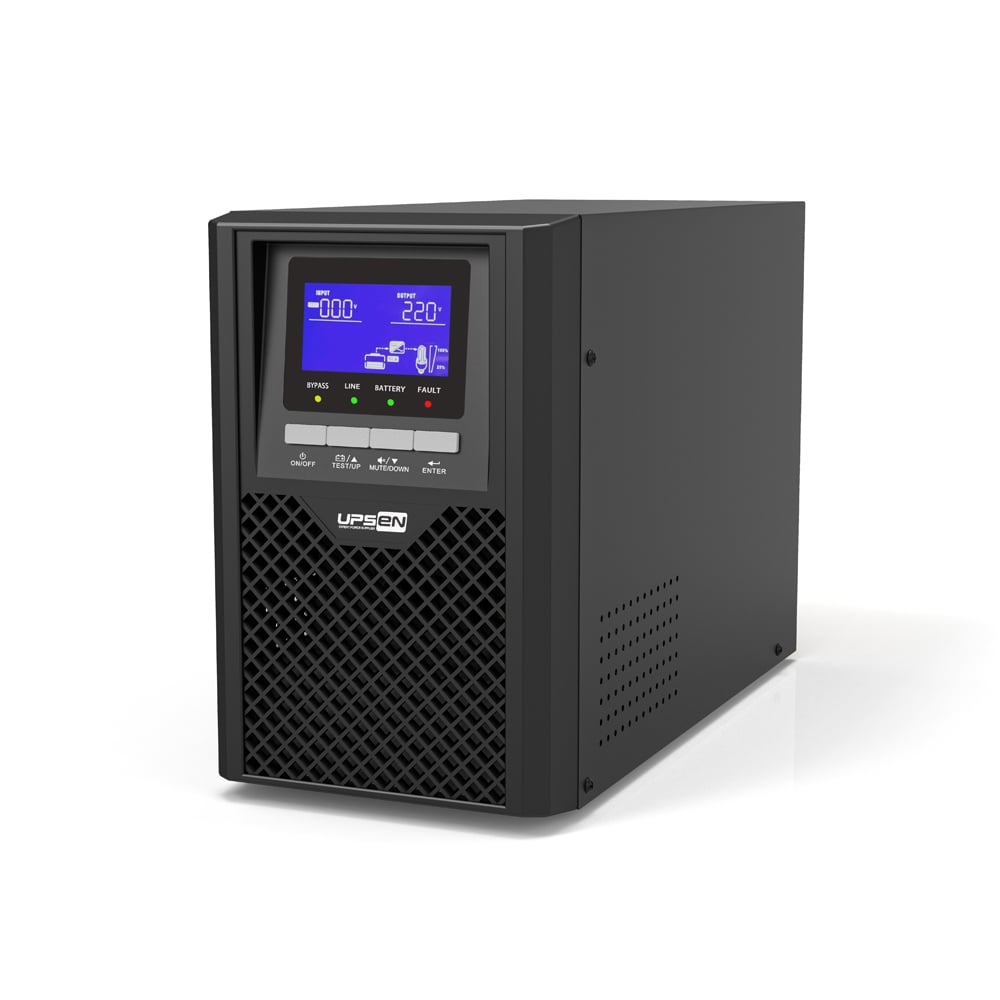
The RS-Li(LV) is designed specifically for this kind of chaos. It's a true online double-conversion UPS, meaning your equipment never sees the raw grid. But what really sets it apart is how it pairs an ultra-low 65V input tolerance with a built-in lithium-ion battery pack — and then wraps it all in a rugged, dust-resistant chassis that doesn't flinch.
True Online Protection, No Shortcuts
This unit is classified VFI-SS under IEC62040-3, the highest performance rating for a UPS. The inverter is always running, regenerating a perfect sine wave from the DC bus. If the grid drops completely, there's no transfer time. Zero. Your load doesn't see a flicker.
Inside, a DSP digital controller keeps output voltage and frequency locked on target. It doesn't matter if the input is swinging between 65 volts and 145 volts or wobbling around 40 to 70 Hz — the output stays clean and stable. For sensitive servers, access control panels, or medical carts where a single power glitch can cause a system crash, that's the baseline you need.
Lithium Where It Makes Sense
Lead-acid batteries in this size range are bulky, heavy, and they hate being cycled. The RS-Li(LV) uses a lithium-ion pack instead. Compared to a lead-acid UPS offering similar runtime, this one takes up about half the space and can give you up to three times the backup time. In a shallow wall-mount enclosure or a crowded industrial panel, that's the difference between fitting and not.
And lithium lasts. Thousands of charge-discharge cycles instead of a few hundred. Over the unit's life, the total cost of ownership usually tips in lithium's favor — less battery swapping, less labour, less downtime.
Deep BMS Integration with Redundant Communication
Most UPS units with lithium batteries treat the battery management system like a black box — if you're lucky, you get a single dry contact for "battery OK." The RS-Li(LV) doesn't do that. It talks to the BMS over two independent interfaces:
`A dry contact interface for essential control signals: when to charge, when to discharge, basic status.
`A ModBUS (RS485) interface that streams real-time data: individual cell voltages, state of charge, state of health, temperature, and even remaining runtime prediction.
The really clever part: these two interfaces act as redundant communication paths. If the ModBUS link drops, the dry contact path still keeps the battery safely in its operating envelope. No single point of failure in the monitoring chain. For a critical site that needs to know exactly what the battery is doing without sending a technician to check, this level of visibility is rare in a sub-3kVA unit.
Charging That Respects the Cells
The built-in charger is a proper 4-stage lithium profile: constant current, constant voltage, float, and turn-off. It doesn't trickle-charge the battery to death like a dumb lead-acid charger. If you're using a custom battery pack — different cell count, different chemistry — the charging logic can be tuned to match. You're not locked into a rigid configuration.
Handles the Loads That Trip Other Units
The inverter uses a 3-level topology, which produces a smoother output waveform and handles non-linear loads that would make a standard 2-level inverter protest. Half-wave rectifier loads (think small solenoid valves, cheap LED drivers, or a blow dryer on a service bench) won't cause the output to distort. Induction motors and laser printers — loads with sharp inrush currents — are handled without the UPS dropping to bypass. In mixed-use environments where you might have a server, a camera, and a small pump on the same circuit, this is a practical advantage.
Efficiency That Adapts
In full online mode, efficiency runs at 93%. If the grid is relatively stable and you want to save a few extra percentage points, flip it into ECO mode and efficiency jumps to 97%. The inverter stays ready, and the UPS snaps back to double-conversion the moment the input power looks questionable.
Built for Harsh Environments
The internals are built on an FR4 glass fiber PCB with conformal coating. Components are spaced with large span to handle vibration and thermal cycling without cracking solder joints. Ventilation is designed to move air efficiently while keeping dust accumulation to a minimum. This isn't an office UPS in a rugged wrapper — it's a unit that's meant to survive in unconditioned utility closets, dusty factory floors, and humid coastal telecom shelters.
Open to Custom Integration
Because the controller is flexible, the RS-Li(LV) can be customized for integration with automatic control systems or intelligent supervisory platforms. If you need the UPS to speak a specific protocol or work within a larger energy management setup, that's generally achievable.
Where the RS-Li(LV) Fits Best
This unit is for sites that combine several tough requirements into one box: the grid is weak (frequent dips below 90V), space is tight, lithium's benefits matter, and battery visibility is non-negotiable. Common applications include:
`Remote telecom shelters and microwave relays
`Security gate controllers and access control panels
`Industrial automation cells and PLC cabinets
`Medical carts and portable diagnostic stations
`Rural pumping stations and monitoring systems
If your voltage routinely stays above 90V, the standard RS-Li or another series might be enough. But if you're dealing with brownouts that dip into the 60s — and you want lithium's runtime and lifespan without giving up ruggedness — the RS-Li(LV) is the one.
The Practical Upshot
The RS-Li(LV) High Frequency Online UPS combines three things that rarely show up together in a 1–3kVA package: an ultra-low 65V input tolerance, a space-saving lithium battery, and a redundant BMS communication setup that tells you exactly what's happening inside. It runs clean online power, handles tricky loads, and is built to survive conditions that would have lesser units throwing fault codes. If your power situation is messy and your uptime expectations are strict, this machine was made for it.

1409-1410, Tongfang Center, the intersection of Zhongxin Rd. and Haoxiang Rd., Xinqiao St., Bao'an Dist., Shenzhen, China.
Copyright © Shenzhen UPSEN Electronic CO., LTD. All Rights Reserved Privacy Policy
 EN
EN