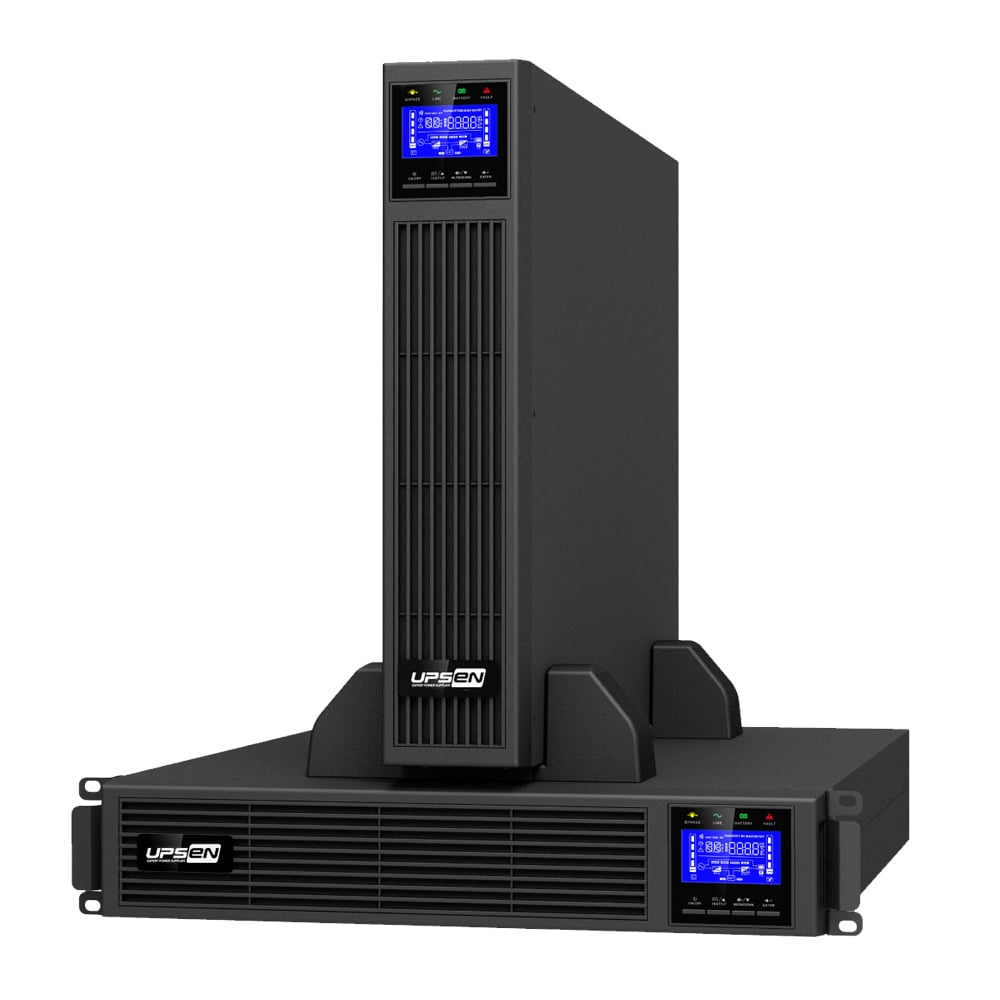
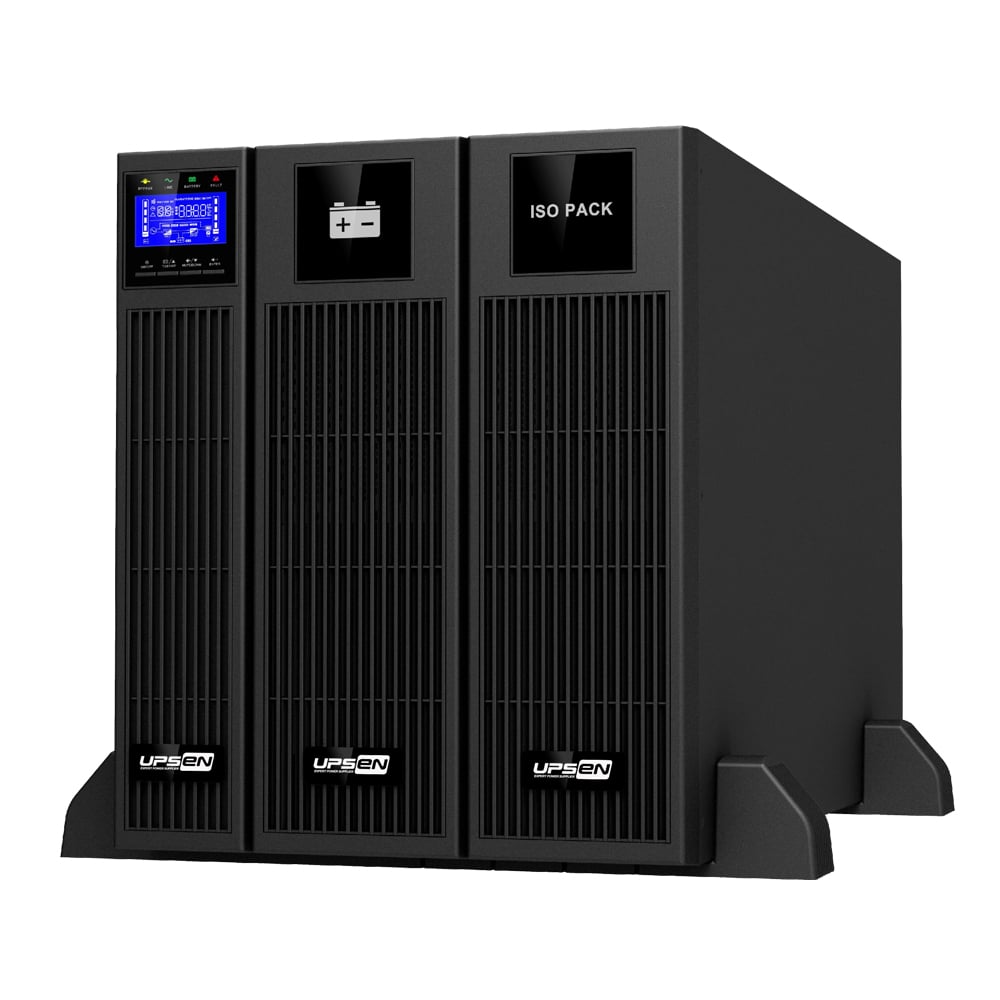
In today's digital-first world, power continuity is non-negotiable. From data centers hosting cloud services to industrial plants running 24/7 operations, even a few seconds of downtime can result in significant financial losses and reputational damage. This is precisely where UPS (Uninterruptible Power Supply) systems come into play—and among the various UPS architectures available, the parallel-redundant (N+X) configuration stands out as one of the most robust and widely adopted solutions for mission-critical power protection.
Understanding UPS Parallel Operation
Before diving into the N+X redundancy concept, it is essential to understand what UPS parallel operation entails. A UPS in parallel refers to the configuration where the outputs of two or more UPS modules are connected to supply the load via a common AC busbar. In this setup, all connected UPS units operate in synchronization, sharing the total load demand equally among themselves. This parallel architecture forms the foundation upon which redundancy can be built.
What Does "N+X" Actually Mean?
The "N+X" designation follows a logical and industry-standard naming convention. "N" represents the minimum number of UPS modules required to support the total critical load—essentially the "need" capacity of the system. "X" denotes the number of additional, redundant modules installed beyond this minimum requirement. For example, in an N+1 configuration, if three UPS modules are needed to power the load (N=3), the system would include four modules in total, providing one extra unit for redundancy purposes.
This N+X configuration is commonly used to protect mission-critical applications in data centers, industrial sites, and larger business operations. The fundamental principle behind a parallel-redundant UPS system is straightforward yet powerful: it can continue to support the critical load should one or more UPS modules fail. This built-in fault tolerance is what distinguishes redundant systems from simple capacity configurations.
How Parallel-Redundant Systems Work in Practice
During normal operation, each UPS in a parallel-redundant configuration shares the load equally. This load-sharing arrangement ensures that no single module operates at maximum capacity under typical conditions, which helps reduce stress on individual components and extends equipment service life. Similarly, when the UPS system needs to run on batteries during a utility outage, each module draws from its own independent battery set rather than a shared common battery—a design feature that prevents a single battery failure from compromising the entire system.
If any UPS module in a parallel-redundant configuration fails or experiences an internal fault, it automatically disconnects from the output AC busbar, while the remaining active UPS modules continue sharing the load seamlessly. This isolation mechanism ensures that a single point of failure does not propagate through the system, maintaining uninterrupted power to the connected equipment.
Key Benefits of N+X Parallel Redundancy
Higher Availability and Reliability: Compared to N capacity installations, which provide no redundancy whatsoever, parallel-redundant configurations achieve significantly higher availability and MTBF (Mean Time Between Failure). This enhanced reliability is essential for organizations that simply cannot afford downtime—large data centers, financial institutions, and healthcare facilities among them.
Concurrent Maintenance Capability: One of the most practical advantages of N+X redundancy is that it enables UPS maintenance to take place without interrupting the critical load. Individual modules can be powered down for servicing while the remaining UPS modules continue supporting the load. This concurrent maintainability aligns directly with Tier III data center requirements as defined by Uptime Institute standards, which mandate that systems can be serviced without requiring downtime.
Fault Tolerance and Automatic Isolation: When a module fails, the system automatically removes it from the critical bus without operator intervention. Internal diagnostics immediately isolate the faulty unit, and the remaining modules seamlessly assume the additional load. This automatic failover capability minimizes human error and accelerates recovery from component failures.
Scalability and Future Growth: N+X parallel architectures offer inherent scalability. As power requirements grow, additional UPS modules can be added to the parallel bus—provided the system is designed with expansion in mind. Modern modular UPS designs take this concept further, allowing incremental capacity scaling without requiring downtime.
N+X vs. Other Redundancy Architectures
It is important to distinguish N+X parallel redundancy from other common UPS configurations:
Capacity (N) Configuration: This is the simplest and most common arrangement, where exactly the number of modules needed to support the load are installed. While cost-effective, N configurations offer no redundancy; maintenance requires bypassing the entire UPS system, leaving the load unprotected.
2N Configuration: Also known as system plus system, this architecture uses two completely independent UPS systems, each capable of supporting 100% of the load. A 2N design provides dual power paths from service entrance to critical loads, eliminating virtually all single points of failure. While more reliable than N+X, 2N systems come at a significantly higher cost.
2N+1 Configuration: This premium architecture combines the benefits of 2N and N+1 designs, providing fully redundant dual-bus systems with an additional backup module per side. This configuration is typically reserved for the most critical Tier IV data center environments.
Implementation Considerations and Best Practices
When planning an N+X parallel-redundant UPS deployment, several factors warrant careful attention:
Module Compatibility: For stable parallel operation, all UPS modules in the system must be identical in brand, model, and specifications. Precise synchronization is required to ensure proper load sharing and fault isolation.
System Commissioning: Parallel UPS systems require more complex commissioning than standalone units. Proper configuration of system parameters—including the number of parallel requisite units—is essential for reliable operation.
Space and Cooling Requirements: Additional modules require additional floor space and generate more heat than a simple N configuration. Data center planners must account for these factors when designing the facility infrastructure.
Initial Investment: While more expensive than capacity configurations, the investment in N+X redundancy is often justified by the cost of downtime that it helps prevent. Organizations should evaluate their downtime tolerance and business continuity requirements when selecting a redundancy level.
The Role of N+X Redundancy in Tiered Data Centers
The Uptime Institute's Tier classification system provides a useful framework for understanding redundancy requirements. Tier III data centers, which offer 99.982% uptime and concurrent maintainability, typically employ N+1 UPS redundancy to meet these requirements. Tier IV facilities, targeting 99.995% availability with full fault tolerance, generally require 2N or 2(N+1) configurations.
For many organizations, N+X parallel redundancy represents the optimal balance between reliability and cost. It provides robust protection against single-module failures, enables maintenance without downtime, and offers a clear upgrade path for future expansion—all without the premium investment required for full 2N architectures.
Conclusion
The parallel-redundant (N+X) UPS system is a proven, reliable solution for organizations that demand continuous power availability. By combining multiple UPS modules in a synchronized parallel configuration with built-in spare capacity, N+X architectures deliver the fault tolerance, maintainability, and scalability required to support today's most critical operations. Whether deployed in a data center, industrial facility, or large commercial enterprise, understanding the principles and benefits of N+X redundancy is essential for making informed decisions about power protection strategy
 Hot News
2025-07-29
2025-01-22
2026-04-09
2026-07-20
2026-07-21
2026-02-27

1409-1410, Tongfang Center, the intersection of Zhongxin Rd. and Haoxiang Rd., Xinqiao St., Bao'an Dist., Shenzhen, China.
Copyright © Shenzhen UPSEN Electronic CO., LTD. All Rights Reserved Privacy Policy
 EN
EN