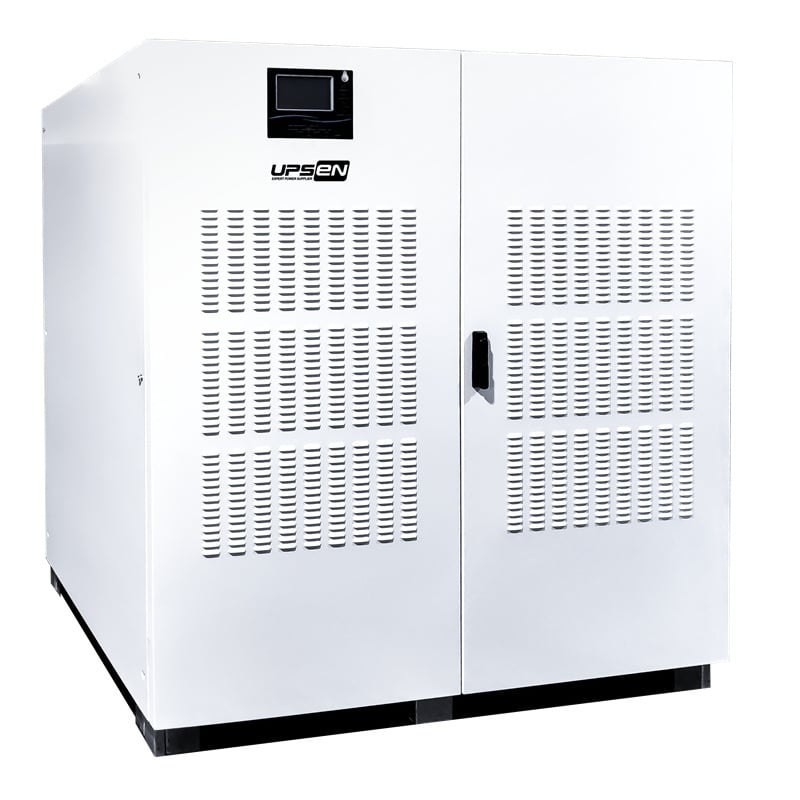
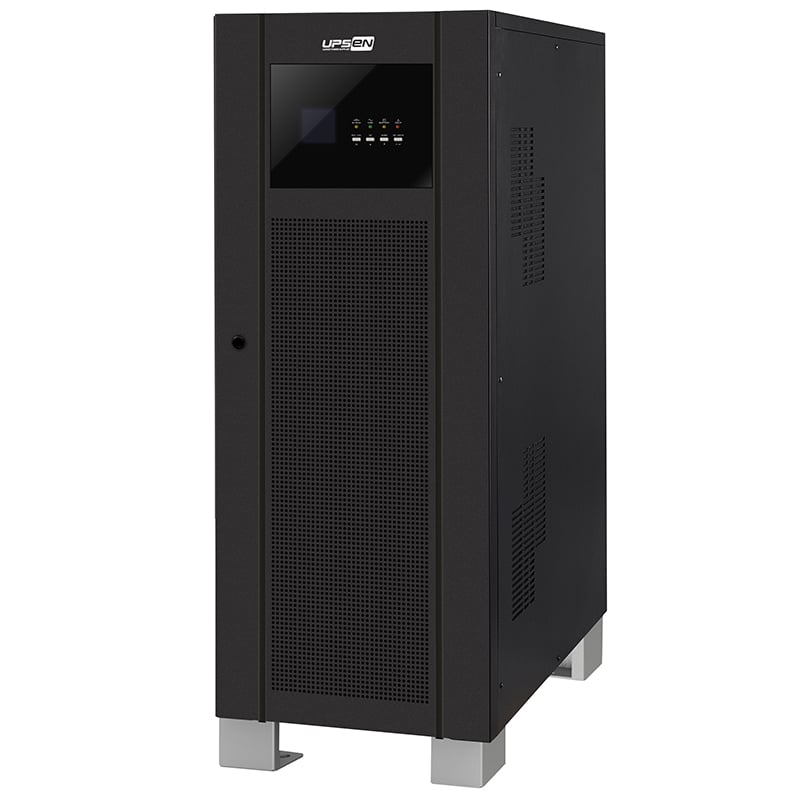
. High reliability, high market retention.
.Using dual-DSP and all-digital control technology, the system has higher stability.
. Built-in output isolation transformer, with stronger load capacity.
. Advanced decentralized autonomous parallel technology, without centralized bypass cabinet, can achieve up to six parallel.
.Intelligent battery management function, battery cycle self-check, battery EOD time automatic adjustment, automatic maintenance of batteries, prolong battery life.
.5.7 inch LCD display, Chinese and English display interface, to accurately
display UPS working status information to users, user-friendly management.
·Independent airtight duct and redundant fan design, all circuit board three paint protection, built-in dust-proof filter, with efficient heat dissipation and effective protection in harsh environment.
.Standard distribution battery contactor, when the battery is low voltage, automatically disconnect the battery to avoid overdischarge damage to the battery, better guarantee battery life.
.Customized energy back-irrigation absorption device is suitable for feedback load.
·Optional mixer can share battery pack function to save battery cost for users.
| Model | LX33 10K | LX33 15K | LX33 20K | LX33 30K | LX33 40K | LX33 60K | LX33 80K | LX33 100K | LX33 120K | LX33 160K | LX33 200K | LX33 300K | LX33 400K |
| Rated Capacity(VA) | 10KVA | 15KVA | 20KVA | 30KVA | 40KVA | 60KVA | 80KVA | 100KVA | 120KVA | 160KVA | 200KVA | 300KVA | 400KVA |
| Active Power(W) | 9KW | 10KW | 18KW | 27KW | 36KW | 54KW | 72KW | 90KW | 108KW | 144KW | 180KW | 270KW | 360KW |
| INPUT | |||||||||||||
| Voltage Range | 380 /400/415Vac (-25%~ +20%) Three phase five wire | ||||||||||||
| Frequency Range | 50/60Hz ± 5Hz Auto identification | ||||||||||||
| Power Factor | ≥0.8(without filter),≥0.95 (with filter) | ||||||||||||
| Rated Current | 18A | 28A | 37A | 56A | 74A | 112A | 148A | 185A | 224A | 298A | 371A | 557A | 742A |
| OUTPUT | |||||||||||||
| Rated Voltage | 380/400/415Vac±1% | ||||||||||||
| Frequency | 50/60Hz | ||||||||||||
| Frequency Stability | 50/60(±0.05%)Hz at battery mode | ||||||||||||
| Wave Form | Sine wave | ||||||||||||
| Power Factor | 0.9(lagging) | ||||||||||||
| Total Harmonic Distortion | ≤3% (linear load), ≤5%(nonlinear load) | ||||||||||||
| Overload Capacity | 110%/125% / 150% for 60min/10min/1min | ||||||||||||
| Crest Factor | 3:1 (Max.) | ||||||||||||
| Transfer Time | Oms, Normal mode to Battery mode or vice versa | ||||||||||||
| BYPASS | |||||||||||||
| Rated Voltage | 380/400/415Vac three phase five wire | ||||||||||||
| Voltage Protection Range | -40%~+20% | ||||||||||||
| Rated Frequency | 50/60Hz | ||||||||||||
| Frequency Protection Range |
±20% | ||||||||||||
| Transfer Time | Oms/2ms | ||||||||||||
| BATTERY | |||||||||||||
| Voltage Range for Inverter Operation(VDC) |
320~490VDC | ||||||||||||
| PANEL | |||||||||||||
| LED | Input, Inverter, Bypass, Battery, Output and Status | ||||||||||||
| LCD | Input/Output Voltage, Frequency, Power Factor, Battery Voltage, Battery Current and Status, Load Percentage, UPS Status, History Record, Settings | ||||||||||||
| COMMUNICATION | |||||||||||||
| Interface | RS232,RS485,Dry contact, SNMP card | ||||||||||||
| ENVIRONMENT | |||||||||||||
| Working Temperature | 0~40℃ | ||||||||||||
| Relative Humidity | 0~95% (without condensing) | ||||||||||||
| Storage Temperature | -25℃~+70℃ | ||||||||||||
| Altitude | ≤1000m above sea level , 1% derating per 100m from 1000m to 2000m | ||||||||||||
| Noise at 1m | ≤70dB | ||||||||||||
| Optional | Harmonic Filter, SNMP adapter, Bypass current-sharing inductor | ||||||||||||
| PHYSICAL | |||||||||||||
| Machine Size - W*D*H(mm) |
570*800*1195 | 880*760*1600 | 1751160*805*1600 | 1400*945*1900 | 1635*1040*1900 | ||||||||
| Net Weight(KG) | 213 | 273 | 273 | 316 | 328 | 483 | 568 | 800 | 902 | 1219 | 1425 | 1800 | 2050 |
| Gross Weight(KG) | 259 | 319 | 319 | 362 | 374 | 553 | 638 | 886 | 988 | 1349 | 1555 | 1950 | 2200 |
| *Specification are subject to change without prir notice | |||||||||||||
The Machine That Stays Online When Everything Else Quits
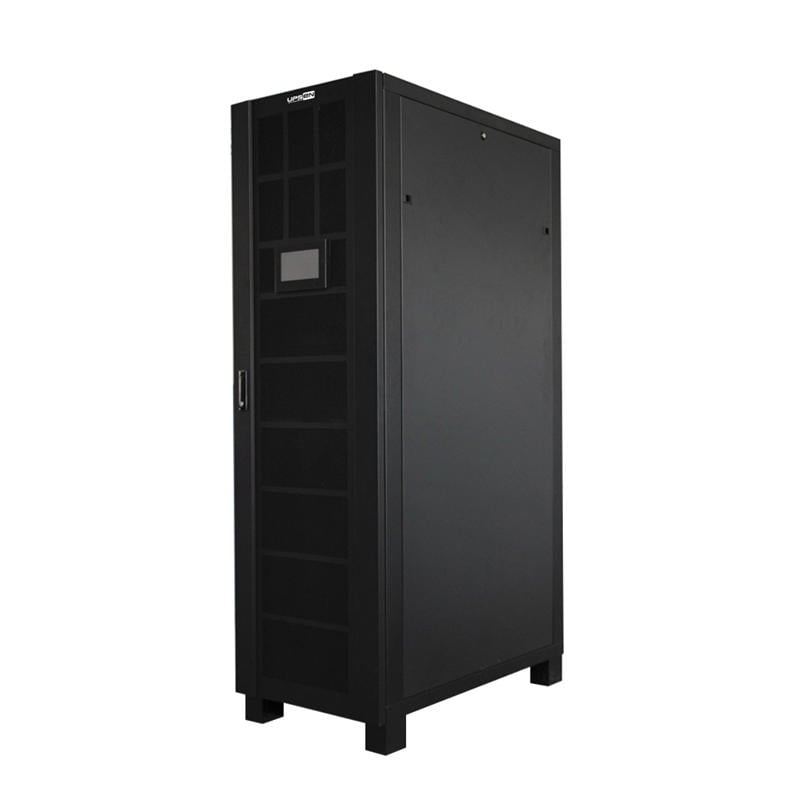
Some UPS series earn a reputation slowly, racking up years of field data in the kinds of places that kill ordinary electronics. The LX33 is one of those. It's been deployed in enough hot, dusty, vibration-heavy electrical rooms that its reliability numbers aren't just factory projections—they're backed by a track record. The reason comes down to a handful of engineering decisions that prioritize stability, serviceability, and sheer staying power over chasing spec-sheet trends.
Dual-DSP Control: Two Brains, No Single Point of Failure
At the core of the LX33 is a dual-DSP all-digital control architecture. Two independent digital signal processors share the workload, continuously sampling input voltage, output current, battery state, and internal temperatures. If one DSP encounters a fault, the other maintains control without a glitch. It's not just about processing power—it's about designing out the kind of single-chip failure that can take down a whole UPS. The result is a system that stays locked on frequency and voltage even when the grid is swinging wildly or the load is stepping up and down in unpredictable ways.
Built-In Output Isolation Transformer: The Low-Frequency Advantage
The LX33 is a low-frequency online UPS, which means there's a substantial output isolation transformer sitting between the inverter and your load. That transformer does two things no high-frequency unit can match. First, it provides complete galvanic separation—zero DC leakage, no common-mode noise sneaking through from the utility side. For sensitive industrial controls, medical diagnostics, or broadcast equipment, that isolation eliminates a whole category of gremlins. Second, it gives the inverter serious load-starting muscle. When a motor, a compressor, or a bank of solenoids pulls a massive inrush, the transformer's magnetic field absorbs the shock and delivers it smoothly. The inverter semiconductors don't get hammered with the full spike. That's why the LX33 can start loads that would cause a transformerless UPS to fold into bypass or throw a fault.
Decentralized Autonomous Parallel: Scale Without a Central Cabinet
Most parallel UPS systems require a centralized bypass cabinet or a master controller to coordinate the units. That box becomes a single point of failure—if it goes down, the whole parallel system loses its mind. The LX33 takes a different approach. It uses decentralized autonomous parallel technology. Up to six units can operate in parallel, and they coordinate among themselves without a central controller. Each unit monitors the shared bus and adjusts its output independently. If one unit fails or is taken offline for service, the others redistribute the load automatically. No single component can take down the parallel array. That's the kind of resilience you want in a facility where N+X redundancy isn't just a spec—it's a requirement.
Battery Management That Actually Learns
Batteries age, and a UPS that treats a three-year-old string the same as a brand-new one is asking for a runtime shortfall at the worst possible moment. The LX33's battery management system runs automatic cycle self-checks, tracking how the battery performs under load and adjusting its end-of-discharge predictions accordingly. As the cells degrade, the UPS recalibrates its runtime estimates so you're not staring at a display that says "15 minutes remaining" when you really have four. It also handles routine maintenance automatically—equalizing charges, temperature-compensated voltage adjustments—without needing a technician to remember the schedule.
A standard distribution battery contactor is built into the DC circuit. If battery voltage drops below a safe threshold during a prolonged discharge, the contactor physically disconnects the bank to prevent overdischarge damage. That simple electromechanical device has saved more battery strings than any software algorithm ever could.
Built to Live Where the Air Is Dirty
Industrial environments are unforgiving. Dust settles on circuit boards, humidity corrodes traces, and heat soaks into everything. The LX33's physical design addresses all three. Cooling air moves through an independent airtight duct, completely separated from the sensitive electronics. That means the dust and fumes pulled in by the fans never touch the control boards or power components. The fans themselves are redundant—if one seizes, the others maintain airflow and the unit keeps running.
Every circuit board gets three layers of protective coating: a base conformal coating, plus additional barriers against moisture and chemical attack. There's also a built-in dust-proof filter on the air intake, which catches particulates before they even enter the chassis. In a cement plant, a textile mill, or a coastal installation where salt spray is a fact of life, this level of environmental hardening is what separates a decade-long service life from a premature failure.
Display and Interface That Don't Require a Manual
The front panel features a 5.7-inch LCD with a bilingual Chinese-English interface. It's not the biggest screen on the market, but it's clear, well-organized, and shows you what you need without nested menus: input and output voltages per phase, load percentages, battery status, alarm history. For routine checks or troubleshooting, you don't need to plug in a laptop or decode blinking LEDs.
Options for Specialized Applications
A couple of optional features make the LX33 adaptable to niche requirements that most standard UPS units simply ignore. One is a custom energy back-feed absorption device. In applications with regenerative loads—certain motor drives, elevators, or test equipment that can momentarily push power back toward the source—this device safely dissipates that energy rather than letting it destabilize the DC bus or trip protections. It's a niche need, but if you have it, the alternative is usually a lot of trial and error with external braking resistors.
The other is a battery sharing module. In a multi-unit parallel installation, instead of each UPS having its own dedicated battery bank, multiple units can share a single common battery. That cuts battery costs significantly—fewer cabinets, fewer cells to maintain, less floor space consumed. It's a practical way to reduce both capital expenditure and ongoing maintenance burden in a redundant configuration.
Where the LX33 Proves Its Worth
The LX33 isn't for a small office server closet. It's for sites where the loads are heavy, the environment is hostile, and the power quality is unpredictable. Common deployments include:
`Large-scale industrial automation with mixed motor and control loads
`Critical infrastructure—water treatment, power generation, transportation signalling
`Semiconductor and pharmaceutical manufacturing where process interruption means scrapped batches
`Mining and mineral processing with high dust and vibration levels
`Medical campuses with imaging systems that demand isolated, stable power
`Data centers that need N+X parallel redundancy without a central bypass cabinet
The Workhorse That Earns Its Reputation
The LX33 Series Low Frequency Online UPS isn't chasing the highest efficiency numbers or the smallest footprint. It's built on a simple philosophy: put two DSPs in control, isolate the output with a real transformer, design a parallel system that can't be brought down by a single failed controller, and wrap the whole thing in enough environmental protection to survive in places that eat ordinary electronics. The result is a machine that stays online through grid chaos, load abuse, and years of accumulated dust. When uptime is the only metric that matters, the LX33 is the one you want in the room.

1409-1410, Tongfang Center, the intersection of Zhongxin Rd. and Haoxiang Rd., Xinqiao St., Bao'an Dist., Shenzhen, China.
Copyright © Shenzhen UPSEN Electronic CO., LTD. All Rights Reserved Privacy Policy
 EN
EN