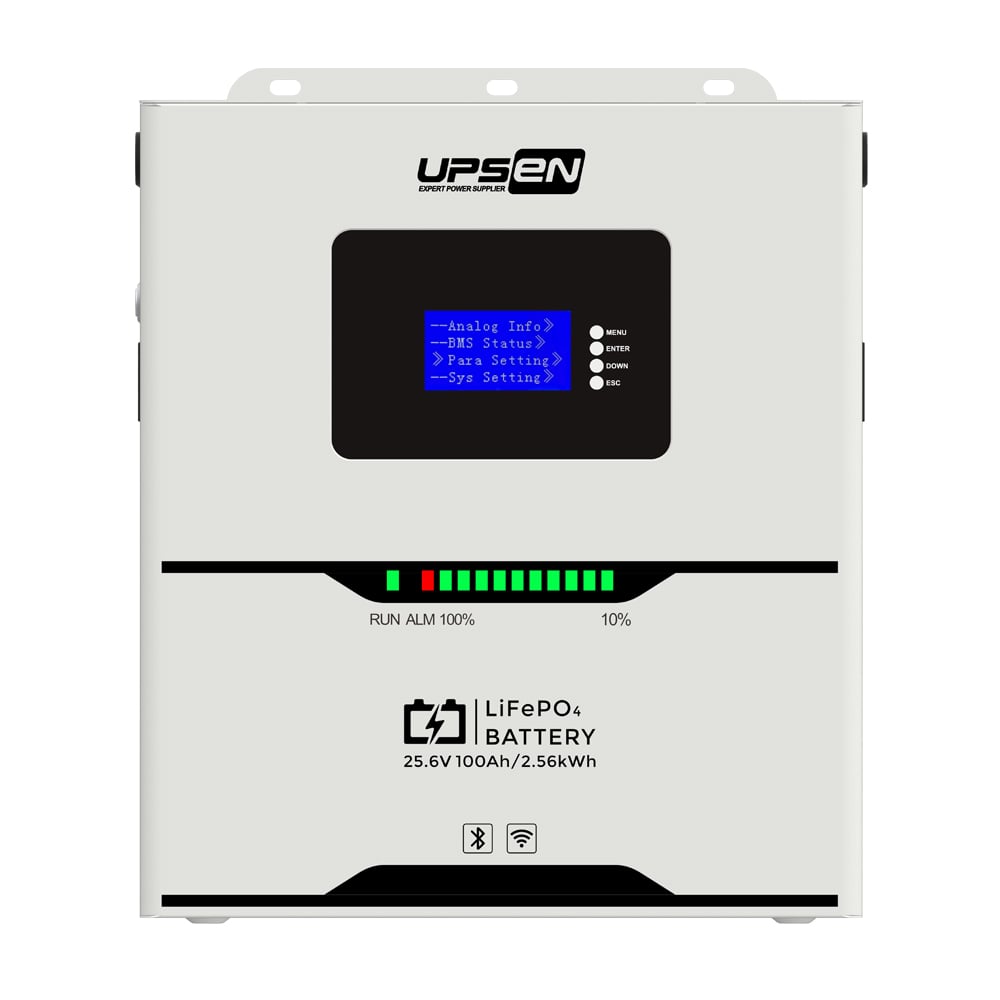
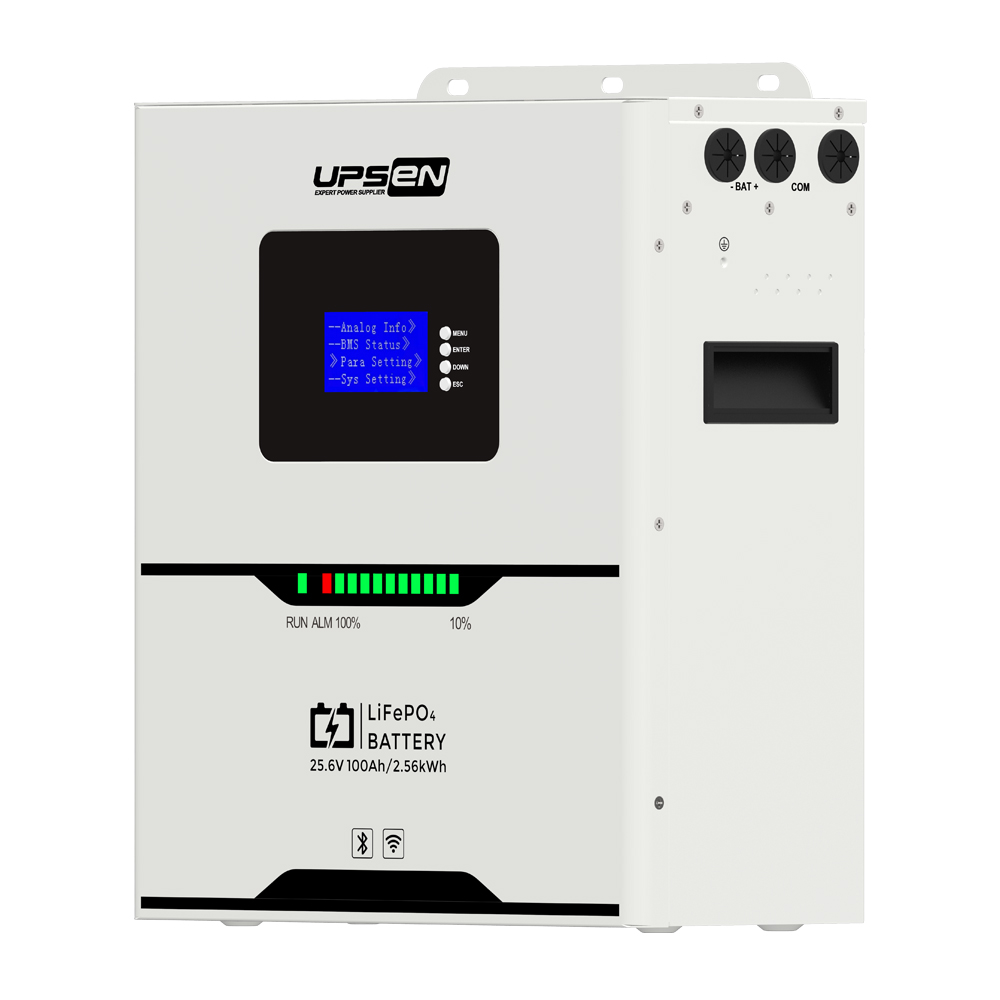
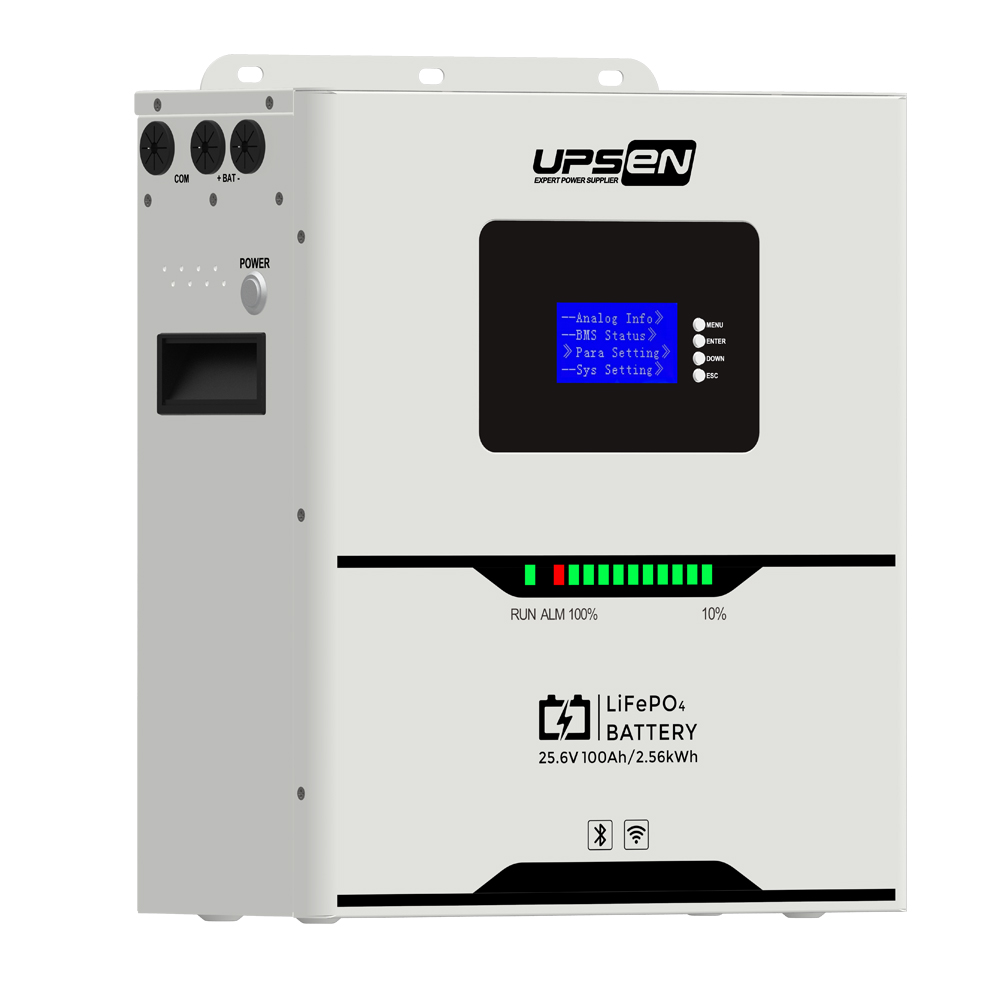
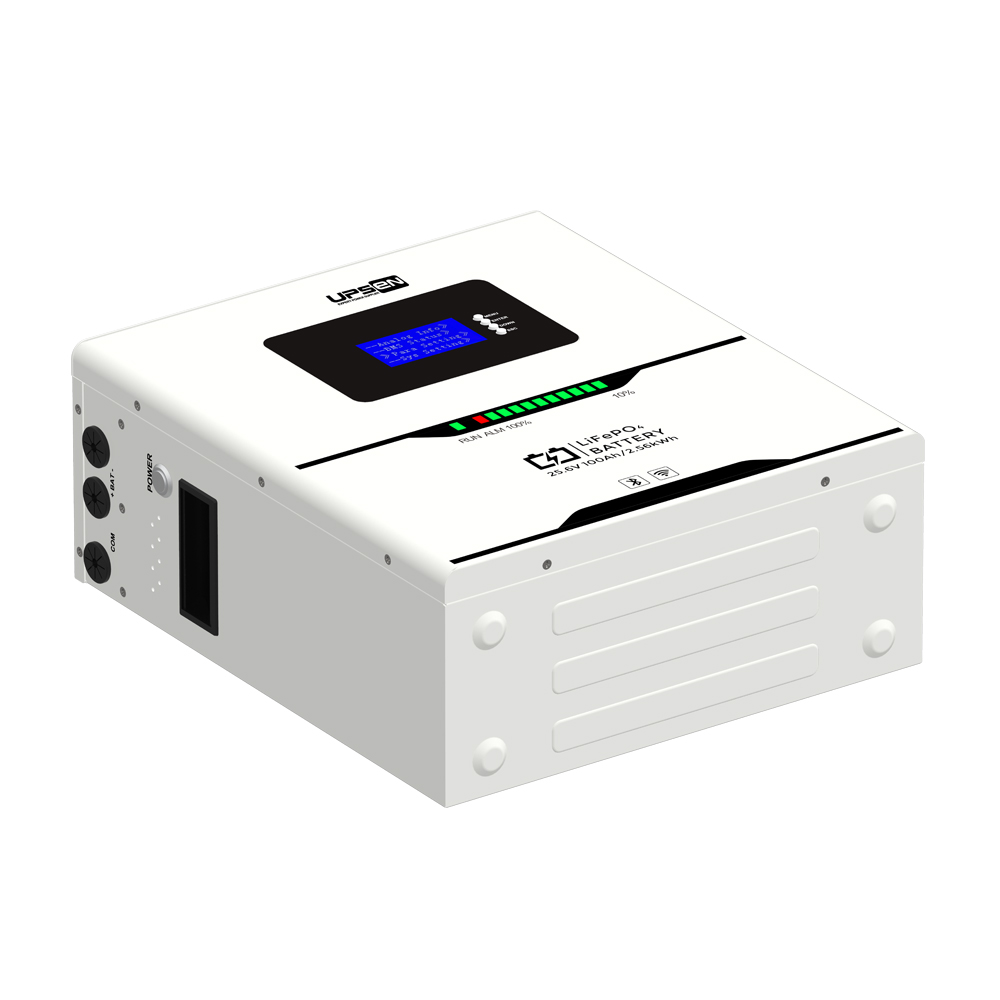
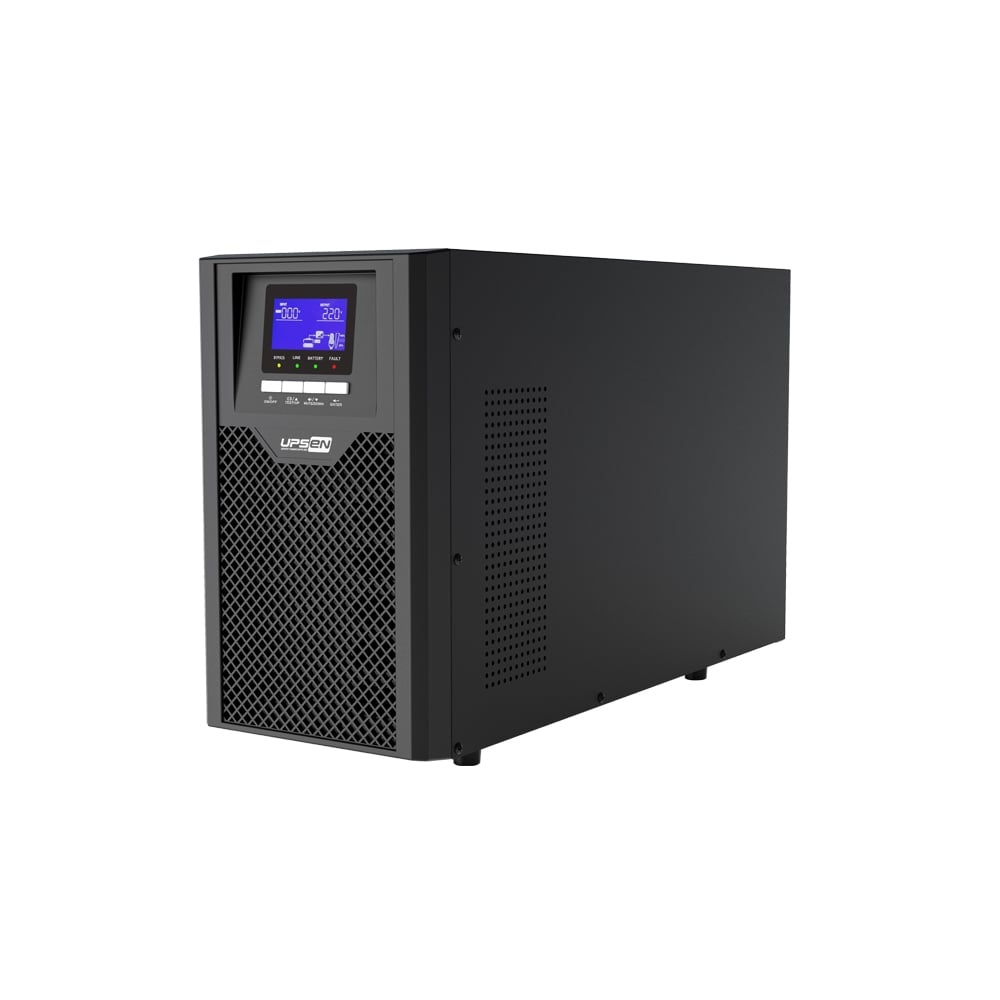
• Wide temperature range: -20~55°C
• Cycle life ≥6000 cycles
• Communication compatible with major inverters
• Parallel support for inverters of higher power or larger capacity
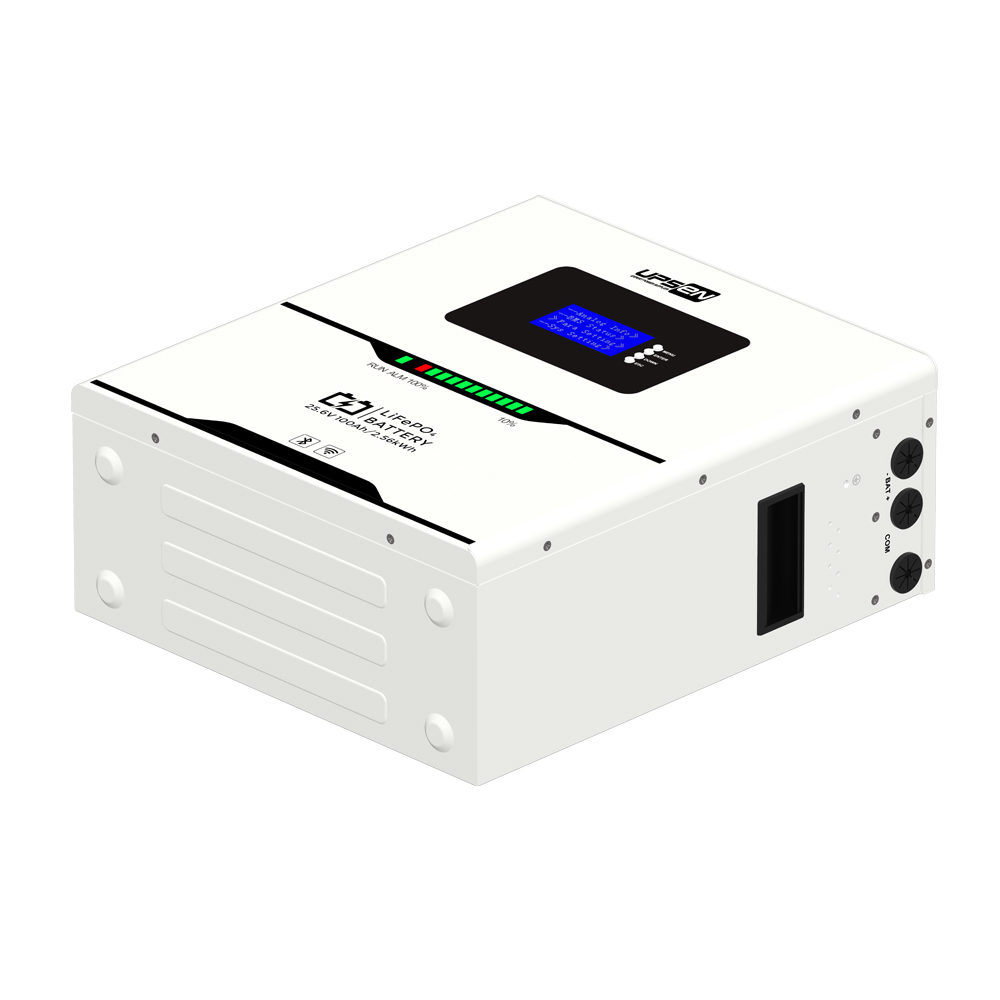
• SOC, RUN, ALARM display and BMS PC software
• OVP, LVP, OCP, OTP, LTP, Short‑circuit protection
• RS485, CAN communication ports
• Battery certification: UN38.3, MSDS, CE
| Model | PWT 25.6V100AH | PWT 25.6V205AH | PWT 25.6V300AH | PWT 25.6V314AH | PWT 51.2V100AH | PWT 51.2V205AH | PWT 51.2V300AH | PWT 51.2V314AH |
| Picture | ||||||||
| Energy Storage | 2560Wh | 5120Wh | 7680Wh | 8036Wh | 5120Wh | 10240Wh | 15360Wh | 16077Wh |
| Rated Voltage | 25.6V | 25.6V | 25.6V | 25.6V | 51.2V | 51.2V | 51.2V | 51.2V |
| Voltage Range | 21.6V‑29.2V | 21.6V‑29.2V | 21.6V‑29.2V | 21.6V‑29.2V | 43.2V‑58.4V | 43.2V‑58.4V | 43.2V‑58.4V | 43.2V‑58.4V |
| Max Charge Current | 100A | 200A | 200A | 200A | 100A | 200A | 200A | 200A |
| Max Discharge Current | 100A | 200A | 200A | 200A | 100A | 200A | 200A | 200A |
| Discharging Cut‑off Voltage | 21.6V | 21.6V | 21.6V | 21.6V | 43.2V | 43.2V | 43.2V | 43.2V |
| Floating Voltage | 28.8V | 28.8V | 28.8V | 28.8V | 57.6V | 57.6V | 57.6V | 57.6V |
| Cycle Life | 6000 Cycles @ 80% DOD | |||||||
| Certification | UN38.3 / MSDS | |||||||
| Communication Port | RS485 / CAN | |||||||
| Work Temperature | -20℃ ~ 55℃ | |||||||
| IP Degree | IP65 | |||||||
| Net Weight(KG) | 25.5 | 47.5 | 59 | 61 | 43 | 85.5 | 106.5 | 113 |
| Gross Weight(KG) | 26.5 | 49.5 | 62.5 | 64 | 45 | 89.5 | 128.5 | 129 |
| Machine Size(mm) | 413.5*382.5*162.3 | 427.7*389.8*246.3 | 480.5*390*246.2 | 480.5*390*246.2 | 607.7*382.5*162.3 | 637.1*389.8*246.3 | 834*390*246 | 834*390*246 |
| Package Size(mm) | 480*423*250 | 488*451*332 | 598*440*302 | 596*440*302 | 680*425*238 | 760*451*352 | 895*450*426 | 895*450*426 |
| *Product Specifications are Subject to Change Without Notice. | ||||||||
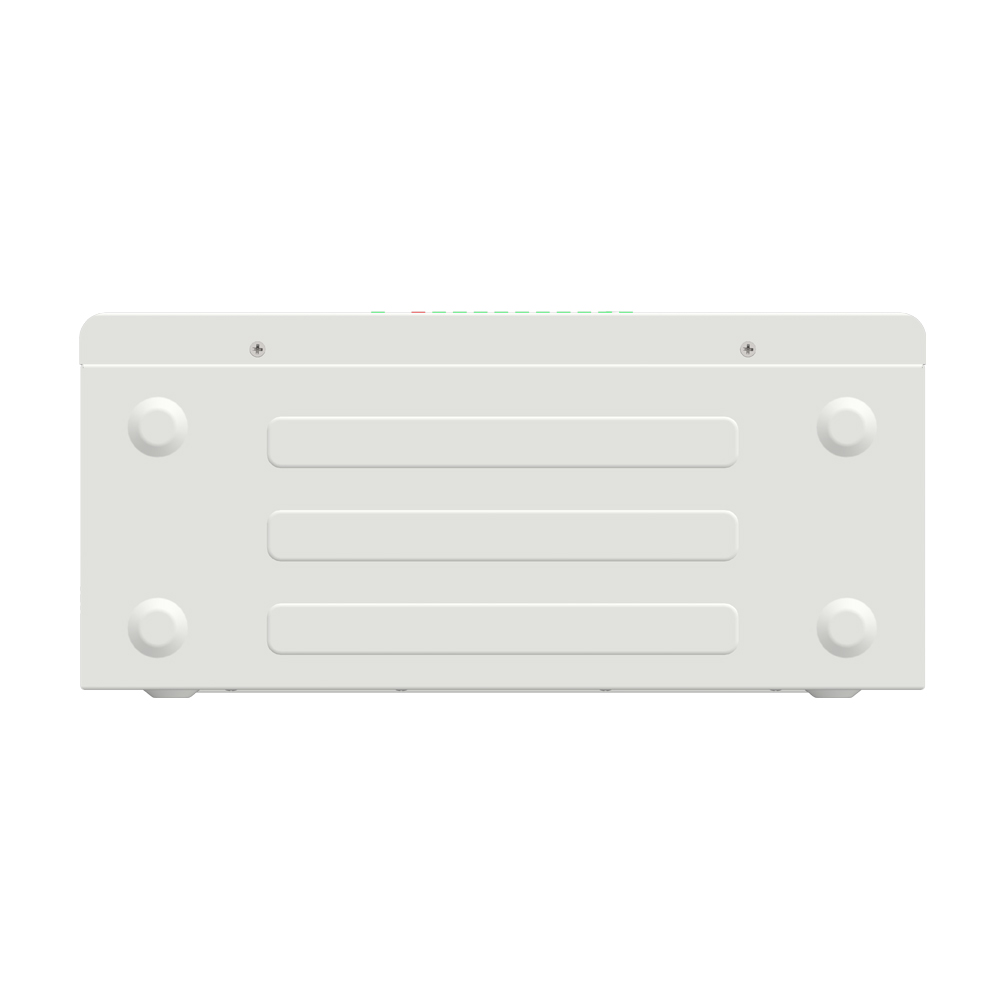
Every installation site has its own opinion about where a battery should live. Some have a damp concrete floor you'd rather not set electronics on. Others have a load-bearing wall that's just sitting there, empty, begging to hold something useful. And then there are the battery rooms—dedicated, racked, with dozens of modules stacked like library books. Most lithium batteries force you to choose one style at purchase time. Wall-mount? That's one SKU. Floor-stand? Different SKU. You try to standardise across projects, and you end up with a warehouse full of two product lines that are functionally identical but visually incompatible. The PWT Series removes that headache. Same module, same internals, same cell chemistry—just pick how you want to mount it when it arrives on site.
Two Voltages, a Hundred to Three Hundred Amp-Hours
The PWT comes in two nominal voltages: 25.6V for 24V systems, and 51.2V for the 48V standard that most modern hybrid inverters expect. Capacity spans from 100Ah to 314Ah—roughly 2.5kWh to 16kWh per module. A single 100Ah 24V unit will keep a small off-grid cabin's lights and router alive through the night. A bank of four 314Ah 48V modules will back up a commercial refrigeration system or a telecom shelter through a full day of bad weather. The point is, you're not stuck buying a capacity you don't need just to get the mounting option you do need. The PWT line covers both variables without making you compromise on either.
Lithium Iron Phosphate: The Chemistry That Doesn't Make You Nervous
Inside each PWT module are LiFePO4 cells—lithium iron phosphate. If you've spent any time around battery spec sheets, you know why this matters. No thermal runaway risk, which means no dramatic fires in the garage. A cycle life rated beyond 6,000 cycles at 80% depth of discharge, which works out to well over fifteen years of daily use before the pack degrades to 80% of its original capacity. In practice, most systems won't even cycle it that hard. Partial daily cycles—charge during the day, discharge a bit overnight, charge again—stretch that lifespan even further. You install the PWT, and you stop thinking about it for a decade and a half. It becomes infrastructure, like the water heater or the fuse box.
Wide Temperature Range: No Derating, No Excuses
A lot of lithium batteries claim to work in the cold, but their spec sheet whispers "derate below 10°C" in a footnote. The PWT doesn't need that footnote. It operates across a –20°C to 55°C range without derating. In plain terms, you can put this thing in an unheated Canadian garage in January, or a hot Australian equipment shed in February, and it will still deliver its full rated capacity. For off-grid installations where the battery has to live in whatever shelter exists—not a climate-controlled server room—this tolerance is the difference between a system that works year-round and one that sulks through the winter. The BMS also includes low-temperature charge protection, so you won't cook the cells trying to charge them when they're frozen. That's the kind of self-preservation you want when the installer is four hours away and the temperature drops below minus fifteen.
Communication Without the Compatibility Headache
Here's the part that actually causes real pain in the field. You mount the battery, wire it to the inverter, power everything up—and the inverter doesn't see the battery. Wrong protocol. Wrong baud rate. The manufacturer only tested it with their own proprietary inverter, and you're using a Deye. Or a Growatt. Or a Victron. The PWT Series sidesteps this by being genuinely promiscuous. Standard RS485 and CAN ports, pre-configured protocols for the major hybrid inverter brands, and documentation that tells you which DIP switch setting matches which manufacturer. You wire it up, set the address, and the inverter reads state of charge, current, temperature, and all the rest. No gateway boxes. No firmware prayers. No 90-minute phone call to a support line that doesn't answer. For an installer on a schedule, this compatibility is worth as much as the battery cells themselves.
Parallel Support That's Actually Straightforward
Need 60kWh instead of 15? Connect modules in parallel. The PWT is designed for it. Power bus connections, communication cables, address settings—it's all documented and all accessible from the front of the module. You don't have to lift the battery, open a side panel, or consult a forum post from 2019 to figure out how the parallel wiring works. Multiple PWT modules link up cleanly, and the master BMS coordinates charging and discharging across the bank so all modules share the load evenly. Start with two modules today, add a third next year when the client decides to power their workshop off the same system. The architecture doesn't punish you for starting small or growing later.
Front Panel Indicators, No Guesswork
Every PWT module has a front panel with three indicators: State of Charge, Run status, and Alarm. One glance tells you whether the battery is full, charging, discharging, or complaining about something. No app required. No login credentials. No hunting for a phone at the back of a dark electrical room. And if you do want deeper detail—individual cell voltages, internal temperatures, historical discharge data—there's BMS PC software that gives you the full picture over a USB or serial connection. The local installer can plug in a laptop and run a diagnostic in five minutes without needing cloud connectivity or a manufacturer login.
Protections That Don't Need Monitoring
The BMS handles the complete list: over-voltage, under-voltage, over-current, over-temperature, low-temperature, short circuit. All automatic. All built into the cell management logic. If a cell starts drifting, the BMS balances it back. If the pack gets too hot, it throttles. If a short circuit appears on the output, it disconnects in milliseconds. The battery protects itself, so you don't have to build external protection into the system design. For a battery that's going to live in an unattended remote site, that autonomy is the whole ballgame.
Certifications That Clear Customs
UN38.3 for transport. MSDS for safety data. CE for European compliance. If you're shipping the PWT across borders—and most commercial projects do—these documents mean the battery doesn't get held at the dock while some customs officer emails you for test reports. They're standard, they're complete, and they're ready when you need them. For a system integrator who's been burned by grey-market cells that suddenly can't be shipped to a client, this paperwork is quietly essential.
Where the PWT Earns Its Place
The PWT Series sits at the intersection of "tough enough for a worksite" and "compatible enough for a professional install." Common deployments:
- Off-grid homes and cabins where the battery has to live in an unconditioned space
- Solar self-consumption systems that charge from PV during the day and discharge through the evening
- Backup power for small businesses—retail, restaurants, medical clinics—where a blackout means lost revenue
- Telecom shelters and remote monitoring stations that run unattended for years
- Agricultural water pumping and cold storage with temperature extremes
- Installers who want to stock one battery line that can be wall-mounted or floor-placed depending on the job
The Practical Choice
The PWT Series LiFePO₄ Battery isn't trying to be the fanciest module on the shelf. It's built to be the battery you don't have to think about after you've installed it. Wide temperature tolerance. Genuine parallel support. Inverter compatibility that doesn't demand a particular brand. Mounting flexibility that adapts to the site rather than the other way around. And cycle life numbers that mean you install it once and let it run for fifteen years. If you're tired of batteries that fight you at every step—mounting, wiring, communication, inspection—the PWT is the line that stops fighting and starts working.

1409-1410, Tongfang Center, the intersection of Zhongxin Rd. and Haoxiang Rd., Xinqiao St., Bao'an Dist., Shenzhen, China.
Copyright © Shenzhen UPSEN Electronic CO., LTD. All Rights Reserved Privacy Policy
 EN
EN